
 Tiếng Việt
Coffee Knowledge, Me Trang Activities
Vietnamese Green Coffee Beans: Quality, Potential And B2B Import Opportunities
Nov
For brands seeking a stable coffee supply, understanding the dynamics of Vietnam’s green coffee beans market is the foundation of every buying decision. Green coffee is where the flavor profile begins and the main lever for optimizing costs across your entire coffee supply chain.
This article summarizes the scale of Vietnam’s green coffee industry and explains why MeTrang Export is a suitable partner to develop long-term supply for your brand.
Characteristics of green coffee beans and their role in the coffee value chain
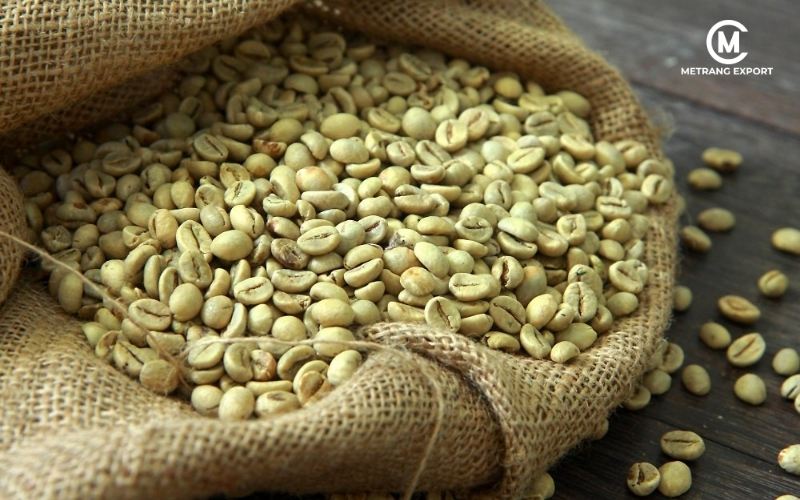
Green coffee beans have undergone primary processing but have not yet been roasted, making them suitable for storage, transportation, and international trade.
What are green coffee beans
In the processing chain, green coffee beans appear after the coffee cherry has been depulped and stripped of its mucilage and parchment, leaving only the inner bean.
- Physical state: hard beans with a green or green-grey color, depending on the variety and processing method. Moisture content is typically controlled at around 10-13%.
- Chemical composition: contains caffeine, chlorogenic acids, sugars, and lipids – the key precursors that will develop into aroma and flavor during roasting.
- Commercial characteristics: green coffee is the standard trade unit in B2B transactions, standardized by screen size, moisture, and defect count.
From a B2B buyer’s perspective, every decision about the final cup quality starts with choosing the right source of green coffee beans.
The position of green coffee beans in the global coffee supply chain
In the supply chain, green coffee is the critical link between coffee-growing regions and the roasting-distribution hubs.
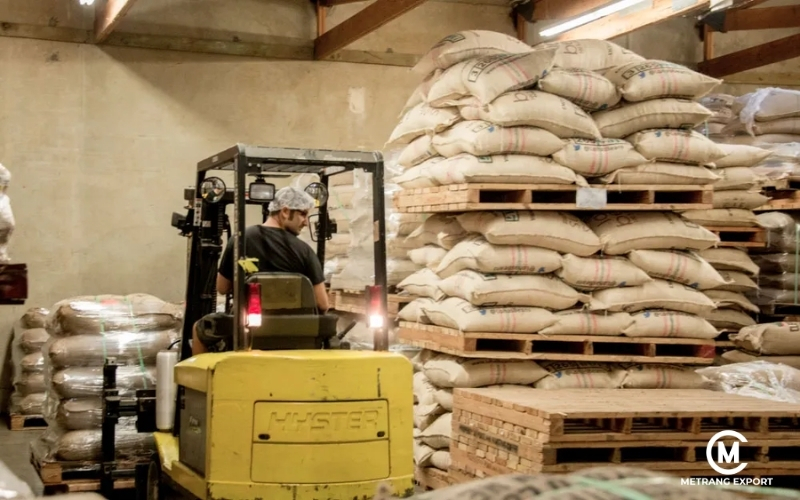
- Ensuring stability: When properly stored, green coffee beans can maintain their quality for around 12-24 months.
- Optimizing logistics: green coffee beans are physically more stable and better suited to long ocean shipments compared to roasted coffee.
Size, trends, and opportunities for buyers in Vietnam’s green coffee beans market
In Vietnam, the green coffee beans market reaches millions of tons per year, with Robusta accounting for around 90-95% of total production.
Where does Vietnam rank in the global green coffee export market?
Vietnam is the world’s second-largest coffee exporter, only behind Brazil. It is a major green coffee beans hub that brands should not overlook when building long-term supply chains.
- Consistent volume: Every year, Vietnam exports approximately 1.6 million tons of coffee, providing a large and steady supply base.
- Fast-growing export value: export turnover increased from about USD 2.7-3 billion in 2020-2021 to more than USD 4.1-4.2 billion in 2023.
- Broad market coverage: Vietnamese green coffee beans are exported to dozens of countries and territories; Germany, Italy, and Japan are among the largest buyers by value.
Competitive advantages of Vietnamese green coffee beans
From a B2B buyer’s standpoint, Vietnam’s green coffee beans offer several notable advantages.
Stable output and concentrated growing regions
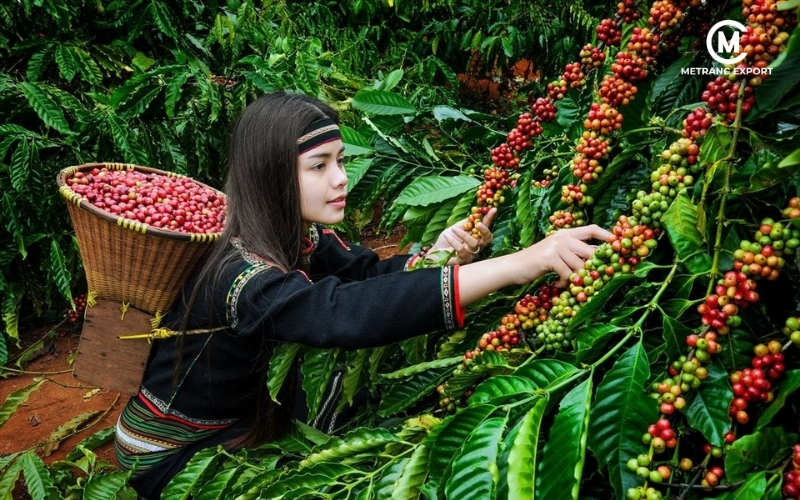
The Central Highlands of Viet Nam is the heartland of Robusta coffee, with large and relatively concentrated growing areas. This concentrated structure makes it easier for exporters to standardize quality across volumes and optimize collection, warehousing, and logistics.
Competitive cost structure
Compared to many other producing countries, Vietnamese green coffee beans, especially Robusta, are typically priced competitively, helping brands balance quality and cost in blends or single-origin ranges.
Professional processing and export capabilities
Vietnamese green coffee beans exporters, including MeTrang Export, increasingly invest in:
- Modern processing plants and technology
- Quality control systems aligned with international standards
- Certifications and traceability systems to meet stringent requirements from US/EU buyers
Why import Viet Nam green coffee beans from MeTrang Export
Suppose your brand is still struggling to secure a stable, flexible, and tightly quality-controlled supply of green coffee. In that case, MeTrang Export is the strategic partner to build a long-term sourcing relationship with.
Official export brand of Mê Trang coffee
MeTrang Export is the official export brand of Mê Trang Coffee, a Vietnamese coffee company with more than two decades of development and presence in multiple international markets.
- Strong production foundation: built on a well-established system of factories, raw material areas, and partner networks.
- Brand reputation: Mê Trang has extensive experience serving both domestic and export markets, making MeTrang Export a suitable partner for long-term development projects.
Supply capacity and quality control
Leveraging Mê Trang’s production and export infrastructure, MeTrang Export provides stable volumes while offering flexible processing methods tailored to different market segments and product concepts. Throughout the entire process, the company applies rigorous quality control (QC) to ensure consistent physical and sensory quality. This combination allows brands and roasters to rely on MeTrang Export for stable cup profiles, dependable repeat orders, and the ability to grow volumes in line with their long-term business plans.
FAQ about green coffee beans
How long can green coffee beans be stored
When stored correctly, green coffee beans can typically be used for 12-24 months. However, to maintain optimal and stable cup quality, many roasters prefer to use beans within 6-12 months from hulling/primary processing.
- Cool, stable warehouse temperature (around 18-25°C), away from heat sources
- Dry, well-ventilated environment, minimizing high humidity and mold risk
- No direct sunlight and away from strong or foreign odors
- Use of jute bags with PE liners or dedicated coffee bags placed on pallets, not directly on the floor
- Regular checks for moisture content and insect activity in the warehouse
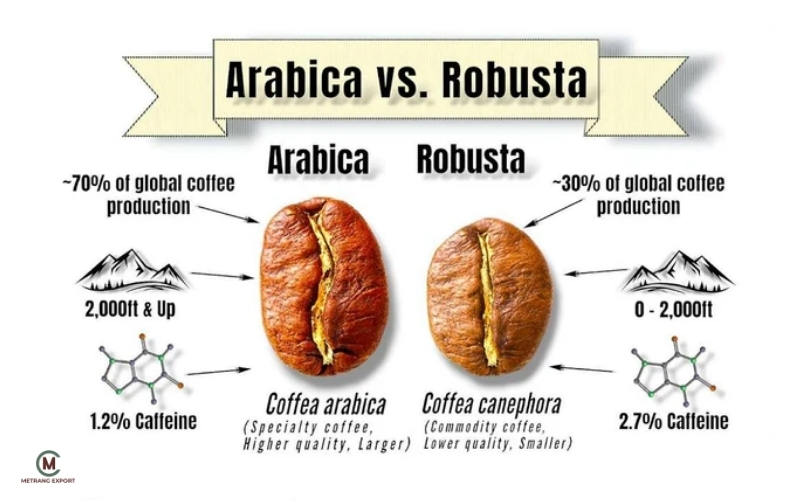
What are the differences between robusta and arabica
In practice, many international brands use a blend of Vietnamese Arabica and Robusta green coffee to balance cost and flavor, depending on the target market and product positioning.
| Criteria | Robusta Green coffee beans | Arabica Green coffee beans |
| Share of global production | Higher, about 1.8-3.5% | Lower, about 0.8-1.5% |
| Caffeine content (estimated) | Strong, pronounced bitterness, heavy body, low acidity; suitable for strong flavor preferences and rich crema | More complex aroma (floral, fruity, caramel, etc.), higher acidity, light to medium body |
| Share of Vietnam’s coffee production | Dominant share, about 90-95% of national coffee output | Smaller share but gradually increasing in highland regions such as Lâm Đồng and Sơn La. |
| Role in product portfolio | Foundation for commercial blends, optimizing cost and consistency | Creates flavor highlights, elevating brand image and the storytelling of the product |
How are green coffee and roasted coffee different
In simple terms, roasted coffee is green coffee that has been thermally processed to develop its aroma, flavor, and color.
| Criteria | Green Coffee Beans | Roasted Coffee |
| State and flavor | Unroasted; light aroma; not used directly for brewing | Roasted; full aroma and flavor developed; ready for brewing |
| Shelf life | Around 12-24 months under proper warehouse conditions | Best used within 2-8 weeks after roasting |
| Trade and logistics | Well-suited for long-distance ocean freight | Exported as a higher-value finished product; requires stricter storage and logistics |
Comparison Table: Green Coffee vs Roasted Coffee
Conclusion
Green coffee beans are the foundation that shapes the quality and flavor profile of every coffee product and play a particularly important role in the long-term strategy of roasters and retail chains. With its advantages in volume and cost, Vietnam is one of the most attractive sources of green coffee on the global market.
To fully unlock this potential, businesses need partners with strong quality control, deep knowledge of origin, and flexible B2B collaboration models. MeTrang Export is confident in its role as a strategic partner in building long-term green coffee supply chains.
Get in touch with our export team today to receive our latest product portfolio, technical specifications, and green coffee samples tailored to your brand’s development direction.
