

 Tiếng Việt
Coffee Knowledge, Exhibition & Export
Specialty Green Coffee Bean: The Premium Standard Elevating Vietnamese Value
Mar
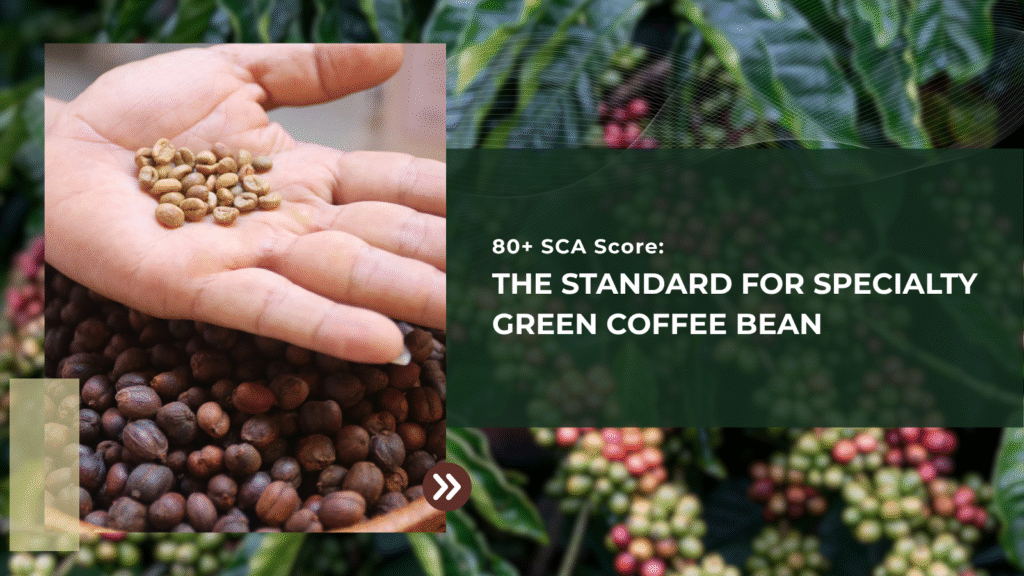
In the world of professional roasters and true coffee connoisseurs, Specialty Coffee is far more than just a fancy label. It is a solemn commitment to a dedicated journey, from the farm to the final cup. In Vietnam, specialty green coffee bean is steadily asserting their position, not merely through volume, but through sophisticated flavor profiles that meet the most rigorous international standards.
In this article, MeTrang Export will decode the stringent criteria and explore why this segment consistently leads global consumption trends.
Defining the excellence and standards for specialty green coffee bean
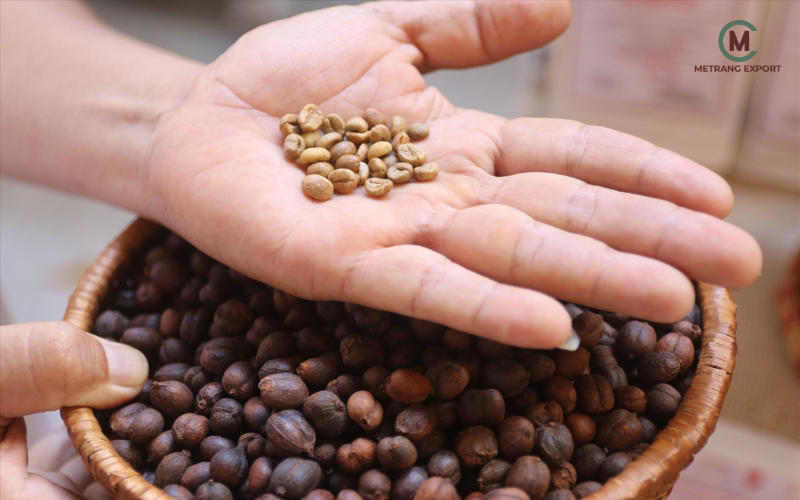
Specialty green coffee bean is more than just a prestigious title; it is the result of a rigorous quality control process. A coffee lot is only certified as “Specialty” when it is free of primary defects and possesses superior sensory attributes that meet global benchmarks.
The SCA scoring scale: The universal language of specialty green coffee bean
The Specialty Coffee Association (SCA) scoring system is the most authoritative scale for identifying quality.
- The 80-point threshold serves as the definitive boundary; only coffee lots scoring 80.0 points or higher are officially recognized as specialty green coffee bean.
- 80.0 – 84.99 (Very good): Coffee with a clean profile, balanced acidity, and a consistent body.
- 85.0 – 89.99 (Excellent): Boasting complex, distinct flavor layers and a long-lasting aftertaste.
- 90.0 – 100 (Outstanding): Extremely rare lots with truly unique and extraordinary flavor characteristics.
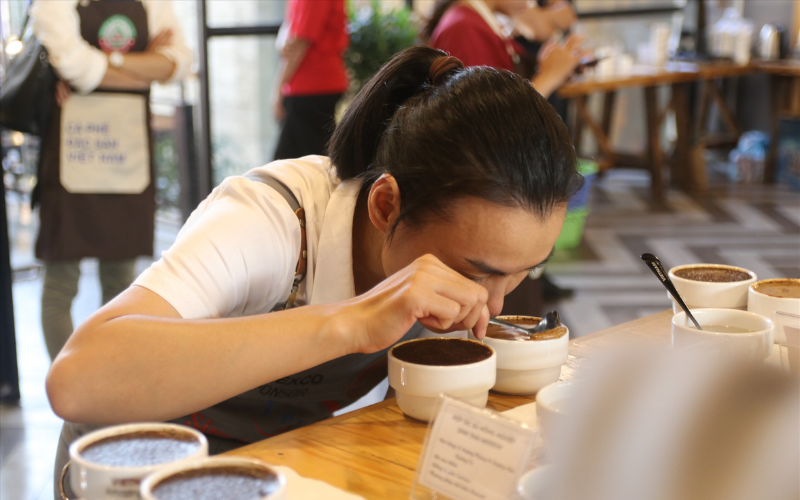
- The grading criteria: The evaluation is based on 10 essential attributes, including fragrance/aroma, flavor, aftertaste, acidity, body, uniformity, clean cup, sweetness, and more.
Purity and terroir: The soul of specialty green coffee bean
A true specialty green coffee bean must be a perfect reflection of its terroir – the unique environment where it was grown, combined with a meticulous processing method.
| Technical indicators | Specialty standard | Detail |
| Defects | 0 primary defects and < 5 secondary defects | Coffee undergoes rigorous sorting and mechanical filtering to ensure it is free from any moldy, black, or insect-damaged beans. |
| Moisture content | Stable between 10.5% and 12.5% | This is the ideal moisture range to preserve natural aromas. If too dry, the beans lose flavor; if too moist, they become prone to mold. |
| Cleanliness | Absolutely clean taste | Upon cupping, there are no off-flavors such as earthiness, medicinal notes, or mustiness. |
| Bean size | Uniform screen 16/18 | The beans are uniform in size. During roasting, this ensures consistent heat absorption, preventing a mix of burnt and under-roasted beans. |
| Terroir identity | Distinct regional characteristics | Each region has its own unique climate and soil. specialty green coffee bean must preserve that distinct essence. For instance, Cau Dat Arabica must feature a delicate, gentle acidity reminiscent of ripe fruits. |
The compelling allure of specialty green coffee bean
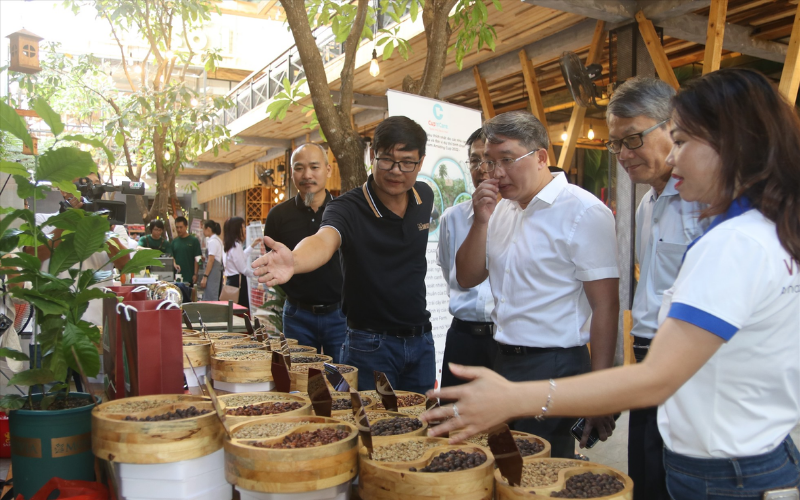
In discerning markets like Japan and Europe, sophisticated roasters are not merely sourcing raw materials; they are seeking a masterpiece crafted by nature itself.
Terroir and varietals: The roots of specialty green coffee bean
The primary appeal of specialty coffee lies in its uniqueness – a perfect synergy of natural elements:
- Exquisite varietals: Elite varieties such as Arabica Typica, Bourbon, or strictly selected Fine Robusta strains are chosen to ensure the highest potential for diverse flavor profiles.
- Altitude and climate: Coffee grown at high elevations, with significant diurnal temperature variations (the difference between day and night), allows the cherries to ripen more slowly. This gradual process enables the beans to develop a dense nutrient profile, resulting in a refined acidity and a full-bodied structure.
- Soil composition: The specific minerals found in basaltic red soil or unique clay types impart signature notes that cannot be replicated. This geographical distinction creates the scarcity and collectible value inherent in every lot of specialty green coffee bean.
Advanced processing techniques: The essence of distinction
If terroir represents the potential, then processing techniques are the keys that unlock hidden aromatic notes.
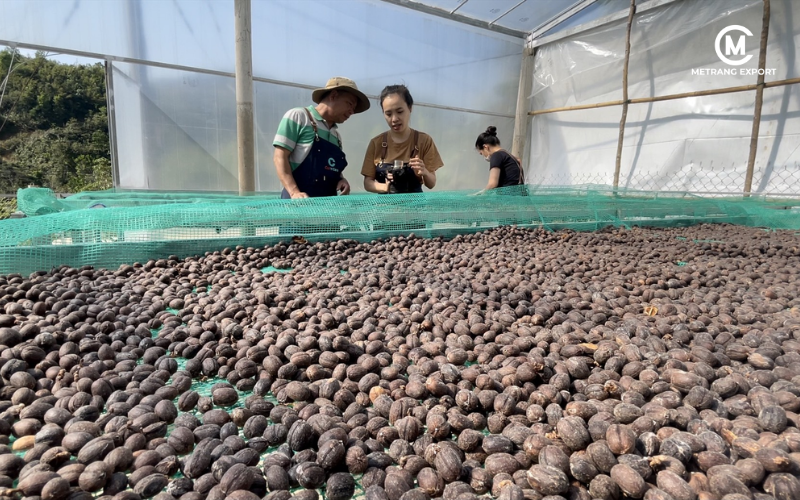
- Controlled fermentation: Methods such as Honey process (retaining the natural mucilage) or Natural process (sun-drying the whole cherry) require constant monitoring of temperature and humidity. Precise fermentation helps the beans develop succulent ripe fruit notes and a lingering, deep sweetness.
- Innovation through anaerobic fermentation: Fermenting beans in an oxygen-free environment creates exotic flavor compounds reminiscent of fine wine, warm spices, or tropical fruits. This sensory touchpoint is exactly what high-end roasters hunt for to create truly unique, one-of-a-kind cups of coffee.
The distinction between specialty green coffee bean and commercial grade
At MeTrang Export, clearly differentiating between the specialty and commercial segments does more than just help our partners optimize their investment costs; it ensures absolute consistency in the brand positioning strategy for roasters worldwide.
Technical standard divergence in specialty green coffee bean
The most significant difference lies in the rigor of the screening process. While commercial coffee prioritizes volume stability, specialty green coffee bean focuses on the sheer perfection of every single bean.
| Technical standards | Commercial green coffee bean | Specialty green coffee bean |
| Defect rate | Allows a certain percentage (approx. 1-2% black or broken beans). | Zero primary defects. Minimal secondary defects (< 5 per 350g) to guarantee an absolute clean cup. |
| Bean size | Commonly screen 13 and up. Suitable for high-volume blending. | Primarily screen 16 and 18 with over 95% uniformity. |
| Cup profile | Bold, stable flavor with broad mass-market appeal. | Complex flavor profiles featuring floral notes, fruitiness, bright acidity, and a deep aftertaste. |
Market positioning and value proposition of each coffee line
If your business is crafting a signature product line to serve as the soul of your brand, specialty green coffee bean is an irreplaceable choice. Conversely, if the goal is to achieve broad market coverage with stable yields and optimized pricing, MeTrang Export’s high-quality commercial coffee line will be your most reliable companion.
| Criteria | Commercial green coffee bean | Specialty green coffee bean |
| Intended use | Production of instant coffee, standard espresso blends, and drip bag coffee. | Ideal for manual brewing methods (pour-over, syphon) at premium Specialty Coffee shops. |
| Economic value | Competitive pricing, suitable for large-scale and sustainable business models. | High value-added; helps roasters build a unique and premium brand story. |
| Target audience | Mass consumers, office workers, and F&B chains require flavor consistency. | Connoisseurs, experts, and customers seeking innovative sensory experiences. |
| Traceability | Usually traceable to broad regions or large provinces. | Detailed traceability down to individual farm lots, specific altitudes, and unique processing methods. |
The global surge of specialty green coffee bean
The global coffee industry is witnessing a powerful shift from mass consumption toward a more profound, appreciative experience.
The consumption wave of specialty green coffee bean in major markets
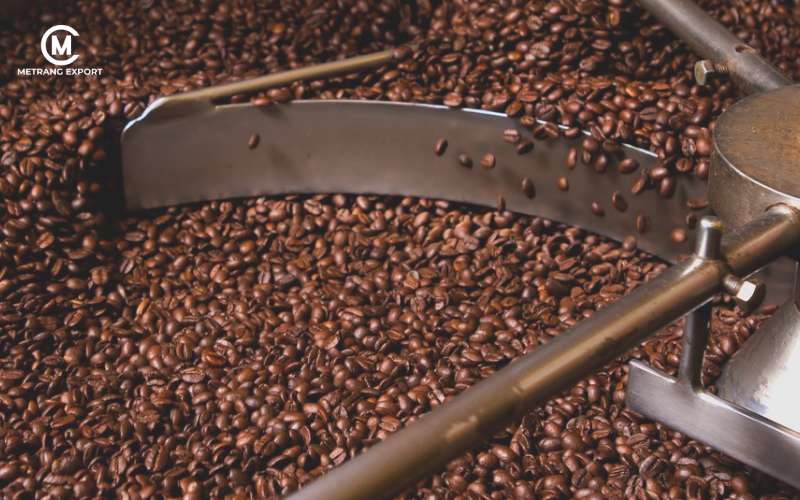
Coffee markets in North America, Europe, and Northeast Asia are riding the robust Third Wave, where consumers treat coffee as a premium artisanal product, much like fine wine. In countries such as the USA, Germany, and Japan, the demand for high SCA-score coffee has become the new benchmark for modern coffee chains. This preference stems from a desire to source the finest specialty green coffee bean to deliver extraordinary aromatic notes, ranging from the bright acidity of tropical fruits to delicate floral undertones.
The rising status of Vietnamese specialty green coffee bean
Vietnam is steadily transcending its image as a giant focused solely on raw volume to assert a new position on the global map of specialty green coffee bean. Thanks to serious investment in varietals and processing techniques in renowned regions like Cau Dat and Buon Ma Thuột, Vietnamese beans are now appearing with increasing frequency in international cupping competitions. The concepts of Fine Robusta and Specialty Arabica from Vietnam are earning high praise from global Q Graders, effectively dismantling the old prejudice of being merely a low-cost supplier.
Conclusion
Specialty green coffee bean is more than just a product; it is a symbol of quality, transparency, and sustainability. At MeTrang Export, we are committed to upholding the standard of True Taste – Trusted Trade, delivering certified beans that elevate the status of Vietnamese agricultural products on the world stage.
