

 Tiếng Việt
Coffee Knowledge, Exhibition & Export, Me Trang Activities
Black Broken Green Coffee: Commercial Risks And Export Value Control Solutions
Mar
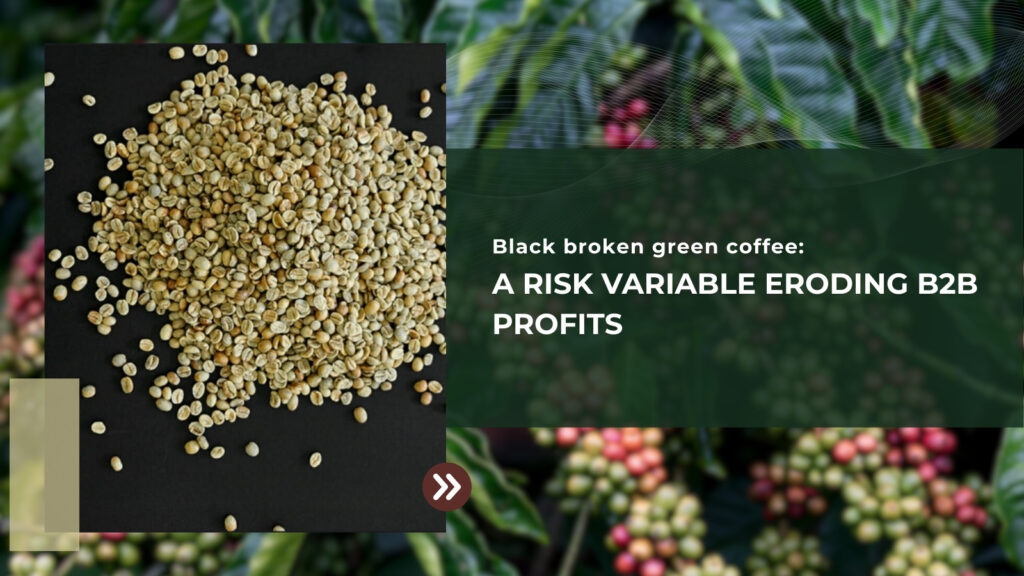
Would your brand accept a 20% loss in profit due to a mere 1% technical error? In the global coffee trade, black broken green coffee is far more than industrial waste; these are silent risk variables capable of eroding profit margins and destroying brand reputation in a single roast.
At MeTrang Export, we define defect control not just as product cleaning, but as financial risk insurance for every B2B order.
The technical nature of black broken green coffee
To communicate effectively in the international market, suppliers and roasting partners require a universal language regarding physical defects, in which black broken green coffee plays a critical role.
Defining black broken green coffee according to SCA/ICO standards
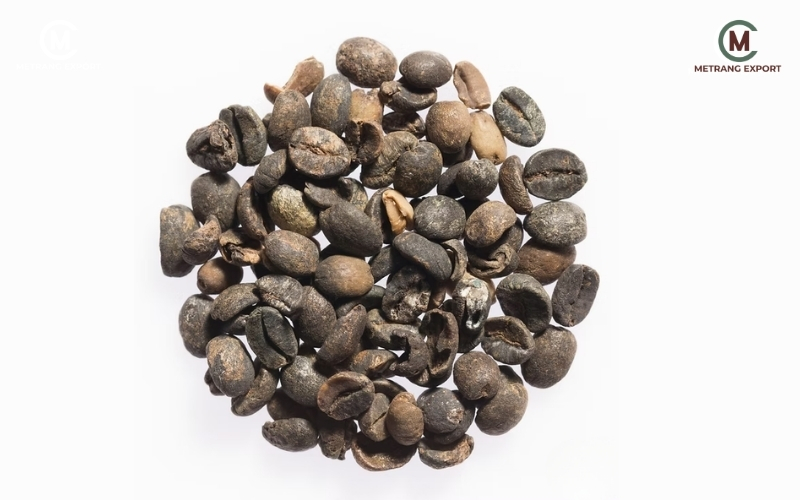
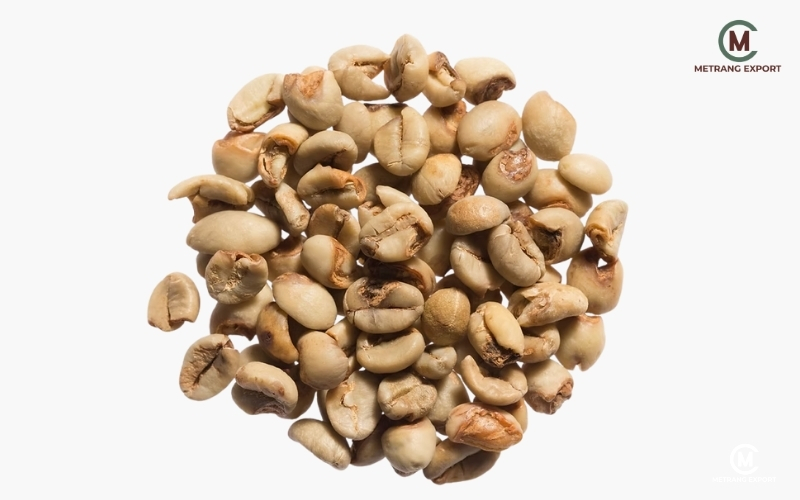
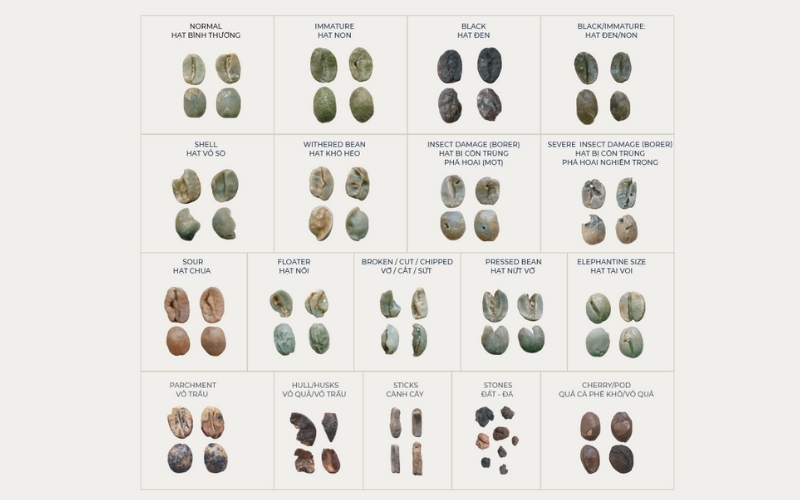
According to the Specialty Coffee Association (SCA), a full black bean is classified as a primary defect – the most severe category that can completely ruin a cup’s flavor profile. Meanwhile, broken or chipped beans are typically categorized as secondary defects. When combined, black broken green coffee serves as a technical indicator reflecting inefficiencies in the production and processing stages.
- Sensory degradation: Severely diminishes the clean cup and overall sensory quality.
- Roasting instability: Causes unpredictable chemical reactions during the roasting process.
- Export compliance: Directly impacts the shipment’s ability to meet rigorous international export standards.
Why do black and broken often go hand in hand?
In the coffee industry, black broken green coffee beans are not isolated occurrences; they share a profound causal link rooted in biological structure.
- Cellular structural weakness: Full black beans are the result of over-fermentation or fungal diseases, which destroy organic compounds and the cellulose structure within the endosperm. This renders the beans porous, hollow, and extremely brittle compared to healthy, dense beans.
- Vulnerability to physical impact: During the dry-hulling process to remove the parchment, coffee beans are subjected to intense friction and mechanical impact. Black beans, with their compromised structures, cannot withstand this force and shatter easily, leading to an uncontrollable ratio of black broken green coffee.
Acceptable tolerance levels for black broken green coffee in export
The ratio of black broken green coffee serves as a direct valuation metric in foreign trade contracts. Each market segment maintains a specific tolerance level:
- Specialty coffee segment:
- Standard: Zero tolerance for any full black beans in a 350g sample.
- Requirement: Broken beans must count fewer than 5. Exceeding this threshold immediately disqualifies the shipment from the Specialty category, leading to a loss of premium pricing.
- Commercial high-quality segment (Grade 1):
- Standard: Total equivalent defect ratios are strictly controlled below 0.5% – 1% of total volume.
- Objective: To ensure stable roasting performance for large industrial roasters, where defect variances can jeopardize tons of finished products.
In stringent markets like the EU, where regulations on Ochratoxin A (often associated with black beans) are rigorous, shipments exceeding these thresholds face destruction or re-export. This results in massive logistical losses and severely damages corporate reputation.
Where does black broken green coffee originate?
Defective beans do not occur by chance; they are the result of gaps in operational procedures, from the coffee plantations to the processing plant.
Originating from cultivation and harvesting errors
Coffee quality is determined on the branch. Most black broken green coffee defects result from sub-standard farm management and harvesting techniques.
- Sub-standard harvesting: Picking green cherries or leaving them on the ground for too long allows yeast and fungi to penetrate, blackening the bean and weakening its internal structure.
- Pest impact: Coffee berry borers (CBB) create deep grooves in the bean. This not only causes discoloration but also makes the beans brittle and prone to shattering under mechanical pressure.
- Nutrition and weather: Mineral deficiencies or drought conditions result in floaters or hollow-structured beans, which are the precursors to black broken green coffee after the hulling stage.
Emerging during processing and mechanization
Deviations in processing workflows and machinery operation are direct catalysts for the increased ratio of defects in export-ready products.
- Over-fermentation: Poor control of temperature and timing leads to biological burning, causing the beans to turn black and lose their natural elasticity.
- Improper drying techniques: Over-drying or thermal shock render the beans brittle. During hulling, mechanical friction shatters these beans into black, broken green coffee fragments.
- Inaccurate equipment: Outdated hullers or improper gap adjustments create excessive compression, directly destroying the bean structure right at the production facility.
How black broken green coffee affects roasting profiles
In the world of coffee roasting, errors are not measured in kilograms, but in every single gram of defective beans. Do not let your brand’s meticulous efforts in time and temperature control go to waste due to a small percentage of physical imperfections.
Black broken green coffee as a clean cup destroyer
A clean cup is the gold standard for coffee valuation, and black broken green coffee is the primary culprit behind the severe degradation of this metric.
- Flavor contamination: Black beans contain decomposed organic compounds that produce sharp bitterness, musty odors, and medicinal taints, completely masking the delicate aromatic notes of the shipment.
- Dirty aftertaste: Impurities within these defective beans create a dry, astringent sensation and an unpleasant lingering finish, leading to significant point deductions in the Uniformity and Clean cup categories on the SCA scoresheet.
- Chemical alteration: Under high temperatures, these defects release toxins and oxidized oils, which accelerate staling and reduce the shelf life of the coffee after roasting.
Black broken green coffee and the risk of localized scorching
The inconsistency in size and structure of black broken green coffee creates thermal dynamics that are extremely difficult to manage within the roasting drum.
- Scorching phenomenon: Due to their high surface-to-volume ratio and hollow structure, broken beans absorb heat much faster than whole beans. They often reach their combustion point before the healthy beans even undergo the First Crack phase, resulting in charred spots that impart a burnt, acrid smell to the entire batch.
- Profile instability: The presence of shattered fragments interferes with temperature sensor readings inside the drum. This makes it challenging for roasters to pinpoint the optimal drop time, leading to uneven color development and inconsistent final products.
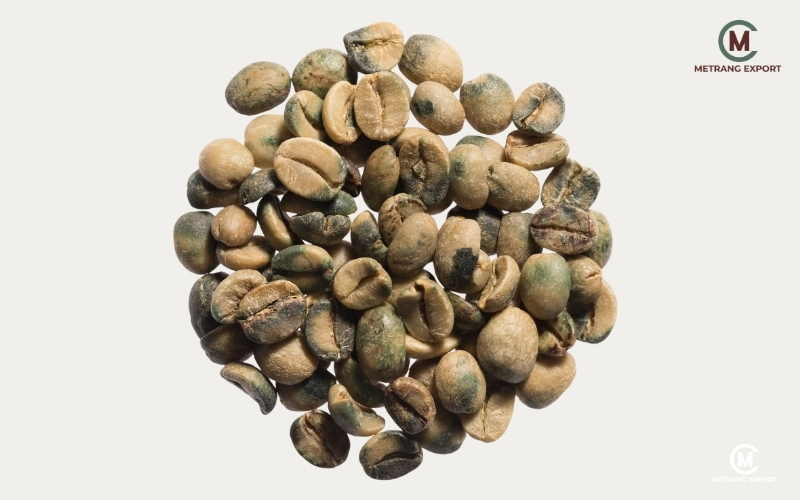
Eliminating black broken green coffee: reliable solutions from MeTrang Export
At MeTrang Export, we do not promise an impossible utopia; instead, we commit to a multi-layered control system that drives the black broken green coffee ratio to the lowest possible threshold according to international standards. Our mission is to ensure maximum safety for your profit margins.
Strict control of black broken green coffee at the raw material source
MeTrang Export believes that quality is not just manufactured in a factory; it must be rooted at the source. We establish rigorous standards for our farmers, prioritizing selective harvesting with a ripeness rate exceeding 95%. This proactive approach effectively eliminates the primary triggers of black beans, such as fungal infections or fruit dropped prematurely on the ground.
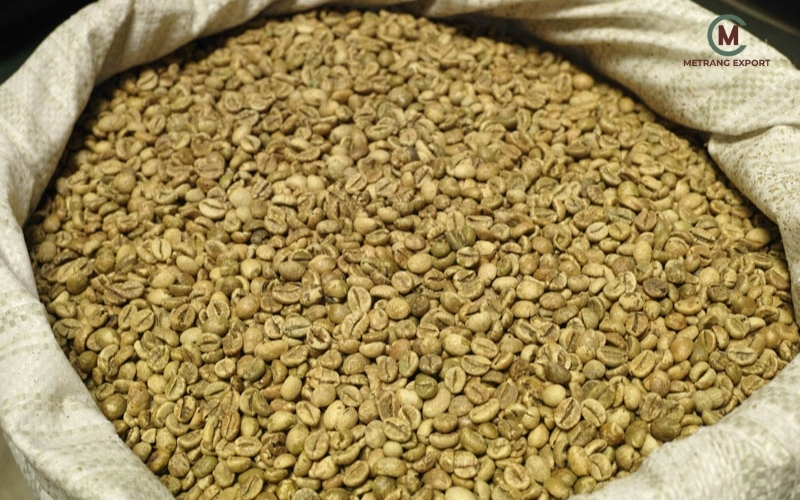
Multi-layered sorting systems and advanced color sorting technology
The core strength of MeTrang Export lies in our deep processing lines, equipped with precision size-grading systems and next-generation color sorters. High-speed optical sensor technology identifies and segregates defective beans based on subtle differences in color and shape. This process thoroughly filters out even the smallest black broken green coffee fragments, ensuring physical uniformity across the entire shipment before bagging.
Conclusion
Black broken green coffee is a small variable that carries massive consequences in the B2B green coffee trade. Proper identification, strict control, and effective elimination of these defects are the keys to safeguarding both profitability and reputation in the international market.
For MeTrang Export, controlling black broken green coffee is not merely a final processing step; it is an integral part of our comprehensive quality standardization system, stretching from the cultivation areas to every export container. We are dedicated to accompanying our partners on the journey of creating sustainable value.
