


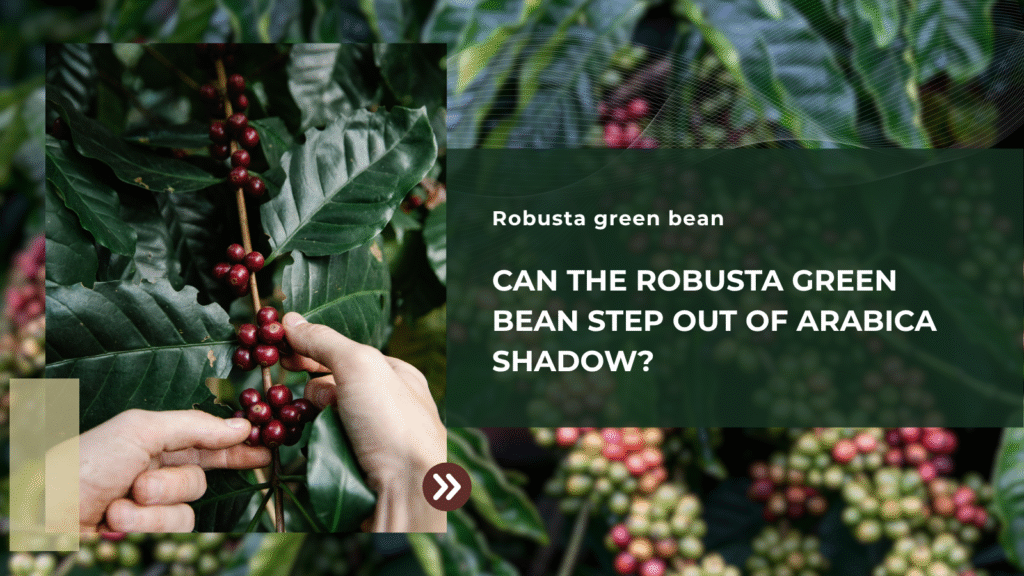
Once seen as just a low-cost alternative to Arabica, the Robusta green bean is now earning a whole new level of respect in the global market. Industry data shows its market share has surged from 25% in the early 1990s to 44% in 2024, and that growth is not slowing down anytime soon.
In this article, MeTrang Export breaks down the natural resilience and unique chemical composition that have made the Robusta green bean a true pillar of the global supply chain.
What is the Robusta green bean and where did it originate?
Originating in the equatorial forests of Central Africa over 150 years ago, the Robusta green bean has journeyed across the globe to build a powerful presence in tropical regions everywhere.

Geographical origins and the global expansion of the Robusta green bean
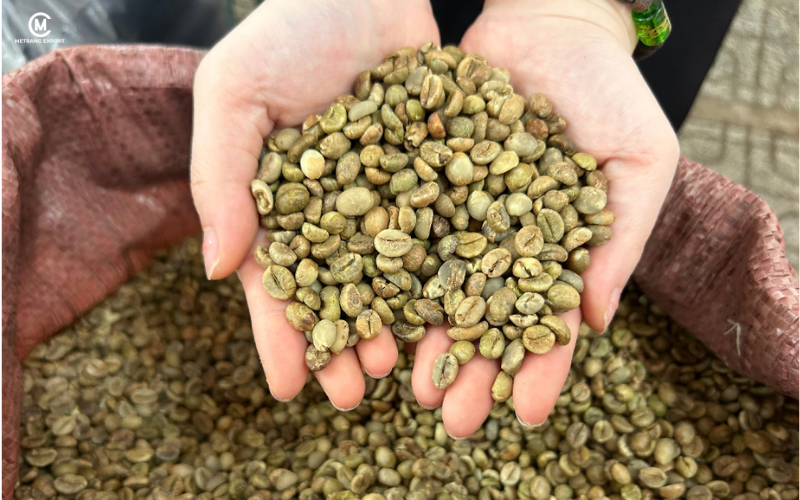
The Robusta green bean (Coffea canephora) traces its roots back to the humid rainforests of Central and West Africa, stretching from Guinea through the Congo to Uganda and Angola. Unlike Arabica, which was domesticated early in Ethiopia and Yemen, commercial farming of the Robusta green bean only began around 1870 in the Congo, using native parent plants from the Lomami River basin.
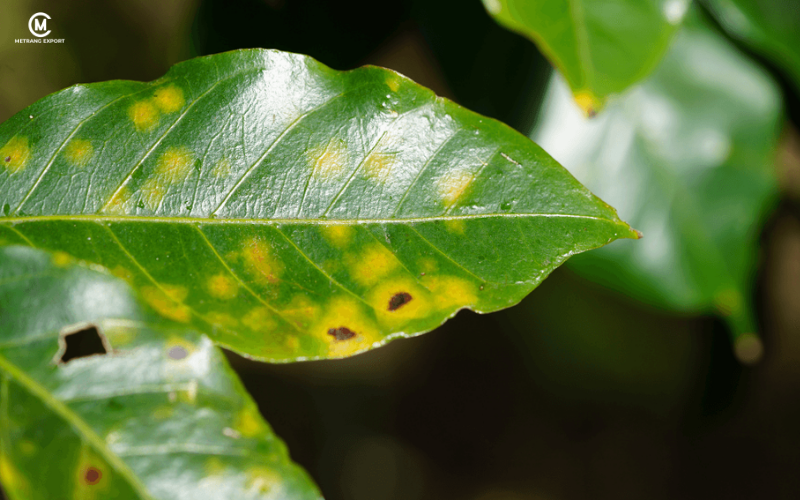
- Late 19th century: Coffee leaf rust disease (Hemileia vastatrix) devastated Arabica plantations across Southeast Asia. Thanks to its superior disease resistance, the Robusta green bean was introduced to Java, Indonesia, as an emergency replacement and quickly took root.
- Early 20th century: From Indonesia, this resilient species spread to India and West Africa, eventually reaching Brazil and Central America between 1930 and 1935.
- Mid-20th century: The instant coffee boom in the 1950s triggered a massive surge in demand. With its high soluble solids content, the Robusta green bean became the go-to choice for instant coffee production over Arabica.
- Late 20th century to present: Vietnam’s rapid emergence following the Doi Moi reforms in 1986 propelled the country to become the world’s top exporter of Robusta green beans, permanently reshaping the global supply chain.
Why does the Robusta green bean thrive in tropical climates?
The widespread success of the Robusta green bean comes down to key biological advantages over Arabica when grown in tropical environments:
- Flexible growing altitudes: The Robusta green bean thrives at altitudes of 200-800 meters above sea level (compared to 800-2,000 meters for Arabica), making it much easier to cultivate across lower plateaus and plains.
- Superior heat tolerance: It enjoys an ideal growth temperature range of 22-30°C, comfortably higher than Arabica’s 15-24°C threshold.
- Natural pest resistance: High levels of caffeine and chlorogenic acids in its leaves act as a built-in biological defense against pests and diseases.
- High crop yields: Yields reach 2,300-4,000 kg/ha, significantly outperforming Arabica’s average of 1,500-3,000 kg/ha.
Chemical structure and the evolving flavor profile of the Robusta green bean
Truly understanding the Robusta green bean requires a closer look at its chemical composition, rather than judging it strictly by traditional commercial standards.
Chemical differences between the Robusta green bean and Arabica
Why is the Robusta green bean so essential in espresso blends? The answer lies in its unique chemical profile, which delivers a rich crema, heavy body, and structural depth that Arabica simply cannot match on its own.
| Chemical indicator | Robusta | Arabica | Commercial application |
| Caffeine Content | 2,2% – 2,7% | 1,2% – 1,5% | Delivers a bold bitterness and stronger stimulating effect; preferred choice for full-bodied products and Espresso Blends. |
| Chlorogenic Acid (CGA) | 7,0% – 14,4% | 4,0% – 8,4% | A natural antioxidant that plays a key role in flavor development and bitterness/body strength during roasting. |
| Soluble Solids | High | Medium | Optimizes extraction yield, delivering strong economic advantages in instant coffee and ready-to-drink (RTD) production. |
| Sugar Content (Sucrose) | 3,0% – 7,0% | 6,0% – 9,0% | Lower sugar levels yield a distinct bitterness, less acidity, and a heavier, more intense cup profile. |
| Lipid & Protein (Crema/Body) | Balanced | High (Lipids) | The balance of lipids and proteins helps build a thick, long-lasting crema; adding 10-30% Robusta significantly enhances body in Espresso. |
Fine Robusta – A major turning point in elevating value
Fine Robusta refers to premium-grade Robusta green beans that are harvested and processed under strict quality controls, scoring 80 points or higher on the Coffee Quality Institute (CQI) standard scale. Instead of the harsh bitterness of standard commercial grades, Fine Robusta offers a rich and complex flavor profile with smooth bitterness, a full body, and a natural sweetness. The rise of Fine Robusta is completely redefining the value of the Robusta green bean on the global stage.
The importance of the Robusta green bean in the global coffee landscape
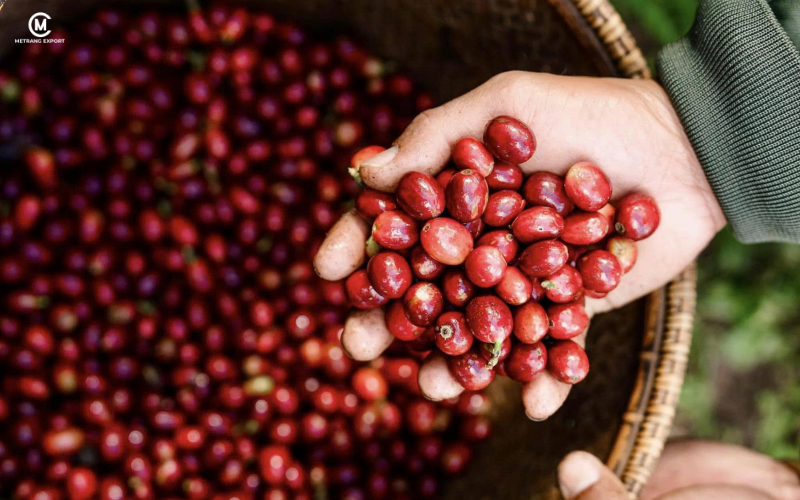
Beyond its impressive production volumes, the Robusta green bean plays a crucial strategic role by filling vital gaps that Arabica leaves behind, both in economic efficiency and technical processing.
What percentage of global production does the Robusta green bean hold?
The market share of the Robusta green bean has been growing steadily. According to data from the United States Department of Agriculture (USDA), total global coffee production reached 174.39 million 60-kg bags in the 2024/25 crop year, with the Robusta green bean accounting for roughly 43% (around 75.7 million bags). Today’s top-producing nations include:
- Vietnam: The world’s largest producer of the Robusta green bean, supplying about 40% of global output. In fact, this bean makes up over 95% of Vietnam’s total coffee production.
- Brazil: The Conilon bean (Brazil’s local Robusta variety) has seen remarkable growth, projected to hit a record 25 million bags in the 2025/26 season.
- Indonesia: Recorded a production of 10.7 million bags in 2024/25, with the Robusta green bean accounting for 9.3 million bags, mainly concentrated in South Sumatra and Java.
Why do industrial roasters rely on the Robusta green bean?
For commercial roasters, incorporating the Robusta green bean is a smart decision for both technical performance and cost efficiency. Its balanced lipid and protein profile helps create a thick, stable crema and a full body, making it an essential ingredient (10-30%) in classic espresso blends.
Additionally, its high soluble solids yield optimal extraction rates for instant coffee and ready-to-drink (RTD) beverages, delivering a consistent, bold taste while keeping raw material costs competitive. High levels of chlorogenic acid (CGA) also make the Robusta green bean a preferred choice for pharmaceutical and cosmetic extraction.

Robusta green bean supply solutions from MeTrang Export
Amid the global rise of the Robusta coffee market, Buon Ma Thuot has emerged as a strategic supply center for international buyers.
Why is the Robusta green bean from Buon Ma Thuot favored globally?
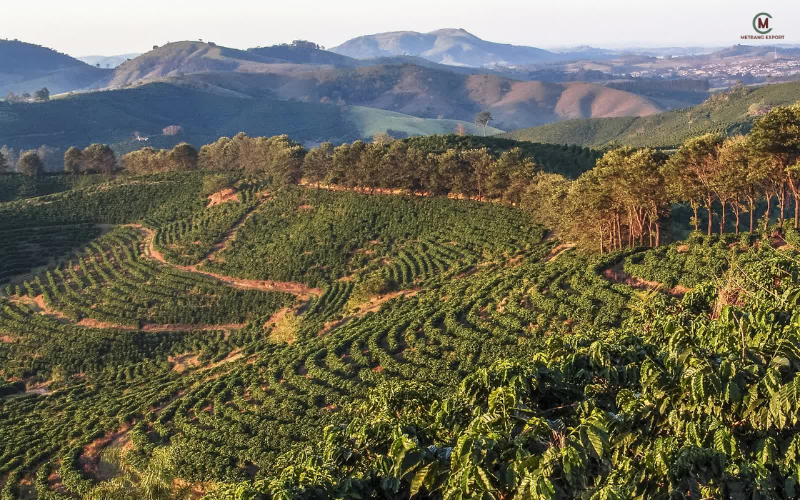
Known as the Robusta capital of the world, Buon Ma Thuot (Dak Lak) benefits from rare natural advantages that optimize the quality of the Robusta green bean:
- Rich basalt red soil: The deep, porous, and nutrient-rich volcanic soil provides optimal nourishment, giving the Robusta green bean its signature bold flavor profile.
- Distinct highland climate: A clear division between wet and dry seasons helps coffee trees thrive, and cherries ripen uniformly, making harvesting and processing much more efficient.
- Leading production capacity: With over 210,000 hectares under cultivation and an annual output exceeding 520,000 tons, Dak Lak accounts for more than 30% of Vietnam’s total production, guaranteeing a stable supply for large-scale export orders.
MeTrang Export’s Robusta green bean portfolio and quality standards
As the official export division of Me Trang Coffee, a brand with over 25 years of industry experience, MeTrang Export offers a diverse portfolio of Robusta green bean to meet varying needs, from large-scale industrial manufacturing to premium specialty segments. Thanks to carefully sourced raw materials and modern sorting and processing lines, every shipment offers high uniformity, precise technical specifications, and rich flavor profiles.
All Robusta green bean products from MeTrang Export comply with respected international certifications, including ISO 22000:2018, FDA, Halal, and FSPCA. This ensures smooth customs clearance across demanding markets such as the EU, the US, Japan, and the Middle East.
Contact MT Export today for detailed technical specifications, product samples, and a quote tailored to your business needs!
Conclusion
The Robusta green bean has become a true pillar of the global coffee industry thanks to core strengths that are hard to replace, from high crop yield and biological resilience to superior caffeine and soluble solids content. Beyond its essential role in commercial production, the rise of Fine Robusta is opening an exciting new chapter, proving that this bean also belongs in the premium segment.
For B2B buyers seeking a stable, high-quality Robusta green bean supply straight from the heart of Buon Ma Thuot, MeTrang Export is your trusted long-term partner. Reach out to our team today to get started!