


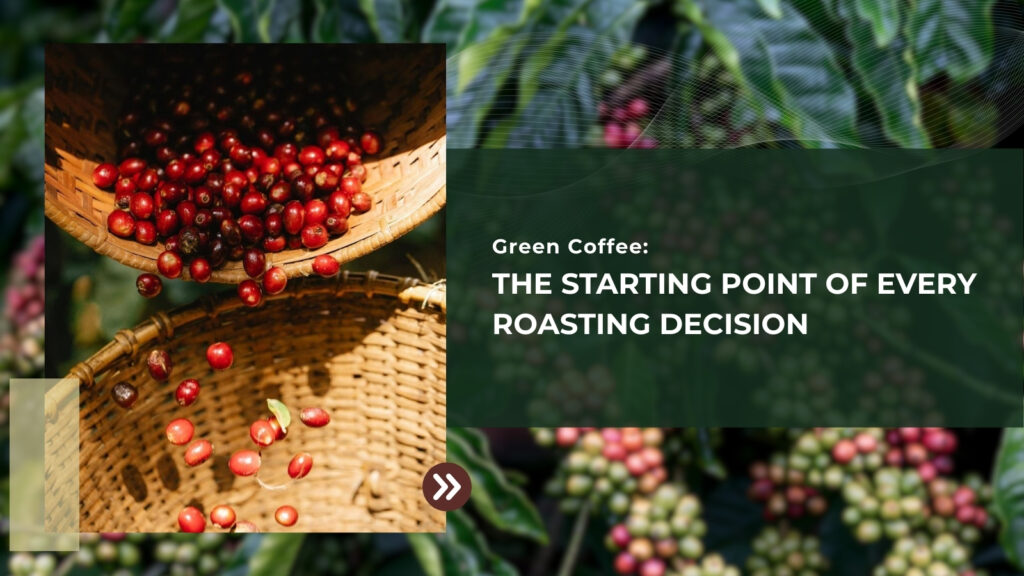
For coffee brands and roasters, green coffee is the starting point of every decision about flavor, quality, and cost. The green bean defines the limits of your roasting profile and the experience that ends up in the cup.
This article from MeTrang Export organizes essential knowledge about green coffee from a roaster’s point of view, covering physical and chemical characteristics, as well as key criteria for selecting a reliable supplier.
Green coffee: Where every flavor story begins
When a brand understands green coffee in depth, each batch of roasting stops being a blind experiment and instead becomes a deliberate step built on a clear raw-material foundation.
Basic definition of green coffee for roasters
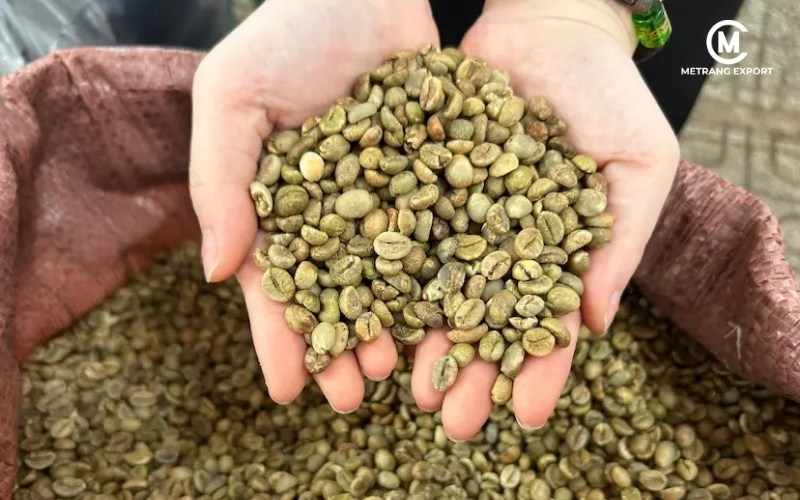
Green coffee has been harvested, processed, and hulled to remove the parchment, but has not yet been roasted.
- On the tree, coffee exists as a fresh cherry, consisting of the outer skin, pulp, mucilage, parchment, and inner bean.
- After harvesting and primary processing, the cherry becomes parchment coffee, where the parchment layer still surrounds the bean.
- Once the parchment is removed by hulling, the inner bean is released and becomes green coffee.

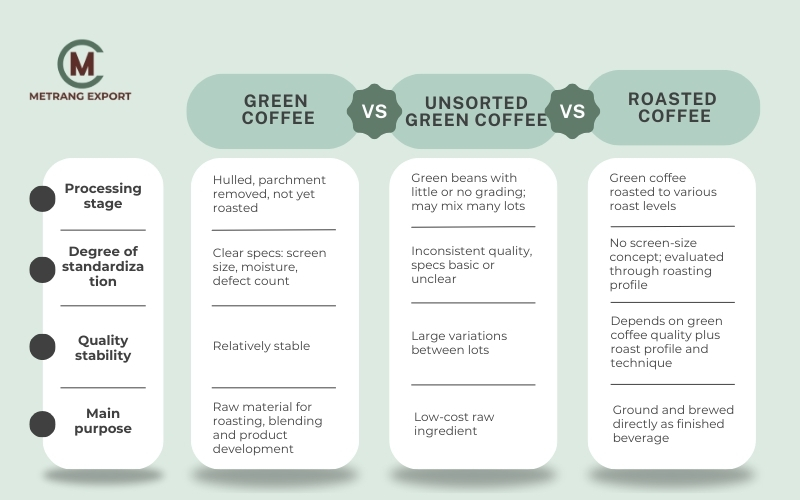
Differences between green coffee, unsorted green coffee, and roasted coffee
Green coffee has already been standardized to a certain level. Unsorted green coffee is still green but remains raw and mixed, often without quality control. Roasted coffee is the final product that reflects both the quality of the green coffee and the roasting technique employed.
Physical characteristics of green coffee
If green coffee is your master file, its physical properties are the metadata that roasters must read correctly from the very beginning.
Shape and size of green coffee beans
For roasters, bean size strongly influences heat transfer during roasting and the uniformity of each batch.
- Bean shape: Arabica beans are usually elongated with a curved center cut, while Robusta beans are rounder with a straighter center cut.
- Bean size: Measured using screen sizes (screen 13, 15, 16, 18, etc.). Larger beans are often classified into higher segments and may require different charge temperatures and development times in the roaster.
Color and surface of green coffee
The color and surface of green coffee provide visual cues about ripeness, processing method, and storage conditions.
- Color: Light green to green‑grey beans usually indicate proper processing and drying, with a stable moisture level.
- Surface: A clean, smooth surface with minimal wrinkles suggests careful handling and good storage. In contrast, dull, uneven, or stained beans may signal defects, poor drying, or re‑wetting during storage.
Moisture and density of green coffee
Moisture content and density are two physical parameters that significantly affect roasting profiles.
- Moisture: Green coffee is generally accepted between 9-13%, with 10-13% often considered optimal for stable storage and predictable roasting behavior.
- Density: High‑density beans (commonly from higher altitudes or favorable growing conditions) tend to have more complex flavor potential and withstand heat better, allowing for more aggressive roasting without scorching.
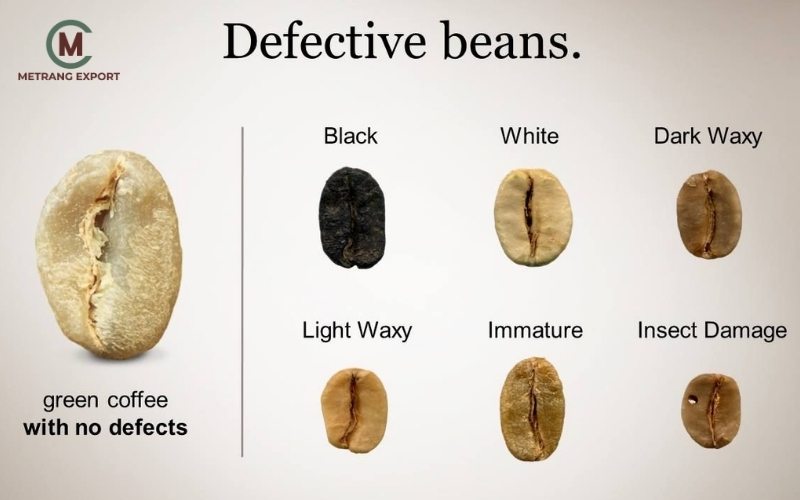
Common defects in green coffee
Defects directly impact quality and can create noticeable off‑flavors in the cup.
- Black or brown beans: Often caused by overripe, dried, or damaged cherries during processing.
- Broken, chipped, or insect‑damaged beans: Reduce roast uniformity and can introduce negative notes.
- Dried cherries, husk, and foreign matter: Burn easily in the roaster and generate smoky or foreign flavors.
Working with suppliers that maintain tight quality control systems, such as MeTrang Export, allows brands to minimize defect rates, improve roast consistency, and reduce operational risk across multiple shipments.
Chemical composition and flavor potential of green coffee
Behind the green‑grey surface of the bean lies a complex chemical structure that ultimately shapes the flavor of the final cup.
Key components in green coffee
- Caffeine: Contributes to bitterness and physiological stimulation. Robusta beans typically contain more caffeine than Arabica.
- Chlorogenic acids and organic acids: Strongly influence perceived acidity and may also contribute to bitterness depending on roast level.
- Sugars (sucrose, glucose, fructose): Fundamental precursors for Maillard and caramelization reactions, creating sweetness and caramel, chocolate, or roasted notes.
- Proteins and amino acids: Participate in aroma‑forming reactions during roasting, supporting complexity and body.
Flavor potential: from green coffee to the cup
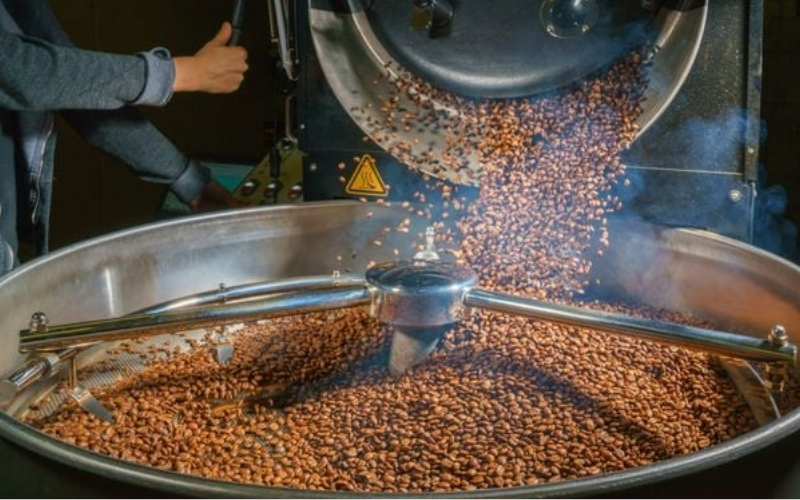
Brands can think of green coffee as a raw data file and roasting as the software that decodes it. If the green coffee has a strong underlying structure, good variety, clean processing, and proper storage, roasting simply unlocks and highlights what is already there.
On the other hand, if the green coffee has many defects, mold, or uncontrolled fermentation, those faults are baked into the bean. The roaster may be able to mask some flaws, but cannot fully remove them.
Factors that shape green coffee characteristics
From variety and origin to harvesting and processing, every factor leaves a discernible mark on the structure of green coffee that roasters should pay attention to.
Coffee Varieties In Green Coffee
Variety is the foundational layer that defines the potential flavor structure, adaptability, and yield of a coffee tree.
- Arabica: Known for more complex aroma and higher acidity, suitable for specialty lines, filter coffees, and premium espresso.
- Robusta: Modern high‑yield hybrids grown in Vietnam are notable for high caffeine content and heavy body, well-suited for cost‑optimized segments and blends.
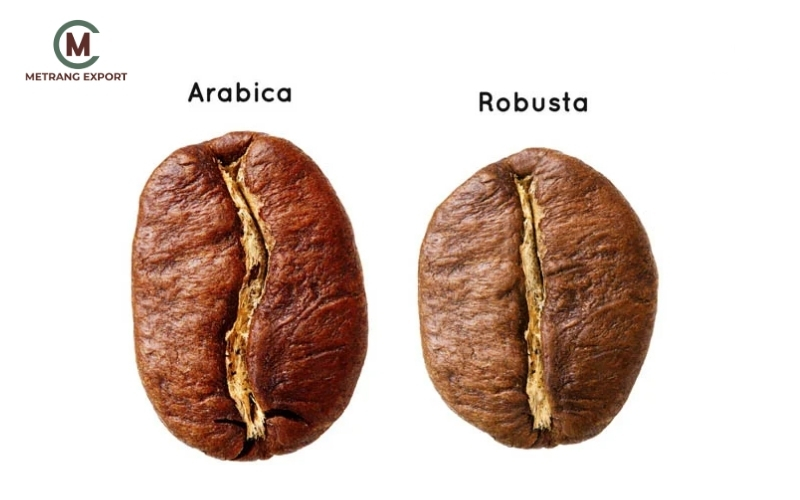
Depending on product strategy, roasters can work with 100% Arabica, 100% Robusta, or flexible blends. A diverse portfolio of green coffee varieties and pre‑designed blends from MeTrang Export makes it easier for brands to standardize product ranges for each target segment.
Origin, altitude, and climate
Origin is a combination of ecological conditions that directly influence green coffee.
- Altitude: For Arabica, higher elevations generally correlate with higher density and greater flavor complexity. For Robusta, cooler and more elevated microclimates often deliver better quality compared with lowland farms.
- Climate: Impacts growth rate, ripening time, and the ability of the plant to accumulate key chemical components in the bean.
- Soil: Mineral composition, structure, drainage, and topsoil depth all contribute to subtle differences in cup profile.
Processing methods and their impact on green coffee
Processing is one of the most powerful levers for differentiating flavor on the same variety and origin.
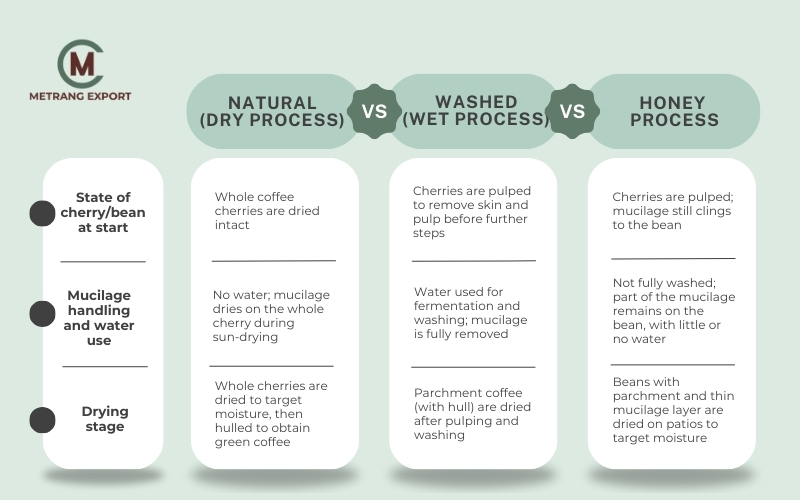
For roasters, understanding the processing method of each lot makes it easier to match the right green coffee to tailor roasting profiles that emphasize each process’s strengths.
Conclusion
For coffee brands, green coffee defines the creative range of roasting profiles, the stability of product quality, and the cost efficiency of every cup served. As the official export arm of Mê Trang Coffee, MeTrang Export brings deep expertise in sourcing, processing, quality control, and exporting green coffee to a variety of international markets.
Contact our team today to discuss your requirements, receive our latest product portfolio, technical specifications, and sample offers. MeTrang Export is committed to helping your brand make roasting decisions on a solid foundation of consistent, well‑matched green coffee aligned with your long‑term business strategy.
FAQ about green coffee for roasters and B2B buyers
Having a clear picture of green coffee characteristics helps brands build stable supply chains with professional partners like MeTrang Export.
How long can green coffee be stored?
Under good storage conditions, green coffee can maintain acceptable quality for 12-24 months. However, many roasters prefer to use beans within 6-12 months from hulling in order to prioritize freshness and a more vibrant cup profile.
If your brand needs detailed guidance on warehouse conditions tailored to specific markets and product lines, MeTrang Export can support you in designing and optimizing your storage procedures.
Why is green coffee preferred in international trade?
Most global coffee transactions are carried out in the form of green coffee.
- Greater stability: Green beans retain their flavor potential far longer than roasted beans, making them suitable for ocean freight and extended storage.
- More control for roasters: Each brand can design its own roasting profiles for different markets, segments, and sales channels.
- Optimized logistics and production costs: Importing green coffee lets companies roast and pack in the consuming market, closer to the final customer.
For B2B buyers, working directly with a trusted green coffee supplier such as MeTrang Export enhances control over technical specifications, delivery conditions, and the ability to customize products to long‑term brand strategies.
What should you look for in a green coffee supplier?
Brands should prioritize several core criteria when evaluating green coffee suppliers:
- Transparent origin information: Clear data on variety, origin, altitude, processing method, and crop year.
- Comprehensive technical specs: Moisture, screen size, defect and foreign‑matter levels, and density, all backed by test results.
- Quality‑management systems: Use of standards such as ISO, HACCP, FSSC, and relevant sustainability certifications.
- Supply and logistics capability: Stable volumes, ability to scale when demand grows, flexibility in Incoterms, ports of shipment, and packaging formats.
MeTrang Export designs its green coffee solutions around these very criteria, positioning itself not only as a supplier but also as a technical partner accompanying brands in their product‑development journey.