


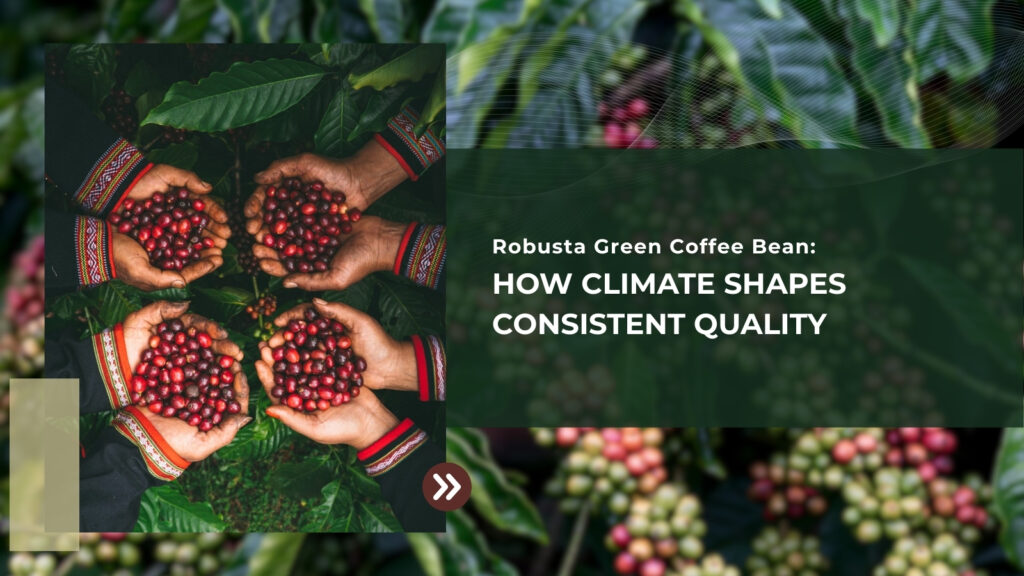
For Robusta green coffee bean procurement, consistency has never been a roastery-only issue. Every swing in weather patterns leaves a measurable footprint on bean size, uniformity, and ultimately the sensory outcome in the cup. This creates a complex challenge for roasters and F&B brands: how can a stable Robusta profile be maintained while climate conditions become increasingly extreme and less predictable?
From the Central Highlands (Tây Nguyên) perspective, MeTrang Export approaches Robusta green coffee bean as a system-spanning origin, harvest timing, post-harvest handling, and the export pipeline to port. By understanding and managing each link in that system, brands can build a medium- to long-term supply plan that remains commercially secure.
Robusta green coffee bean: the origin map and Vietnam’s advantage
For roasters and brands, understanding the development history and the global origin map of Robusta green coffee bean is a practical starting point.


The history of the Robusta coffee tree
Robusta coffee (Coffea canephora) originates from Central Africa, particularly around the Congo River basin. This species performs well under higher temperatures, stable humidity, and low-to-medium elevations, so it was quickly cultivated across tropical regions.
As coffee evolved into a widely consumed beverage and spread from Africa to the Arabian Peninsula, then to Europe and colonial territories, the need to expand cultivation pushed growers and traders to identify varieties suitable for lower-elevation climates. Robusta emerged as a strategic answer, forming the foundation for today’s global Robusta cultivation network.
The global production map for Robusta coffee
Today, Robusta is grown across multiple regions, with production shares distributed relatively clearly by continent:
- Asia: Vietnam, Indonesia, and India are major Robusta producers, contributing close to 60% of global Robusta output. This makes Asia a core supply zone for many importing markets.
- Africa: Uganda, Côte d’Ivoire, and Cameroon remain both a historical origin base and a meaningful contributor, supplying nearly 10% of global Robusta and serving key routes into Europe and the Middle East.
- Latin America: Brazil and neighboring countries contribute more than 30% of global Robusta output, complementing the region’s traditional Arabica structure.
This map confirms that Robusta is a truly global category. However, each origin still carries its own signature. That is exactly why selecting the right origin and the right purchasing partner matters.
H3: Where does Vietnam rank in the Robusta green coffee bean market?
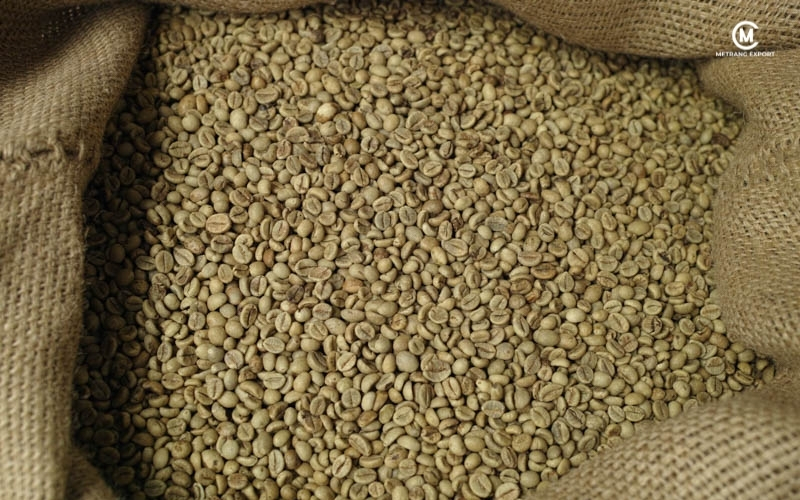
Coffee was introduced to Vietnam by the French in the late 19th century and expanded significantly after the Đổi Mới (1986) reforms. Vietnam is not only the world’s second-largest coffee exporter overall but also a leading producer of Robusta green coffee bean, with an annual output of around 2 million tons and contributing close to 40% of global Robusta supply in many recent crop years. Choosing a supplier in Vietnam offers clear advantages for brands:
Scale and supply capacity: Large Robusta production gives exporters the ability to serve stable, long-term orders.
Room for segmentation: Within Robusta green coffee bean, supply can be tiered from baseline commercial grades to lots managed more strictly for cleanliness, uniformity, and traceability.
MeTrang Export focuses on key Robusta-growing areas in Vietnam’s Central Highlands, building procurement networks and quality-control systems to supply Robusta lots aligned with different business objectives.
Robusta green coffee bean: how natural conditions shape bean quality
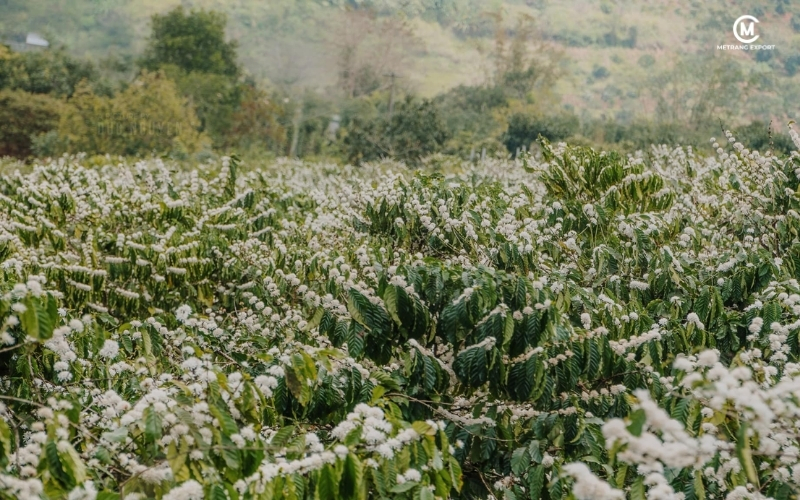
Natural conditions do not only determine yield. They also shape density, bean size, uniformity, and the sensory potential of each Robusta green coffee bean lot.
Seasonal rhythm guides flowering and fruit development
For Robusta, the wet–dry season rhythm plays a defining role in the growth cycle:
- During the rainy season: trees flower, set fruit, and develop cherries. Balanced rainfall, humidity, and sunlight keep foliage healthy, support active root systems, and enable cherries to gradually expand and accumulate dry matter. A steady rainfall rhythm typically results in green beans that tend to be fuller, heavier, and more uniform.
- During the dry season: ripened cherries enter a naturally favorable drying window. A stable dry season supports harvesting and post-harvest handling, improving drying efficiency and reducing mold risk.
In Vietnam’s Central Highlands, the clearer separation between rainy and dry seasons helps produce Robusta green lots with stronger physical appearance and better controllability in roasting. Through local procurement networks, MeTrang Export selects and standardizes lots that match the requirements of demanding brands.
How soil and water influence Robusta green coffee bean quality
Soil and water are both growth foundations and long-term drivers of Robusta green coffee bean quality.
- Soil: Many Central Highlands Robusta areas are planted on mineral-rich red basalt soils. These soils retain water well yet still drain effectively, supporting deep, healthy root development.
- Water: Natural rainfall patterns, combined with irrigation capability in some areas, help reduce plant stress. Prolonged water shortage can lead to smaller cherries and underdeveloped green beans; waterlogging can weaken roots, raise disease risk, and increase fruit drop.
How extreme weather disrupts Robusta green coffee bean harvest outcomes
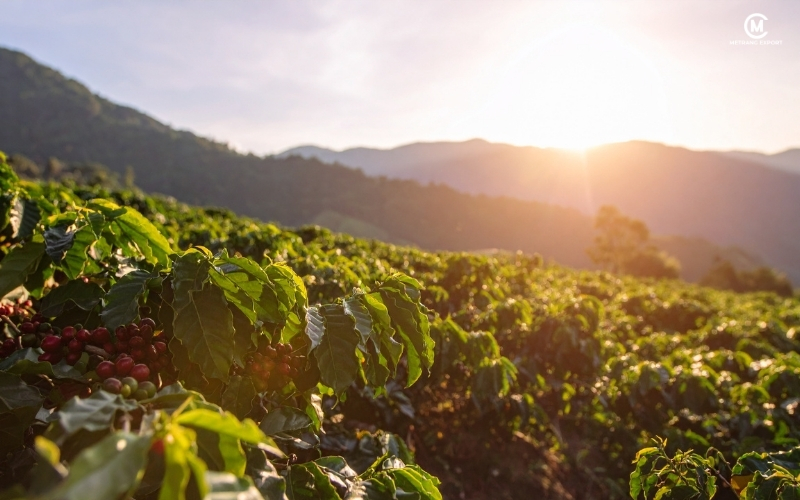
Extreme weather can quickly turn a promising crop into a difficult season for both farmers and roasters.
Drought reduces yield and uniformity in Robusta green coffee bean lots
When drought persists and irrigation is limited, Robusta trees reduce growth as a protective response.
- Trees often reduce fruit development, resulting in smaller cherries and green beans that are smaller, lighter, and less uniform.
- Flowers and young cherries drop more easily, lowering yield and creating uneven development across a farm, where cherries mature at different rates and quality becomes harder to control.
Unseasonal rain drives volatility in Robusta green coffee bean supply
Rain arriving at the wrong time or at unusual intensity can create multiple downstream issues:
- Rain during peak flowering can cause blossoms to drop and reduce fruit set, or trigger multiple flowering rounds, which later produce uneven ripening.
- Heavy rain close to harvest increases the risk of fungal disease, cherry cracking, and fruit drop, while also disrupting drying and processing.
As a result, Robusta green coffee bean lots may fluctuate in both volume and quality, forcing brands to adjust inventory plans, procurement schedules, and even blend formulas. In this context, working with a partner that understands local seasonality, such as MeTrang Export, helps reduce sourcing risk when weather patterns shift.
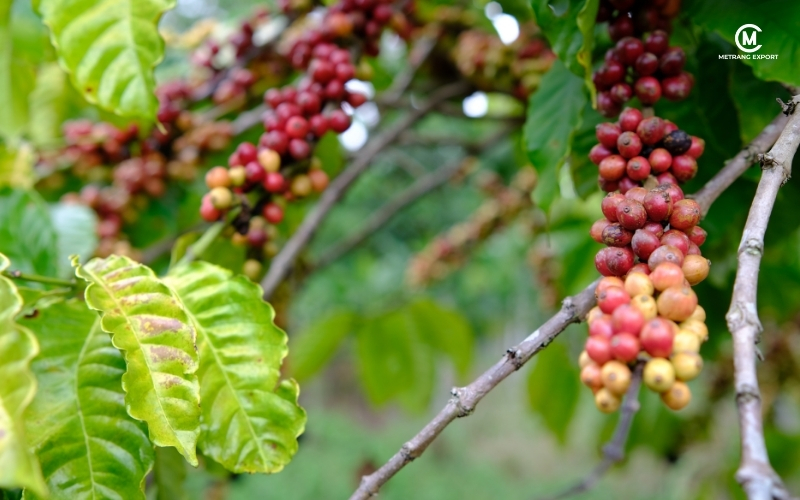
Farm-level practices make the difference in Robusta green coffee bean lots
Within the same origin zone and the same weather year, farm practices can still create differences across Robusta green lots.
Top 5 farming practices that determine consistency
Field experience in producing regions consistently shows that several practices play a key role in maintaining stable Robusta green coffee bean quality:
- Managing planting density and canopy structure: Trees receive sufficient light without heat shock. Better airflow reduces pest and disease pressure and supports more stable fruit development.
- Fertilization based on real needs: Applying the right nutrients at the right time helps avoid deficiency or excess, both of which can reduce fruit quality.
- Proactive irrigation: Irrigation systems reduce the impact of abnormal dry spells, keep trees healthier through the dry season, and support more stable flowering and fruit set.
- Timely pest and disease management: Early detection and treatment limit yield loss and prevent prolonged stress.
- Selective harvesting: Prioritizing ripe cherries while limiting green cherries on trees is directly linked to better uniformity, cleaner lots, and stronger sensory potential.
The Central Highlands farmers’ playbook for maintaining output
In the Central Highlands, many farmers have gradually developed practical approaches to adapt to weather volatility while protecting output:
- Closely monitoring crop timing and weather forecasts to flex irrigation, pruning, and fertilization schedules.
- Combining traditional experience with technical guidance from cooperatives, purchasing companies, or support projects.
- Participating in farmer groups or cooperatives to better meet quality requirements from roasters and exporters.
Through its farmer-partnership networks in the Central Highlands, MeTrang Export can translate market requirements into origin-level practices and procure directly from farms, helping secure Robusta green coffee bean lots that meet higher expectations from B2B customers.
Conclusion
A Robusta green coffee bean is not simply an unroasted bean. It is the outcome of climate, soil, water, farming practices, and how procurement systems are organized and executed. As climate conditions change, the challenge of quality consistency cannot be solved only by adjusting roast profiles; it must begin at the origin and be managed through the supply chain.
For roasters and brands, understanding the link between climate, seasonality, farm practices, and lot quality supports more accurate purchasing decisions, more flexible blend design, and lower operational risk.
When that perspective is paired with a Central Highlands–experienced B2B partner such as MeTrang Export, brands can build a Vietnam Robusta green coffee bean sourcing strategy that remains strong on quality, while staying proactive against future climate volatility.