

 Tiếng Việt
Coffee Knowledge, Me Trang Activities
What Is Robusta Honey? Exploring Its Quality Standards And Commercial Impact
Mar
For decades, Robusta coffee has been associated with high-yielding, bold-flavored beans that form the foundation of the global coffee industry. However, as the market shifts toward higher values in flavor, stability, and sustainability, Robusta has also embarked on a repositioning journey.
Robusta Honey stands as one of the most significant turning points in that journey, where exporters like MeTrang Export play the role of a bridge, transforming the potential of Vietnamese Robusta beans into tangible value in the international market.
What is the Robusta Honey method and the appeal of its processing?
Robusta Honey is not merely a new processing method; it is the result of a search for a solution that balances sensory quality and economic efficiency in Robusta coffee production.
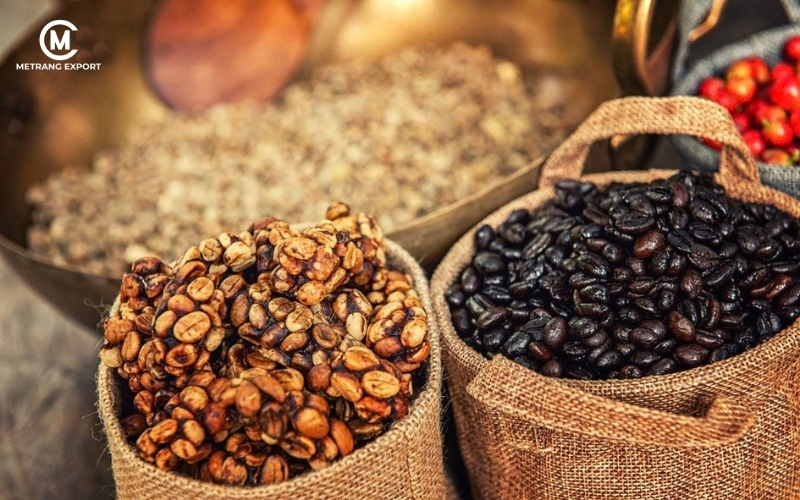
The concept of Robusta Honey in the chain of processing methods
In the world of coffee processing, the Honey method is considered an intelligent hybrid, inheriting the advantages of both traditional methods (washed and natural). To fully understand Robusta Honey, we must place it within the context of the processing value chain:
- A unique intermediate position: While the washed process focuses on completely removing the mucilage to achieve clarity, and the natural process keeps the whole cherry to seek intensity, the Honey process removes the outer skin (pulp) but retains the sugar-rich mucilage layer. This mucilage is the core element that gives the product its name and signature flavor profile.
- The flavor formation mechanism: The name Honey does not imply the use of actual honey; rather, it refers to the mucilage becoming sticky and turning a dark golden color like honey during drying. Throughout this process, the mucilage acts as a natural fermentation medium. The sugar and acid content in the mucilage permeate back into the coffee bean, transforming the inherent flavor structure of Robusta, enhancing sweetness, and minimizing harsh bitterness.
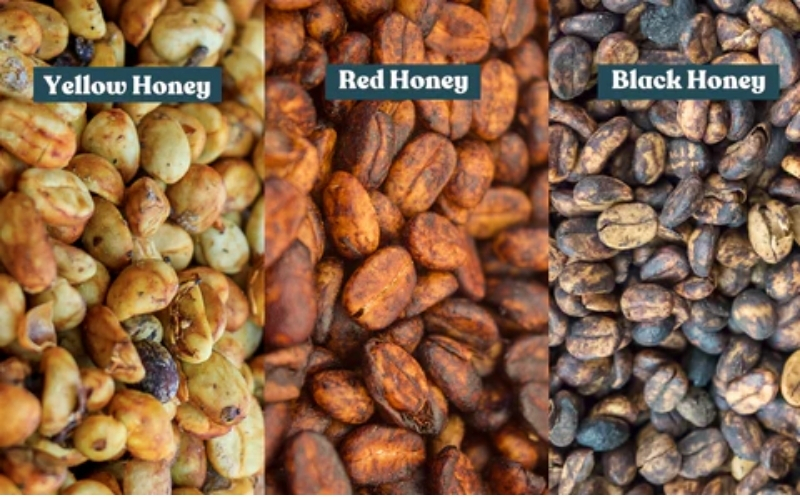
- Diversity in color gradients: The concept of Robusta Honey is further categorized based on the percentage of retained mucilage and drying techniques, creating products with distinct flavor profiles:
- White & Yellow Honey: Retains less mucilage and is dried under intense sunlight, resulting in a clean and light flavor.
- Red & Black Honey: Retains nearly all the mucilage and is dried in shaded or covered conditions to prolong fermentation, creating a heavy body and bold notes of ripe fruit.
Why is the Honey method a turning point for Robusta coffee?
With natural characteristics of prominent bitterness and high caffeine content, traditional Robusta often faces limitations when approaching premium consumer segments. The Honey method helps soften the flavor structure, enhances natural sweetness, and reduces harshness, thereby opening up broader applications for Robusta in modern roasting.
For roasters, Robusta Honey is no longer just a supplementary ingredient but has become a strategic choice to optimize costs amidst high volatility in Arabica prices.
Robusta Honey quality control process
Robusta Honey is not just clean coffee; it is a line of coffee with a processing mindset, where technical intervention transforms the inherent qualities of traditional Robusta beans.
Key stages in the Robusta Honey processing pipeline
The Robusta Honey process is a combination of moisture control techniques and fermentation timing to maximize the preservation of natural sugars.
- Harvesting and sorting ripe cherries: Only ripe cherries with standard sugar content (Brix) are selected for production. Subsequently, water tanks are used to completely remove floaters (hollow cherries) and impurities.
- Pulping: The pulping machine removes the outer skin while retaining the sugar-rich mucilage layer. The ratio of retained mucilage determines the color gradient and flavor profile of the Honey line (Yellow, Red, or Black).
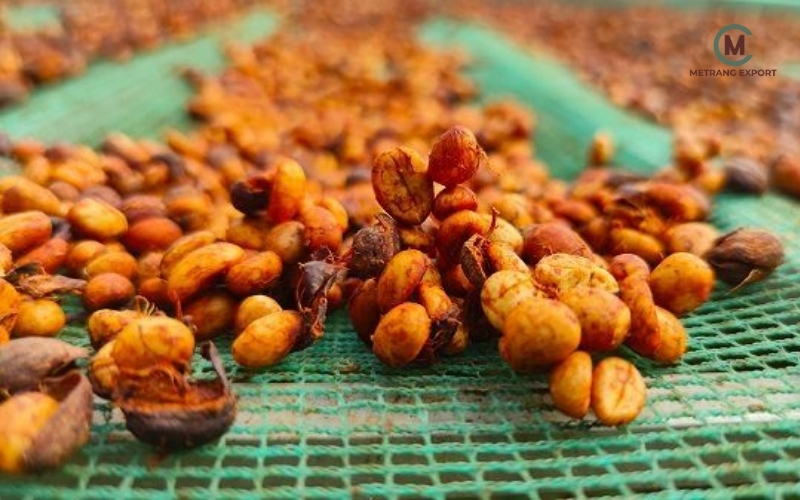
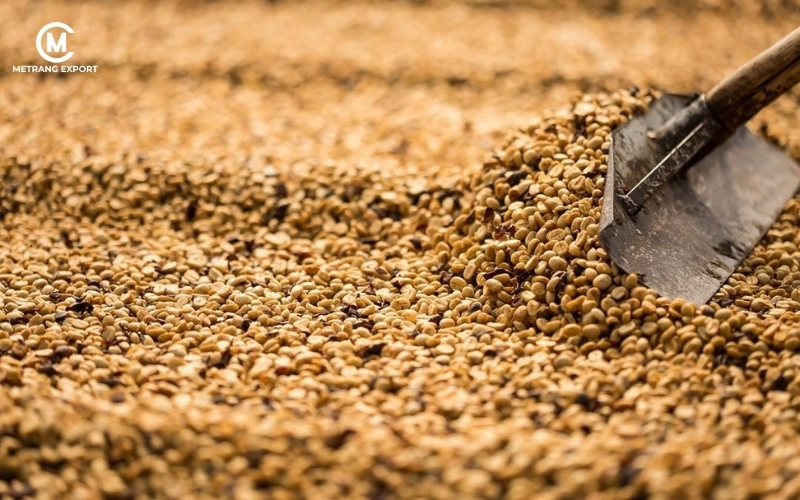
- Controlled drying: Coffee is spread on raised beds inside solar houses to avoid dust and environmental humidity. Continuous raking during the “slow drying” phase allows the honey sugars to permeate deeply into the green beans without causing mold.
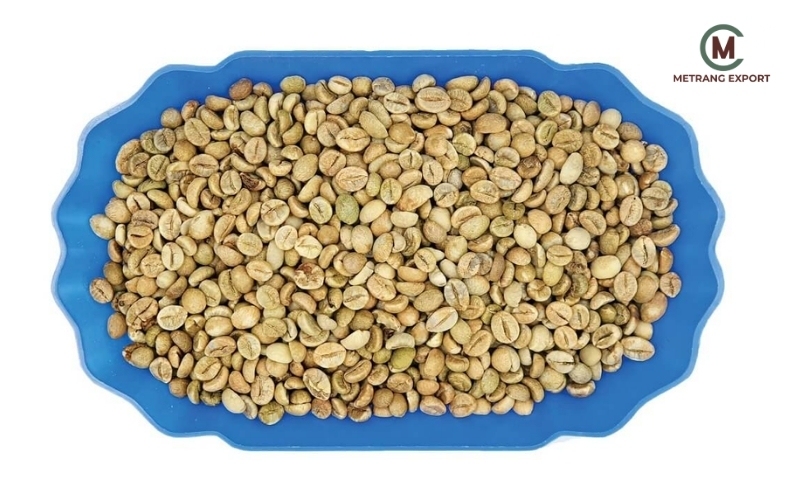
- Dry milling and green bean grading: Finally, the dried parchment is removed. The green coffee beans are graded by size (screen 16, 18) and color-sorted to eliminate defects, making them ready for export.
Technical factors affecting green bean quality
To guarantee the quality of Robusta Honey, suppliers must focus on key technical parameters:
- Mucilage thickness and drying time: The balance between these two factors determines whether the flavor is clean or intense. If the mucilage layer is thick but ventilation is insufficient, the beans are prone to becoming over-fermented.
- Drying bed hygiene: Because the mucilage is very sticky and sugar-rich, drying beds must be kept clean to prevent cross-contamination, ensuring a clean cup with a clear aftertaste.
- Solar house temperature: Maintaining a stable temperature ensures an even sugar osmosis process, creating a heavy and smooth body for the Robusta beans.
Flavor profile and application potential of Robusta Honey
One of the primary reasons Robusta Honey is gaining increasing attention is the distinct difference in the final cup experience.
Distinct sensory characteristics of Robusta Honey
Compared to traditionally processed Robusta, Robusta Honey possesses a more pronounced natural sweetness, a heavy body, and a well-rounded mouthfeel. Notes of chocolate, caramel, and ripe fruit are often clearly present, while the harsh bitterness is significantly tempered. This improvement makes Robusta Honey more accessible to modern consumers, particularly in markets traditionally accustomed to Arabica.
Practical applications of Robusta Honey in modern roasting
Robusta Honey is widely applied in espresso lines, milk-based coffees, and is especially effective in premium blend recipes. With its ability to provide excellent body and sweetness, this coffee line helps roasters build stable, easy-to-control profiles while optimizing raw material costs. Amidst the supply pressures on Arabica, Robusta Honey has become a rational alternative that does not compromise on quality.
Commercial value of Robusta Honey in the global market
The growth of Robusta Honey clearly reflects the restructuring trend within the global coffee industry.
The shift toward high-quality coffee lines
The global market is witnessing the rise of Fine Robusta. Major consuming countries such as the US, EU, Japan, and South Korea are gradually replacing harsh-tasting commodity coffee with Robusta Honey, featuring clean profiles and a sweet aftertaste. This shift helps optimize costs compared to Arabica while still ensuring a premium experience. Robusta Honey not only creates a thick, silky Crema for Espresso but also meets the standards for manual brewing. MeTrang Export is proud to supply international-standard raw materials, helping partners stay ahead of these stringent market tastes.
Economic advantages and supply stability of Robusta Honey
Robusta Honey is a smart economic solution due to its high stability against climate change, reducing the risk of supply chain disruptions compared to Arabica. With its resilience and steady yields, it serves as a strategic alternative for global roasters. Despite being priced 20-30% higher than traditional coffee, Robusta Honey delivers significant profit margins by elevating final product quality. Leveraging the advantage of vast raw material regions in Vietnam and professional logistics, MeTrang Export commits to a stable supply and consistent quality year-round.
Conclusion
Robusta Honey is a testament to the evolution of Robusta coffee in response to increasing market demands. Through a combination of processing techniques, improved flavors, and commercial advantages, Robusta Honey is steadily asserting a new position for Vietnamese coffee on the world map. In the journey to elevate the value of Vietnamese beans, MeTrang Export focuses on developing high-quality Robusta Honey solutions, accompanying international roasters with a stable, transparent supply that aligns with modern market needs.
