

 Tiếng Việt
Coffee Knowledge
How the Chemistry of Unroasted Coffee Beans Matters in B2B Export
Dec
In the international coffee trade, unroasted coffee beans (green coffee beans) are often evaluated by physical characteristics. Yet behind those physical specs lies a far more decisive layer – the chemical map. This map determines flavor potential and roast performance of every shipment your brand receives.
Drawing on years of experience supplying and exporting unroasted coffee beans, MeTrang Export helps brands connect the numbers on chemical spec with what actually shows up in the cup.
Key chemical components in unroasted coffee beans
The chemistry of unroasted coffee beans can be grouped into several main families. Each group leaves its own imprint on the flavor and structure of the roasted coffee.
Water and moisture in unroasted coffee
Most of the water in unroasted beans exists as bound water, locked inside the cell walls.
- Standard moisture for export-grade unroasted coffee beans is typically 9-13%.
- Excess moisture increases the risk of mold, fermentation, and condensation inside containers.
- Too little moisture makes beans dry and brittle, resulting in harsh cups with limited depth.
For B2B export, moisture is a critical baseline indicator. MeTrang Export controls moisture tightly, minimizing quality risks at the destination.
Carbohydrates and sugars are drivers of sweetness and color
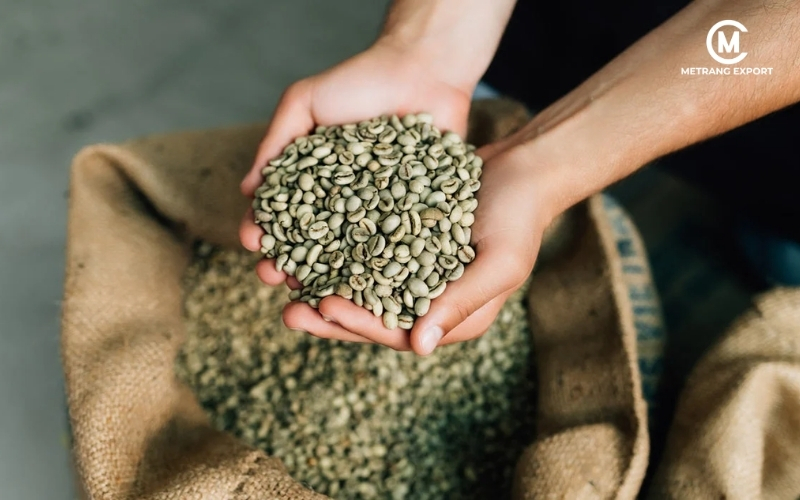
Carbohydrates form a large proportion of unroasted coffee beans. As temperature rises, sugars participate in Maillard reactions and caramelization, creating:
- The characteristic golden-brown color of roasted beans
- Sweet notes reminiscent of caramel, honey, chocolate, and toffee
The amount and distribution of sugars are especially important for espresso and specialty lines where sweetness and color development are tightly controlled.
Organic acids, pH, and perceived acidity
Organic acids shape the language of acidity in the cup. Typical contributors include:
- Citric acid: bright, citrus-like acidity similar to lemon or orange
- Malic acid: softer, reminiscent of apples and pears
- Tartaric acid: associated with grape or wine-like acidity
- Acetic acid: vinegar-like; at low levels, it can be interesting, but excessive amounts suggest over-fermentation
- Chlorogenic acids (CGA): abundant in unroasted coffee beans, contributing to both acidity and part of the bitterness after roasting
These acids affect:
- The style of acidity (sparkling and bright vs. heavy and muted)
- The stability of flavor over time, as some acids degrade faster than others during storage and roasting

Proteins, amino acids, and the Maillard backbone
Proteins and free amino acids in unroasted coffee beans are the building blocks of roast aroma. When they meet sugars under heat, they engage in complex chains of Maillard reactions, transforming into hundreds of aromatic compounds.
The richer the foundation of proteins and amino acids, the wider the spectrum of aromas a roaster can unlock – a major advantage for product lines focused on flavor experience and differentiation.
Caffeine and lipids in unroasted coffee beans
Caffeine and lipids heavily influence perceived strength and body metrics that B2B buyers routinely monitor.
- Caffeine: drives the characteristic bitterness and physiological “kick” of coffee.
- Lipids (coffee oils): contribute to body, texture, and mouthfeel. They are the base for crema in espresso and help create the satisfying, coating sensation that many consumers enjoy.
What Happens Chemically When Unroasted Coffee Beans Are Roasted?
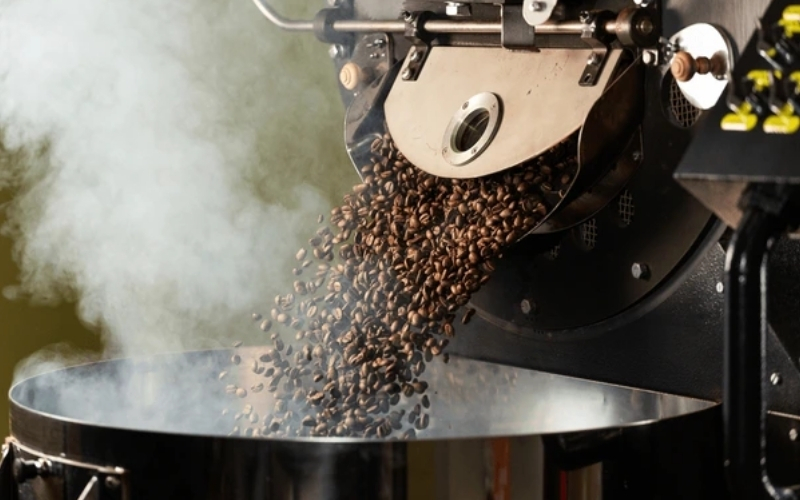
Once unroasted coffee beans enter the roaster, their chemical map is transformed through a series of thermal reactions.
Maillard reactions – the aroma factory
The Maillard reaction is a series of reactions between amino acids and reducing sugars that occurs at temperatures above 140-150°C. It generates numerous aroma compounds that roasters describe as nutty, bready, chocolate-like, and more. The intensity and character of Maillard reactions depend on:
- The type and concentration of amino acids and sugars in the unroasted coffee beans
- The roast profile: rate of rise, development time before and after first crack, and overall roast degree
Caramelization and the Development of Sweetness
Caramelization is the thermal breakdown of sugars, becoming more pronounced around 160-180°C. As sugars decompose and reorganize, they generate:
- Darker color in roasted beans
- Sweet, complex notes of caramel, toffee, butterscotch, and honey
Lots with stronger carbohydrate and sugar foundations tend to show a broader sweet range during roasting. MeTrang Export can provide cupping notes and suggested roast levels for each shipment to support product development.
Chlorogenic Acid Decomposition and the Balance of Acidity and Bitterness
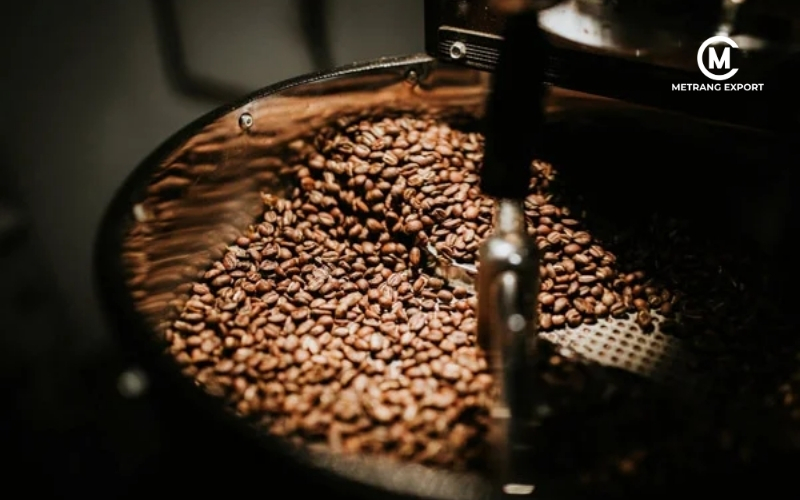
Chlorogenic acids play a dual role as adding to perceived acidity and bitterness. During roasting:
- Part of the CGA pool breaks down into caffeic acid and various lactones, which can create a pleasant, structured bitterness.
- If the roast is poorly managed, the balance between acidity and bitterness shifts unfavorably, leading to sharp sourness, harsh bitterness, or an uncomfortable aftertaste.
From farm to container: factors shaping the chemistry of unroasted coffee beans
The chemistry of unroasted coffee beans is from genetics and terroir to processing and storage.
Variety and genetic line
Variety sets the first layer of the chemical blueprint.
- Arabica: higher in organic acids, lower in caffeine, ideal for bright acidity and complex aromatics.
- Robusta: higher in caffeine and CGA, suitable for blends requiring high body, clear bitterness, and strong impact.
MeTrang Export works with multiple varieties in key growing regions, allowing customers to build a portfolio of unroasted coffee beans aligned with diverse product strategies.
Growing region, soil, and climate
Origin combines altitude, climate, and soil.
- Influences how the tree synthesizes carbohydrates, acids, and secondary metabolites
- Creates subtle differences between regions, even with the same variety, two origins may exhibit distinct chemical and sensory profiles
In B2B export, origin information typically appears on product specifications. MeTrang Export can provide traceable origin data for each lot, supporting storytelling for roasted-coffee products.
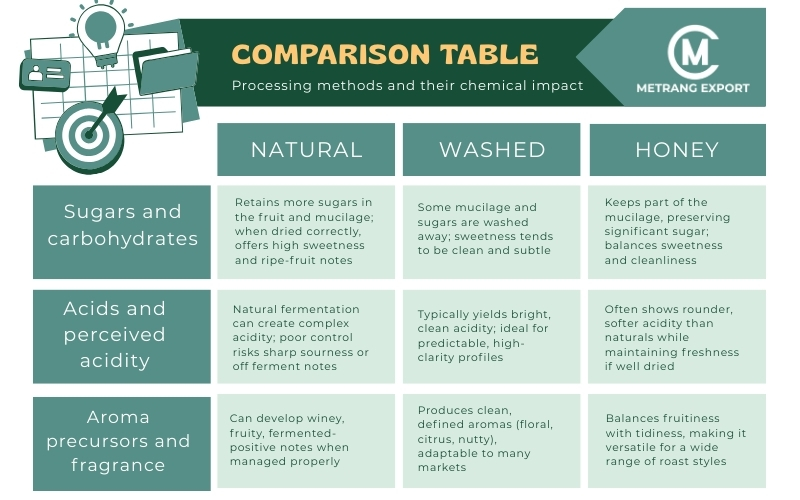
Processing methods and their chemical impact
In practice, three processing methods dominate: natural, washed, and honey. Each intervenes at different stages of the cherry and leaves a unique signature on the chemistry of the unroasted coffee beans.
Storage and Warehouse Management
Even after excellent processing, unroasted coffee beans can undergo unwanted chemical changes if:
- Warehouse humidity is too high or fluctuates dramatically
- Temperature swings widely between day and night
- Beans are exposed to foreign odors, insects, or mold
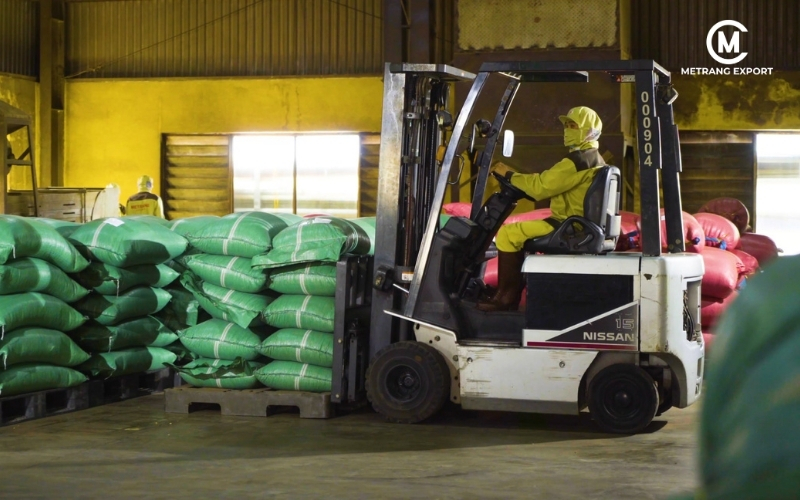
For B2B export, pre-shipment storage management is a critical link. MeTrang Export maintains clear procedures for warehouse conditions and performs periodic checks, helping reduce quality risk both at shipment and at the importing market.
How the chemistry of unroasted coffee beans impacts B2B export
In B2B trade, the chemical characteristics of unroasted coffee beans directly connect to certificates of analysis (COA), legal requirements, and market standards.
Different Requirements Across Import Markets
Each importing region has its own regulatory framework for food safety, residue levels, contaminants, and quality standards as well as distinct consumer preferences. Some European markets enforce strict limits on ochratoxin A (OTA) and pesticide residues. Other markets may prioritize strong, full-bodied profiles and higher caffeine content.
With multi-market experience, MeTrang Export supports brands in adjusting specs, choosing origins, and selecting product lines that fit each target market.
Metrang Export – A Partner That Understands Unroasted Coffee
As the official export brand of Mê Trang Coffee, MeTrang Export goes beyond simply shipping goods:
- Deep understanding of the value chain from farm to container, including both physical and chemical variables of unroasted coffee beans.
- Robust quality-control systems, combining physical inspection, chemical analysis, and cupping for each lot.
- Ability to align technical parameters, green-bean selection, and logistics with the long-term needs of B2B buyers.
This makes Metrang Export a reliable partner for brands seeking a stable, traceable, and technically supported supply of unroasted coffee beans.
Conclusion
The chemical profile of unroasted coffee beans is the hidden map that determines flavor potential, roast performance, and lot-to-lot stability in B2B export. With long-standing experience in coffee, MeTrang Export helps partners build supply chains of unroasted coffee beans based on clear data, strict quality control, and practical knowledge of each market segment.
Contact MeTrang Export today for technical consultation, samples, and detailed information on unroasted coffee beans suitable for your long-term roasting strategy.
FAQ About Unroasted Coffee Beans for B2B Buyers
- Which chemical indicators matter most when buying unroasted coffee beans?
For B2B export, key indicators include:
- Moisture: directly affects quality, stability, mold risk, and shipping weight.
- Caffeine content: crucial for products that emphasize strength or for designing Arabica-Robusta blends.
- Acidity-related metrics: provide an initial view of how acidity and bitterness may present in the cup.
Depending on your product direction and target market, additional indicators can be added. Metrang Export can advise on a suitable test panel for each customer group.
- Do chemical characteristics significantly affect real roasting profiles?
Yes. Roast profiles and technique are important, but if the underlying unroasted coffee beans are not suitable, roasting adjustments can only offer partial fixes. Chemistry underpins:
- Maillard reactions, caramelization, and acid degradation in the roaster
- How the bean absorbs and distributes heat, influencing flavor development
- The resulting sweetness, acidity, bitterness, body, and cleanliness of the final cup
- How does Metrang Export control quality and chemical indicators?
Metrang Export operates a multi-step quality-control process:
- Origin and processing control: working with partners that follow clear standards for harvesting, drying, and storage.
- Physical and sensory checks: screening for size, defect rate, and moisture, combined with cupping for each lot.
- Lot-tracking and verification: comparing sample results with the actual shipment condition before export.
This system supports B2B buyers in managing risk, meeting import standards, and maintaining consistent cup quality across seasons.
