


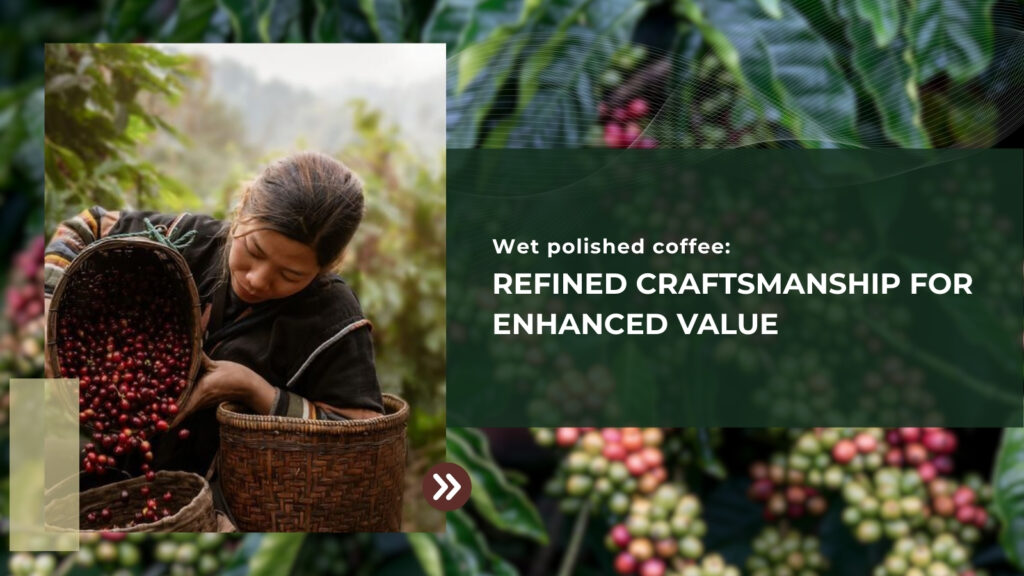
In the context of an increasingly demanding global coffee market, the boundary between a standard shipment and a Premium product line often lies in the smallest details on the bean’s surface. If flavor is considered the soul of coffee, then its appearance is the first business card that builds trust in B2B transactions. The technique of producing wet polished coffee was born not just for cleaning purposes, but as a meticulous refining process, helping Vietnamese coffee beans present themselves with a completely different level of class.
At MeTrang Export, we do not view polishing as a simple mechanical processing step. We consider it a refined art based on scientific foundations, where every mechanical impact must be calculated to both enhance aesthetics and fully preserve the original value and innate qualities inside the green bean.
Wet polished coffee as the final finishing step in dry milling
Many buyers assume polishing is part of wet processing or natural processing. In practice, wet polished coffee belongs to the dry-milling stage, performed at the mill after coffee has completed drying and stabilized at the target moisture level.
Wet polished coffee under a technical lens: What exactly is polished?
To understand wet polished coffee, it helps to visualize the anatomy of a coffee cherry and what remains after each layer is removed:
- Outer skin and pulp: the red/yellow skin surrounding sugar-rich pulp and mucilage
- Parchment: the thin protective husk that surrounds the seed during drying
- Silverskin: an ultra-thin membrane that clings tightly to the green bean surface
- Green coffee bean: the core raw material that roasters purchase and transform

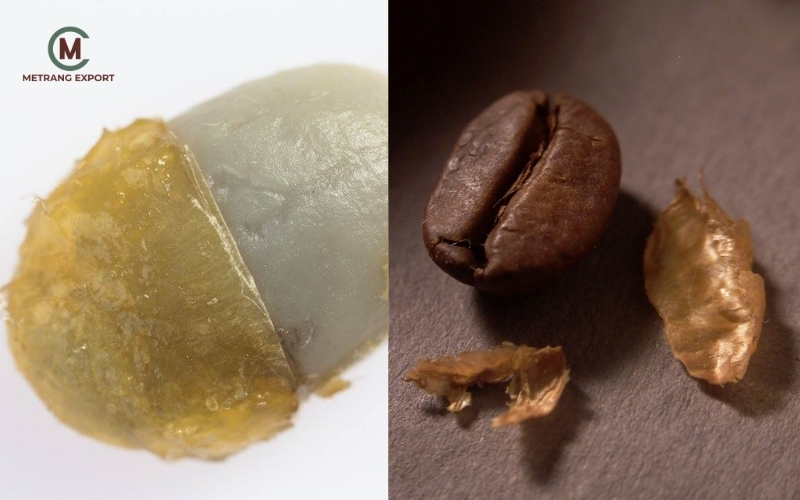
Technically, wet polished coffee refers to green coffee beans that have already had parchment removed (hulled) and still carry residual silverskin, fine dust, and minor surface deposits. These beans are passed through a dedicated polishing machine to remove silverskin remnants, micro-dust, and small adhered particles.
Why wet polished coffee matters in B2B export standardization
In international B2B trade, uniformity is a credibility signal. A wet polished coffee lot delivers value in several practical ways:
- Appearance standardization: removal of silverskin flakes and fine bran dust improves visual consistency and lowers the risk of moisture retention during long storage
- Quality transparency: a cleaner surface makes physical defects easier to detect, enabling optical sorting to operate with higher precision
- Professional impression: for buyers in markets such as Japan or the EU, a smooth, clean surface indicates disciplined dry-mill execution and robust quality management
How mills create a smooth, consistent surface wet polished coffee
A polished surface is not achieved by simply spinning beans in a machine. It is the result of trained technicians working with calibrated equipment and defined parameters.
Two technical directions: Wet polishing vs. dry polishing processing
In practice, there are two main polishing approaches for green coffee:
- Dry polishing: relies purely on mechanical friction. It can be suitable for coffees where silverskin separates easily, or when buyers prefer a slightly more natural look. The advantage is simplicity and minimal impact on bean moisture.
- Wet polishing: a more refined technique. A micro-mist spray is introduced into the polishing drum. The moisture acts primarily on the silverskin layer, softening it so it can be removed more efficiently through friction. The result is a deeper, gemstone-like finish, often preferred for premium-facing shipments.
Depending on market requirements, mill conditions, and buyer objectives, MeTrang Export coordinates with dry mills to select the appropriate polishing direction, balancing aesthetics, operating cost, and quality safety.
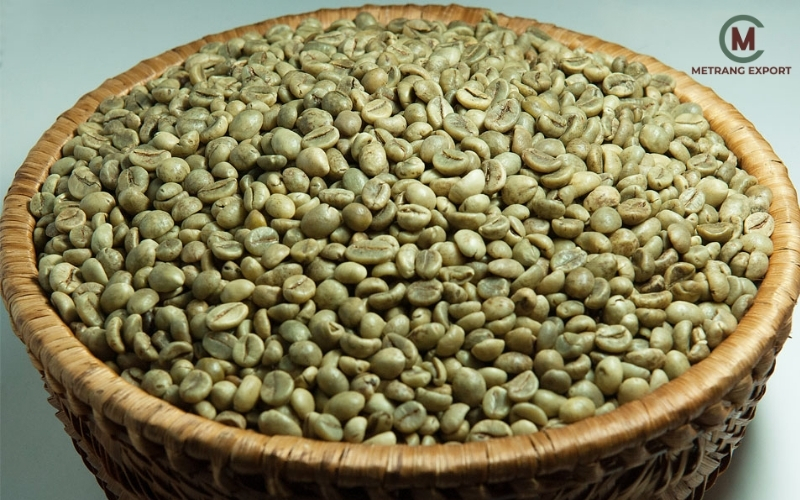
Wet polished Coffee physical changes: What actually shifts in the lot
After polishing, changes are typically observed across three areas:
- Surface: silverskin, dust, and minor deposits are removed, revealing a smoother, brighter surface and stronger visual uniformity
- Weight: Lot weight can decrease slightly due to the removal of silverskin and dust, an expected trade-off for a cleaner presentation
- Dust and impurities: reduced dust in bags improves handling hygiene during transport, unloading, and hopper charging in roasteries
Wet polished Coffee risk management
A common mistake in dry milling is overusing friction. Excess friction generates heat and can compromise green coffee quality. At MeTrang Export, flavor safety remains the priority.
Wet polished Coffee heat control: protecting lipids and freshness
Friction-generated heat is normal physics. However, if the temperature inside the polishing drum rises too high (often referenced around 50°C and above), lipids inside the bean can migrate toward the surface – an oil release effect that accelerates oxidation. Faster oxidation can reduce shelf stability and may increase the risk of rancid notes during roasting.
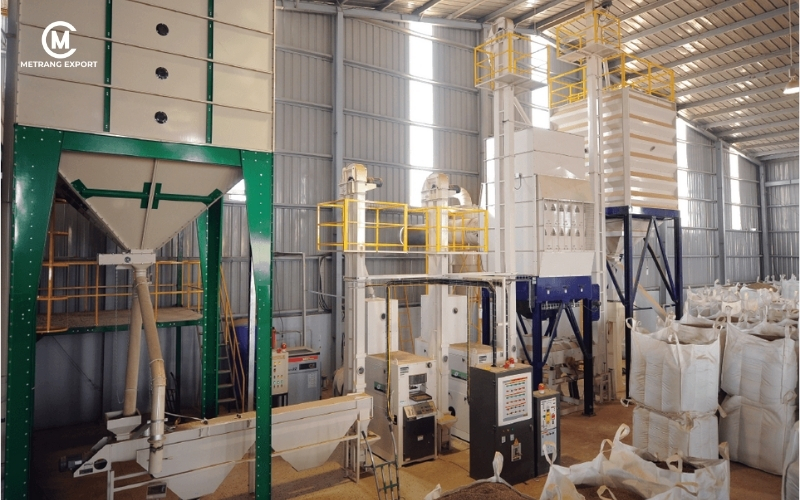
To manage this, MeTrang Export works with systems and partners that regulate drum speed and airflow/pneumatic circulation to keep heat within an appropriate window, so beans become visually cleaner while the core remains stable.
Wet polished Coffee moisture and water activity (Aw) thresholds
Alongside temperature, moisture, and water activity (Aw) should be monitored before and after polishing:
- If beans are too moist when entering polishing, surfaces soften and deform more easily, raising storage risk
- If beans are too dry, surfaces become brittle and chip more easily, creating fragments and dust, which works against the goal of cleaner bags
- If Aw is high, microbial risk increases; when Aw is stabilized at safe levels, shelf life improves, and sensory quality stays more consistent over time
Wet polished coffee benefits for B2B roasters and brands
When used correctly, wet polished coffee delivers more than aesthetics. It creates measurable advantages for roasting performance and brand credibility.
Wet polished coffee reduces fine dust and improves roasting efficiency
Professional roasters do not choose polished beans only because they look better – they choose them for operational performance.
- Cleaner systems: silverskin can detach in the roaster, forming chaff. Excess chaff can clog exhaust systems, raise fire risk, and require frequent cleaning. Polished beans can reduce this operational burden.
- Cleaner cup: silverskin can scorch early and contribute woody or smoky taints that mask desirable aromas. Reducing silverskin supports a cleaner cup.
- More uniform heat transfer: with less silverskin acting as a barrier, heat contact becomes more consistent, supporting even development and more predictable Maillard reactions.
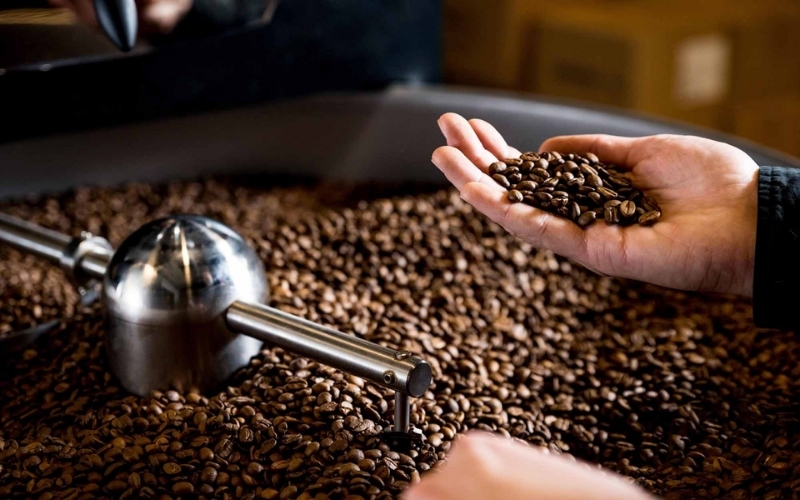
Wet polished coffee strengthens brand credibility through consistent appearance
In competitive B2B markets, green-bean appearance is not merely aesthetic. It is a non-verbal proof of process discipline. A wet polished coffee lot with smoother surfaces and consistent color signals rigorous QC from dry milling through final finishing. For many buyers, this is the first confirmation that the supplier’s system can meet tighter expectations, not only for looks, but for overall shipment integrity.
Wet polished coffee supply by specification: MeTrang Export’s B2B approach
MeTrang Export does not treat wet polished coffee as a one-size product. Each order is designed around the partner’s target use, market positioning, and QC requirements.
Wet polished coffee export customization
Based on each market’s preference, MeTrang Export works with partners to clarify usage goals (product fit, customer segment, roast style), then recommends origin zones, species, and primary processing methods. Requirements are standardized into a shared specification sheet and approved samples, giving both sides one consistent language to evaluate lots.
With this approach, wet polished coffee becomes a planned component of a brand’s product strategy, not just an attractive option.
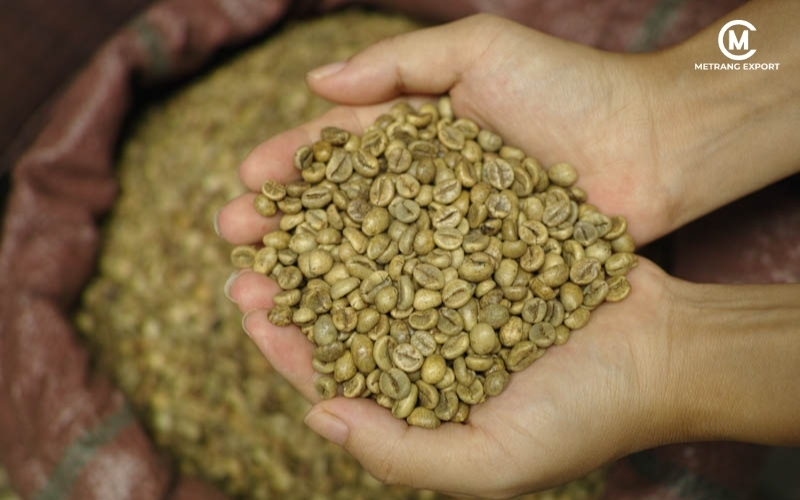
Wet polished coffee sample-to-shipment consistency commitment
To narrow the gap between what is approved on paper and what arrives in containers, MeTrang Export follows a unified sample-to-shipment workflow from sampling and detailed specs to roast trials, cupping feedback loops, and QA/QC checkpoints.
We understand the buyer’s pain point when shipments fail to match approved samples. Through strict QA/QC, MeTrang Export aims to maintain a consistent level of polishing, silverskin cleanliness, and water activity control in shipped lots, as approved by the sample.
Conclusion
Wet polished coffee is not just a product; it is a statement of refinement and modern quality discipline. Through precision surface finishing, green beans become more visually premium, operationally cleaner for roasters, and more reliable for global trade partners.
With MeTrang Export, each lot leaving the mill is not only polished on the outside but protected on the inside, preserving freshness, safeguarding cup potential, and helping B2B buyers elevate brand credibility through standardized, specification-led supply.