

 Tiếng Việt
Coffee Knowledge
Why Robusta Beans Are Vietnam’s Trump Card On The Global Coffee Map
Dec
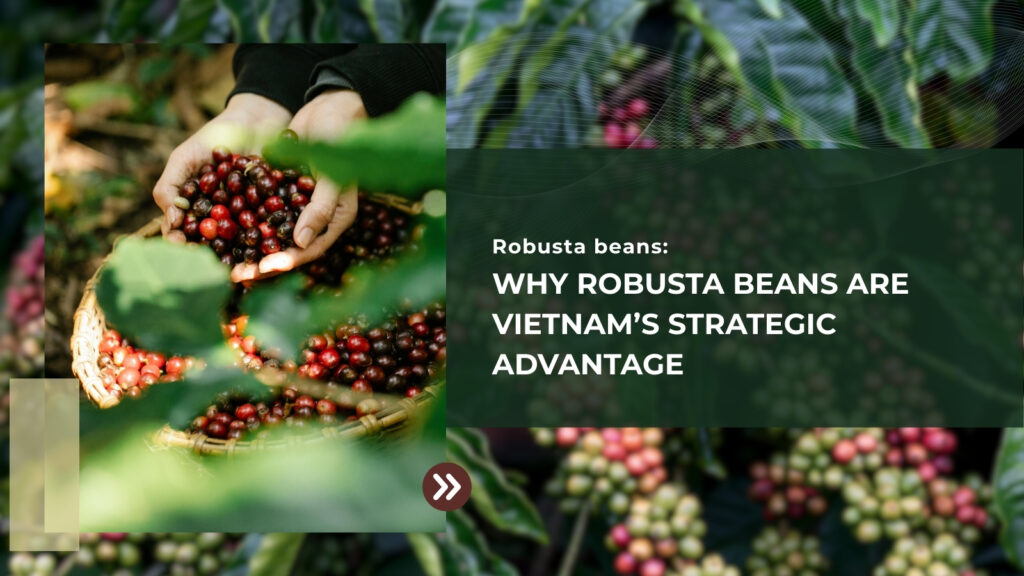
If Arabica is often celebrated for its smooth aroma and bright acidity, Robusta beans are the backbone of the global coffee trade, with high volume, hardy trees, and a key foundation for espresso blends and the instant coffee industry.
Vietnam is currently the world’s largest producer of Robusta beans, accounting for more than 40% of the global Robusta output. Building on that advantage, MeTrang Export works as a B2B partner, helping roasters access standardised green Robusta beans with lot traceability and a fast quotation turnaround.
Where do Robusta beans come from?
Understanding the origin of Robusta beans and their biological differences helps roasters and brands choose the right raw material for their product goals.
What is the origin of Robusta beans?
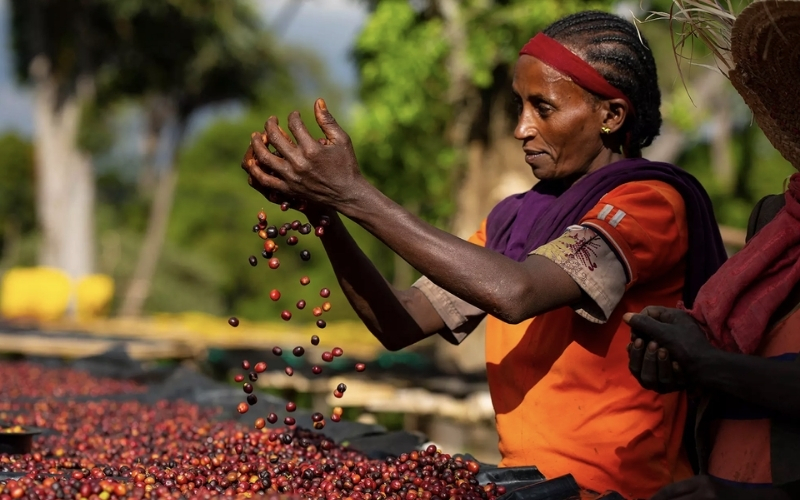
Robusta (Coffea canephora) is a coffee species whose beans originate from wild coffee populations in sub‑Saharan Africa, especially the humid forests of West and Central Africa. From there, it spread across tropical belts and quickly became popular in commercial farming thanks to key traits:
- Strong adaptation to hot, humid climates and higher rainfall
- Hardy growth with better resistance to certain common diseases than many Arabica varieties
- Relatively stable yields, suitable for large-scale cultivation
These factors make Robusta a major choice for tropical countries, including Vietnam.
How are Robusta beans different from Arabica beans?
Robusta thrives in warmer conditions, tolerates heat better, and performs well in regions with relatively high rainfall, making it suitable for many lowland and mid-elevation tropical zones.
| Criteria | Arabica | Robusta |
| Flavour & cup structure | Softer, aromatic, multi-layered | Bolder and heavier; more pronounced body; stronger bitterness |
| Caffeine | ~1.1–1.5% | ~1.5–2.7% (can be up to double Arabica) |
| Plant vigour & farming cost | Prefers cooler climates (higher elevation, lower temperatures); farming costs can be harder to optimise depending on the region | Generally more resilient; often more cost-competitive (tolerates hot/humid conditions well and delivers high yields in many contexts) |
Distinguishing between Robusta and Arabica coffee trees.
The development journey of Robusta beans in Vietnam
Vietnamese Robusta is not simply a story of “more volume wins”. Vietnam’s strength lies in finding the right core growing region and building a production, purchasing, processing, and export ecosystem at a scale that supports B2B contracts.
How Vietnam’s Robusta beans scaled up
Brands can imagine the Vietnamese Robusta journey as a layered evolution:
- Robusta first proved its advantage in hot, humid regions with a clear rainy-dry seasonal rhythm, helping trees grow steadily by cycle.
- The Central Highlands, with basalt soils and plateau terrain, became the core region, forming concentrated coffee areas that are easier to organise for purchasing.
- As market demand grew, the purchasing – processing – logistics ecosystem became more standardised, allowing companies to work consistently by lots and specifications.
==>> See also: Vietnamese Robusta Coffee Beans: Competitive Advantage For Roasters
Key regions for Robusta beans in Vietnam
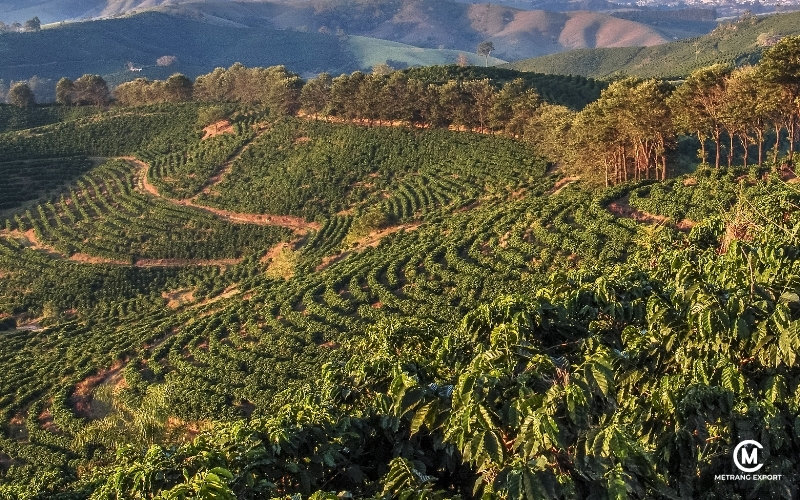
The Central Highlands is the flagship region behind Vietnam’s Robusta advantage.
- Core-region scale: Robusta grown across five Central Highlands provinces (Dak Lak, Dak Nong, Gia Lai, Lam Dong, Kon Tum) accounts for roughly 92% of Vietnam’s Robusta output, across about 577,000 hectares, with an average yield of around 2.7 tons/ha.
- Harvest season: Vietnam typically has one main coffee harvest per year; Robusta is usually harvested in the main season from around October to February (depending on region and weather).
MeTrang Export works directly with farming households in the Central Highlands and maintains a local representative office, supporting a stable Robusta supply and convenient lot traceability for partner brands. Contact MeTrang Export today.
Why Robusta beans are Vietnam’s competitive strength
Vietnam’s Robusta advantage does not come from one single factor. It is the combined effect of climate, soil, terrain, and especially the ability to organise production and export at scale, creating a durable competitive edge.
Vietnam’s tropical monsoon climate
Robusta trees, the source of Robusta beans, perform best in hot, humid climates, with an optimal temperature range of about 22-30°C. In Vietnam’s Central Highlands, average temperatures are around 20-24°C, with two relatively distinct seasons: a rainy season (roughly May-October) and a dry season (roughly November-April). This seasonal rhythm provides direct advantages for both cultivation and green-bean processing.
- Two-season rhythm synchronises flowering and fruit development: the dry season creates a recovery window for trees to accumulate energy and differentiate flower buds; when early rains arrive, flowering is more concentrated, making ripening more seasonal and quality control easier.
- Rainy season supports cherry development: ample moisture helps beans develop more steadily, reducing unevenness across plants.
- Dry season supports post-harvest processing: harvest often falls at the end of the rainy season and into the dry season (around October to February), where sunnier, drier conditions support drying and moisture control for green coffee.
==>> See also: How the Chemistry of Unroasted Coffee Beans Matters in B2B Export
Basalt soil and plateau terrain
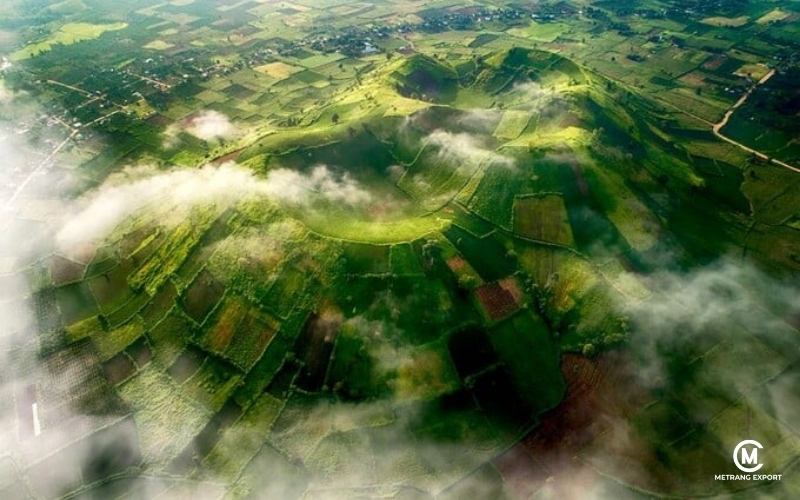
The Central Highlands features red basalt soils formed from volcanic material, typically deep, mineral-rich, and well-structured, creating a strong foundation for Robusta development.
- Mineral-rich, deep soil layers: support healthy growth and steadier cherry development.
- Good drainage with balanced moisture retention: porous structure helps roots develop, reduces waterlogging risk, and maintains adequate moisture during fruit development.
- A stable, concentrated origin on a plateau: concentrated highland basalt regions make it easier to organise farming, purchasing, and processing by procedures, supporting consistent specs and lot stability.
Vietnam’s advantage in the Robusta beans scale and export supply chain
From a B2B perspective, Vietnam’s advantage goes beyond natural conditions. It includes the ability to deliver a stable, compliant supply on schedule.
- More reliable procurement planning: Vietnam is the world’s No.1 Robusta exporter and also ranks among the largest coffee exporters overall. In crop year 2022/23, an estimated 1.5 million tons of Robusta were exported, with an approximate value of US$3.2 billion. This scale enables brands to plan monthly/quarterly procurement and build long-term contracts.
- Concentrated origins enable spec standardisation: sourcing from a concentrated core region makes it easier to consolidate by area and control key quality indicators.
- Supply chain supports on-time shipments: a stable ecosystem of purchasing, processing, grading, bagging, warehousing, and port logistics has developed around the Central Highlands, enabling consistent lot documentation, contract-based work, and container shipments.
MeTrang Export: a stable source of green Robusta beans for roasters
Choosing the right origin is only the first step. Choosing the right supplier determines quality and consistency across every shipment lot.
How MeTrang Export leverages Vietnam’s Robusta advantage
MeTrang Export is the official export brand of Me Trang Coffee. With more than 25 years of experience in the coffee industry, we do more than export green beans; we treat every lot as an opportunity to share the story of hardworking farmers in the Central Highlands. In doing so, the business strives to preserve the original purity of the bean while bringing the essence of Vietnamese coffee to international partners and friends.
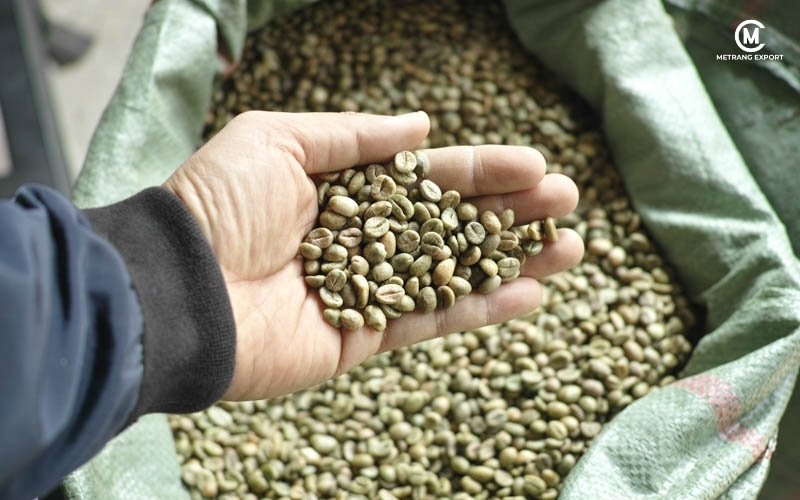
A diverse green Robusta portfolio, flexible to customer needs
MeTrang Export’s green Robusta portfolio is designed to be flexible – supporting multiple roasting needs and business models. Depending on product direction and target markets, roasters and brands can choose across different grades, defect tolerance ranges, and processing methods, and work with MeTrang Export to fine-tune technical specs within an appropriate margin. The goal is to help each partner secure a stable, consistent range of green Robusta aligned with their product strategy.
Conclusion
Robusta is Vietnam’s strength not only because it fits the tropical climate, but also because it is closely tied to the Central Highlands – where basalt soils and plateau terrain support concentrated origins, and where a large-scale export-ready supply chain has formed.
For brands, this advantage truly matters when working with a partner who can standardise specs, provide lot traceability, and ensure on-time delivery. MeTrang Export aims to ensure that every lot meets commitments and supports customers’ long-term growth plans.
FAQ
- Where do Robusta beans originate?
Robusta beans originate from wild coffee populations in sub‑Saharan Africa, mainly in humid forest regions of West and Central Africa. It later spread to many tropical countries, including Vietnam. - Why are Robusta beans Vietnam’s competitive strength?
Because Vietnam has a strong core origin in the Central Highlands with a suitable climate, red basalt soils, and plateau terrain, concentrated growing areas with high productivity, and a stable export-focused supply chain that meets B2B needs.
- What climate is suitable for growing Robusta beans?
Robusta suits hot, humid climates, around 22-30°C, with a relatively clear rainy-dry seasonal rhythm. These conditions support seasonal flowering and fruit development and help control post-harvest quality.
- Where are Vietnamese Robusta beans mainly grown?
Vietnam’s most prominent Robusta region is the Central Highlands, including Dak Lak, Dak Nong, Gia Lai, Lam Dong, and Kon Tum – covering about 577,000 hectares and contributing roughly 92% of the country’s Robusta output.
