
 Tiếng Việt
Coffee Knowledge, Green Coffee Beans, Robusta Beans
Why Global Brands Always Favor Coffee Beans Vietnam?
Jul
On the negotiation tables of international buyers, Vietnam is an indispensable name in strategic sourcing portfolios. This enduring trust has been built over decades, anchored by the unique terroir of the Central Highlands and continuously evolving processing capabilities.
Together with MeTrang Export, delve into the practical factors that allow coffee beans Vietnam to maintain a core position in the global market and discover how this supply source addresses the long-term economic equations for commercial enterprises.
The global standing of coffee beans Vietnam
The influence of coffee beans Vietnam is not merely a generic title; it is clearly demonstrated through actual trade metrics on the global supply map.

Empirical data on production and market share
Vietnam stands as the world’s second-largest coffee exporter, commanding a 19% to 21% global market share and holding absolute dominance in Robusta production—the core bean for commercial blending formulas.
- Production volume: In the 2025/26 crop year, national production is projected to reach 30.8 million bags (60 kg each), reflecting a 6% year-on-year increase, with Robusta accounting for 96%. (Source: USDA FAS, 12/2025)
- Export value: In 2025, export turnover achieved USD 8.92 billion, a spectacular 58.78% surge compared to 2024, indicating skyrocketing global demand for domestic Robusta beans. (Source: InCorp Vietnam, 2026)
- Core market share: Within the Robusta segment alone, local suppliers provide approximately 40% of global trade volume, functioning as a pivotal stabilizer for the worldwide supply. (Source: Mordor Intelligence, citing WTO, 2025)
Driven factors behind the global preference for coffee beans Vietnam
Statistical milestones are merely the surface of the narrative. The compelling reasons why international brands consistently secure coffee beans Vietnam stem from structural competitive advantages that remain difficult to replicate elsewhere:
- Abundant and dependable supply: With a capacity of tens of millions of bags annually, Vietnam guarantees a continuous supply for large contracts, enabling multinational corporations to plan quarterly or annual procurement confidently.
- Cost optimization via robusta varieties: Offering higher cost efficiency, caffeine content, and a robust body than Arabica, coffee beans Vietnam serve as the ultimate foundational ingredient for espresso blends, instant coffee, and RTD beverages.
- Diversity across cultivation zones: From the Robusta heartland of Buon Ma Thuot to premium Arabica regions such as Cau Dat and Son La, Vietnam’s expansive portfolio enables global buyers to serve multiple market segments through a single partnership.
What sets coffee beans Vietnam apart?
The combination of ideal natural conditions and continuously expanding processing capabilities forms the core foundation that defines the unique characteristics of coffee beans Vietnam.
Terroir and climate characteristics in Vietnam
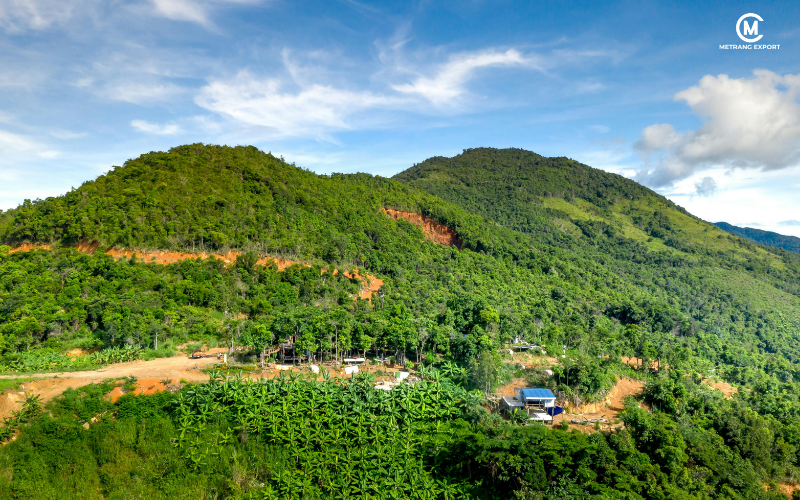
The Central Highlands and key cultivation zones possess rare natural advantages for large-scale raw material development:
- Mineral-rich basaltic soil: Highly porous, well-drained, and rich in organic matter from ancient volcanoes, this soil provides the ideal nutritional base for high yields and bold flavor profiles.
- Distinct seasonal climates: A prolonged dry season ensures concentrated and uniform ripening, while the rainy season supplies ample water for growth. This cycle results in high bean uniformity, facilitating strict quality control.
- Altitude and wide diurnal temperature variation: Arabica regions like Cau Dat (above 1,500m) feature large day-night temperature swings, allowing beans to accumulate sugars and organic acids. This creates a complex flavor profile with bright acidity and a sweet aftertaste.
- Large-scale cultivation area: Spanning 716,600 to 730,000 hectares concentrated in Dak Lak, Lam Dong, Dak Nong, and Gia Lai, the country guarantees a stable supply for massive commercial contracts.
Evolution in processing methods for coffee beans Vietnam
Moving away from traditional, rudimentary processing, the sector for coffee beans Vietnam is shifting rapidly toward the high-value segment through modern processing techniques. International buyers can now flexibly select from:
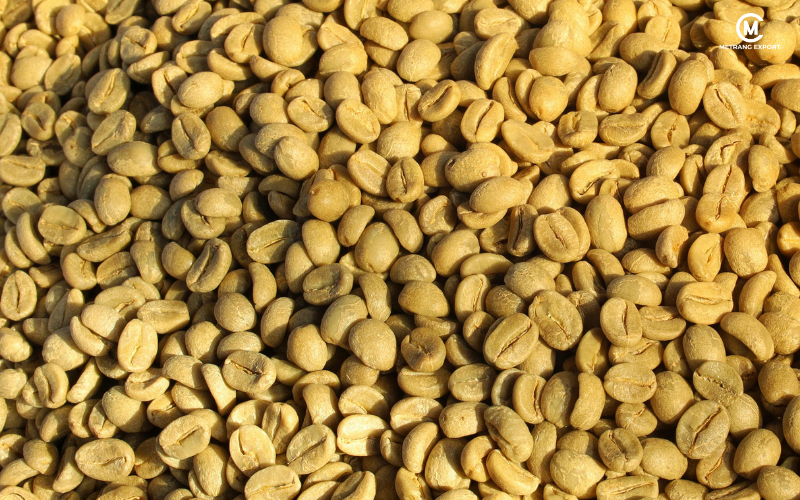
- Fully washed process: Removing all skin and mucilage before drying yields clean, pure, and highly stable beans, perfect for commercial blends.
- Natural process: Drying the whole cherry infuses pulp sugars into the bean, creating a bold, fruity profile favored by specialty roasters.
- Honey process: Retaining partial mucilage balances washed cleanliness with natural sweetness, catering ideally to premium Asian and European segments.
- Anaerobic fermentation: Oxygen-free fermentation unlocks unique, exotic flavor profiles, specifically serving the fast-growing global specialty market.
The adaptability of coffee beans Vietnam to new standards
Faced with rapid global market shifts in environmental regulations and consumer preferences, the sector for coffee beans Vietnam is proactively transforming to adapt swiftly, reaffirming its sustainable competitiveness.
Classifying coffee beans Vietnam from commercial to specialty grades
A major advantage of coffee beans Vietnam is the broad product spectrum, flexibly meeting demands from mass industrial segments to the high-end specialty wave:
- Commercial segment (Robusta G1, G2): Dominating export turnover, this grade offers optimal cost efficiency and stable volume for industrial roasters and instant coffee manufacturers.
- High-quality Robusta (Fine Robusta): Meeting premium international blending trends, these Vietnamese offerings are increasingly leaving a mark at major specialized trade fairs worldwide.
- Specialty Arabica (Cau Dat, Son La): Catering to the growing single-origin market, these beans possess distinct regional profiles that allow brands to easily diversify portfolios.
Adaptability to stringent technical barriers
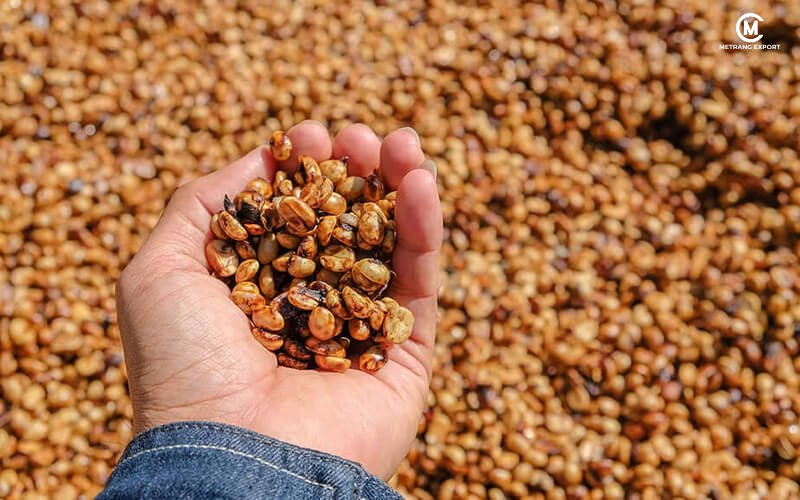
Confronting strict global technical standards, the Vietnamese green coffee sector continues to prove its exceptional compliance capacity. To ensure smooth trade flows into the EU, which consumes over 41% of national exports, the industry is rapidly deploying geolocation data to meet EUDR mandates. Additionally, full adherence to FDA registration and FSPCA Preventive Controls positions local exporters as top-priority partners for US enterprises. Meanwhile, securing Halal certification unlocks skyrocketing consumption demand across high-potential Middle Eastern and Southeast Asian markets. These proactive regulatory alignments guarantee that global buyers can source premium beans with absolute compliance confidence.
MeTrang Export: A trusted supplier of coffee beans Vietnam
The subsequent step involves identifying a reputable supplier to effectively integrate these strategic advantages into an enterprise’s value chain. MeTrang Export serves as the comprehensive solution to this demand.
Execution capacity and a diverse portfolio of coffee beans Vietnam
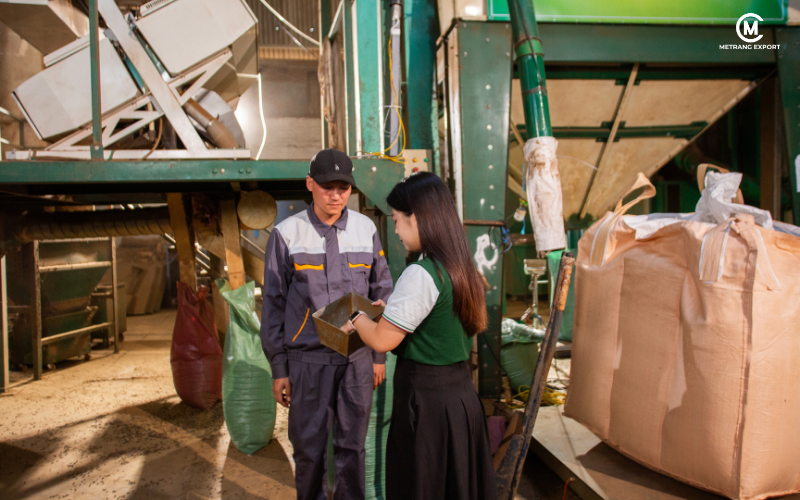
As the official export arm of Me Trang Coffee, MeTrang Export inherits over 25 years of profound expertise (since 2000), with its headquarters located in the coffee capital of Buon Ma Thuot.
- Supply capacity: Armed with an annual output of 5,000 to 6,000 tons and a raw material network stretching from the Central Highlands to Son La, the brand confidently fulfills large-scale, long-term contractual demands.
- Product portfolio: Offering a full spectrum of grades, ranging from commercial to high-quality selections for both Robusta and Arabica varieties.
- International certifications: Strict compliance with ISO 22000:2018, FDA, Halal, and FSPCA standards guarantees seamless customs clearance in the most stringent import markets.
Source-direct supply solutions for cost optimization
The core advantage of MeTrang Export lies in sourcing directly from cultivation regions, completely bypassing intermediaries to deliver three vital B2B benefits. First, it optimizes costs by offering highly competitive pricing over traditional brokers. Second, it ensures transparency through seamless origin traceability and strict specification control at the source. Finally, it guarantees supply security with priority inventory allocation during global crop scarcities. Backed by standardized procedures and tailored logistics, this model allows partners to focus entirely on core business growth with peace of mind.
Conclusion
Looking at the broader horizon, coffee beans Vietnam are carving out a new global standing, one that is more sustainable, quality-focused, and highly responsive to international trends. Selecting this supply origin not only secures stability for a B2B supply chain but also presents a strategic opportunity to align with an evolving agricultural ecosystem. Backed by robust execution capacity, MeTrang Export is proud to serve as the premier gateway, bringing the optimal, authentic values of Vietnamese coffee closer to global partners.
