

 Tiếng Việt
Arabica Green Beans, Coffee Knowledge, Green Coffee Beans, Green Coffee Beans Viet Nam, Robusta Green Beans
Top 3 Strategic Origins For The Best Arabica Coffee Beans
Sep
Arabica leads the specialty coffee market worldwide. The exceptional quality of each lot stems from a precise balance of climate, soil conditions, coffee varietals, and processing techniques.
Choosing the ideal supply source is a strategic decision for every buyer. In this guide, MeTrang Export reviews the best Arabica coffee beans from leading global regions and positions the strategic potential of Vietnam’s Arabica supply.
Evaluation standards for the best Arabica coffee beans
In the coffee industry, quality extends beyond subjective taste; it is quantified through precise, standardized scientific metrics.
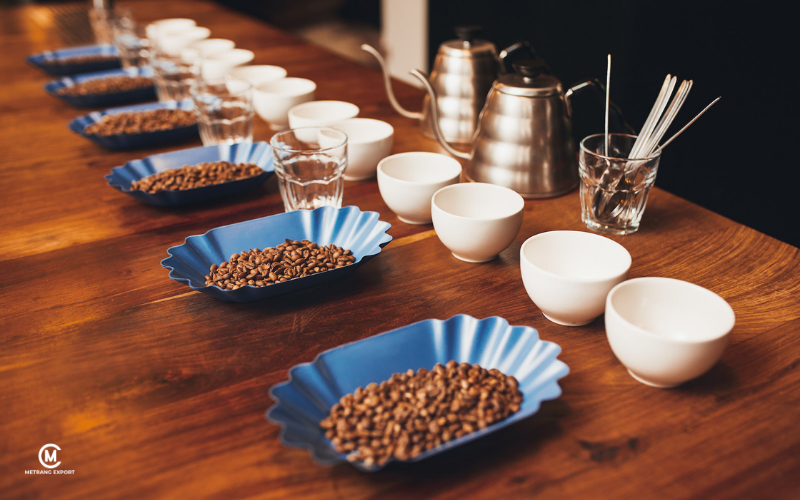
How cupping scores ensure transparency
The Specialty Coffee Association (SCA) devised a globally recognized 100-point scale, which is scientifically evaluated by trained Q Graders using rigorous cupping techniques. Arabica quality is divided into the following categories:
- Below 80 points (Commercial grade): A common raw material for commercial blends and instant coffee manufacture.
- 80-84 points (Very good): The entry-level specialty grade, appropriate for roasters developing premium product lines.
- 85-89 points (Excellent): Outstanding quality, providing a foundation for single-origin lineups.
- 90+ points (Outstanding): The highest quality grade, in which market value is fully independent of commodity futures pricing.
For B2B purchasers, this standardized system provides the most dependable objective baseline for ensuring quality transparency across all lots.
How terroir and processing define the best Arabica coffee beans
While cupping ratings assess final quality, origin conditions and processing processes directly influence the results:
- Altitude and climate: Arabica cherries mature slowly because of high diurnal temperature swings at 800-2,000 meters, allowing them to develop rich sugars and complex organic acids.
- Soil composition: The flavor profile’s depth and complexity are built on mineral-rich volcanic soil.
- Varietals range: from Ethiopian Heirloom and Panama Geisha to Vietnamese Catimor and Moka, each with its own particular genetic flavor character.
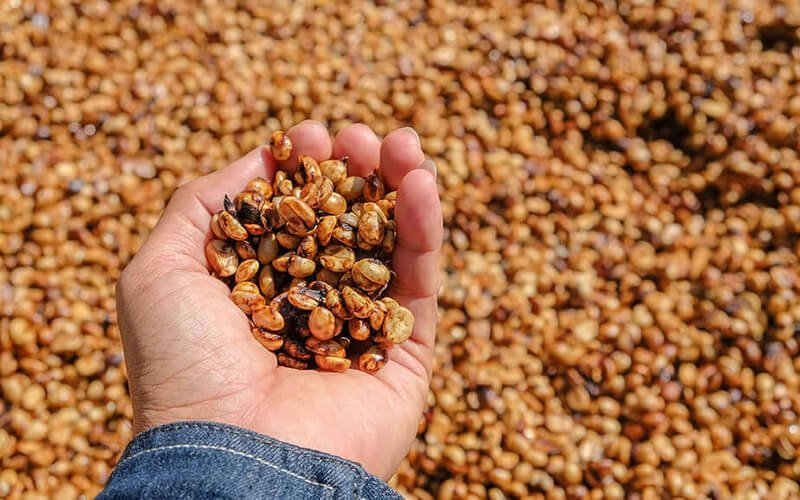
- Processing methods: can either enhance or reduce a crop’s full potential. Washed processing enhances cup clarity and refined acidity; natural processing imparts strong fruit sweetness; and honey and anaerobic fermentation produce distinct, complex aromatic layers.
H2: Ethiopia – Home of the world’s best Arabica coffee beans
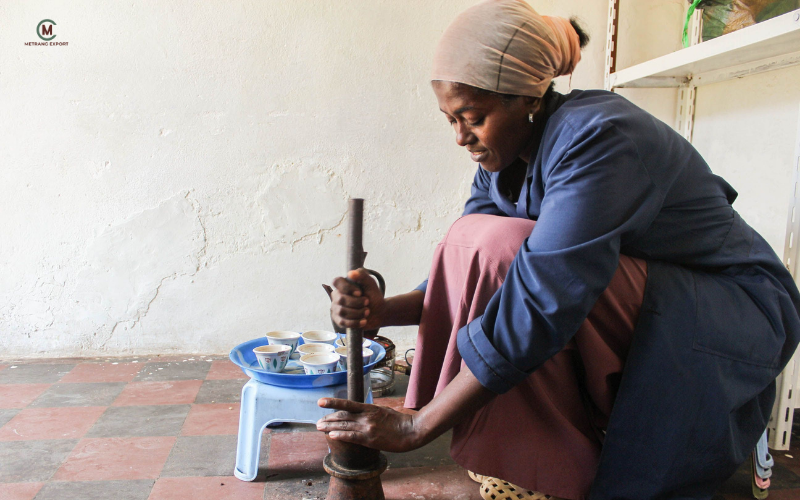
No region carries a richer historical depth than Ethiopia – the undisputed birthplace of the best Arabica coffee beans in the world.
H3: Why does Ethiopia consistently produce the best Arabica coffee beans?
Ethiopia has an unrivaled genetic edge, with an estimated 10,000 to 15,000 unclassified wild heirloom varieties. This genetic variety results in an extremely rich and diverse flavor spectrum. Cherries, grown at altitudes ranging from 1,100 to 2,300 meters in mineral-rich volcanic soil, develop slowly, storing thick sugars and bright organic acids.
The worldwide market consistently validates this fundamental value. At the Cup of Excellence Ethiopia, a natural-processed Arabica lot grown by farmer Basha Bekele in the Sidama region achieved a new record of $445 per pound, the highest price ever recorded in the program’s 25 year history.
H3: Distinct flavor profiles across Yirgacheffe, Sidamo, and Harar
The best Arabica coffee beans from Ethiopia are far from a single flavor note. Each distinct terroir offers a unique sensory signature:
- Yirgacheffe (1,700-2,200m) is known for its washed processing, which yields a tea-like elegance, delicate jasmine aromatics, sharp citrus, and a clean, refined sweetness.
- Sidamo (1,500-2,200m): Cooler microclimates promote strong natural acidity with rich berry and citrus overtones, making it an excellent profile for both specialty espresso and pour-over beverages.
- Harar (1,400-2,000m): Arid growth conditions and traditional natural processing provide a substantial body, strong ripe fruitiness, and enticing red wine flavors.
Colombia and Panama as modern pillars of the best Arabica coffee beans
With two different strategies – one that maximizes scalability and consistency and the other that elevates uniqueness and ultimate luxury – Colombia and Panama dominate the contemporary specialty industry.
Colombia – Scaling the best Arabica coffee beans for Espresso blends
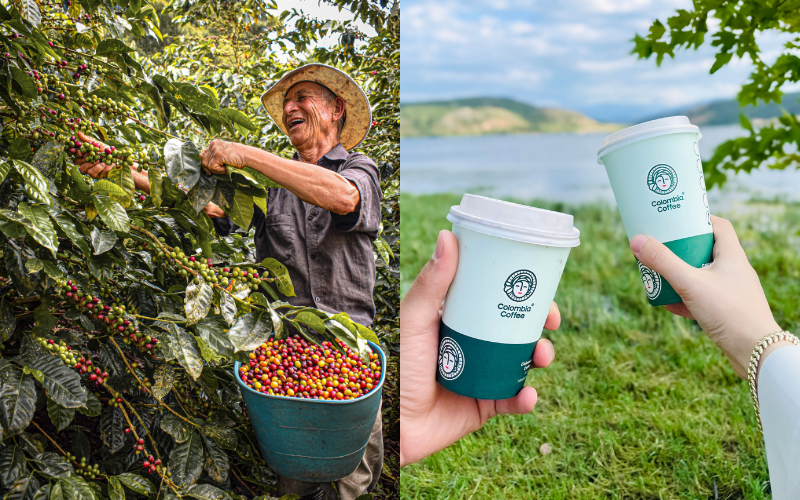
Colombia is one of the few origins that has successfully addressed a significant B2B sourcing challenge: excellent quality paired with plentiful supply. Colombia, which is home to over 500,000 family farms along the Andes, has earned a global reputation for producing consistent quality on a commercial scale. Production reached 14.8 million bags for the 2024/25 crop year, indicating a significant recovery.
Colombian Arabica is used as the fundamental foundation for specialized espresso mixes due to its widespread washing processing and strong volcanic soil content. This combination produces balanced acidity, medium body, and harmonious natural sweetness, making these among the best Arabica coffee beans for roasters seeking consistency.
Boquete, Panama is the home of the legendary Geisha varietal
The specialty coffee market was completely transformed in 2004 when Hacienda La Esmeralda in Boquete debuted the Geisha varietal in the Best of Panama competition. Julith Coffee, based in Dubai, bought a washed Geisha lot from Hacienda La Esmeralda for a record-breaking $30,204 per kilogram after it scored 98 out of 100. Three factors support the commercial demand for Panama Geisha:
- Geisha, which originated in Ethiopia, only fully developed its beautiful jasmine blossoms, honey sweetness, crisp acidity, and smooth body when grown in Panama’s distinct terroir.
- Ideal Boquete microclimate: Rich volcanic soil, high altitudes, and cool temperatures allow cherries to mature slowly, optimizing complex taste development and producing the greatest Arabica coffee beans in the ultra-luxury category.
- Geographical indication protection: The Panama Specialty Coffee Association (SCAP) has registered Panama Geisha as a global Geographical Indication (GI), making it a protected heritage item.
Vietnam is steadily positioning best Arabica coffee beans
Comparing Vietnam’s best Arabica coffee beans with heritage giants such as Ethiopia, Colombia, or Panama highlights a gap in origin brand awareness. However, actual cup quality presents a high-potential sourcing opportunity for strategic B2B buyers.
Assessing the true quality of Cau Dat Arabica
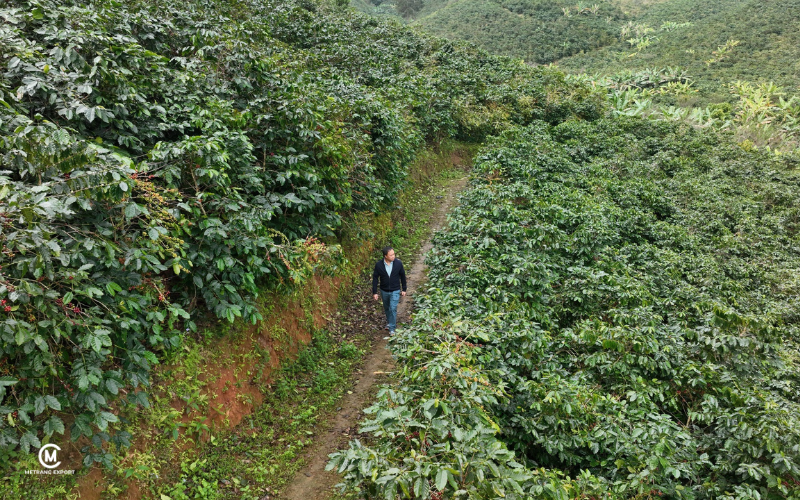
The Cau Dat Plateau (Lam Dong Province), situated at 1,400-1,600 meters, serves as Vietnam’s primary specialty coffee hub. The region holds a rich history dating back to 1875, when French settlers introduced Moka and Bourbon varietals to cultivate luxury crops.
Today, Cau Dat features a diverse varietal portfolio – ubiquitous Catimor with bright citrus notes, elegant heritage Moka, and rapidly recovering Yellow Bourbon and Typica driven by the craft coffee movement. In 2016, Cau Dat Arabica met Starbucks’ rigorous C.A.F.E. Practices standards to enter its global supply network, proving the region’s capacity to yield some of the best Arabica coffee beans in Southeast Asia.
Sourcing advantages of Vietnamese Arabica for B2B buyers
For international buyers, Vietnamese Arabica represents a cost-effective, high-value sourcing decision:
- Competitive pricing: Prices for Vietnamese specialty Arabica remain lower than Ethiopian or Colombian lots at equivalent cupping scores, reflecting brand origin maturity rather than a quality deficit.
- Positive market signals: At the Vietnam Amazing Cup 2026, 83% of 182 sample entries achieved specialty grade, confirming significant advancements in local processing capability.
Supporting this quality movement, MeTrang Export supplies high-grade Arabica green coffee sourced from key growing regions like Son La. Backed by global certifications including ISO 22000:2018, FDA, Halal, and FSPCA, MeTrang Export provides verified supply for international roasters seeking the best Arabica coffee beans from emerging markets.
Conclusion
No single country holds the title of best Arabica coffee beans. Ethiopia holds an unreplicable genetic heritage with complex aromatics; Colombia guarantees commercial-scale consistency; while Boquete, Panama elevates the sensory experience through world-class Geisha lots.
Within this global framework, Vietnamese Arabica – particularly green coffee from the Cau Dat region – presents a prime sourcing opportunity. A century-old cultivation heritage, verified cupping quality, and competitive pricing offer significant upside for forward-thinking B2B buyers before the origin premium fully appreciates.
Contact MeTrang Export today for expert consultation on our premium Arabica green coffee portfolio and detailed pricing.
