

 Tiếng Việt
Coffee Knowledge
Fine Green Robusta Coffee: Upgraded Robusta For A More Refined Cup Experience
Jan
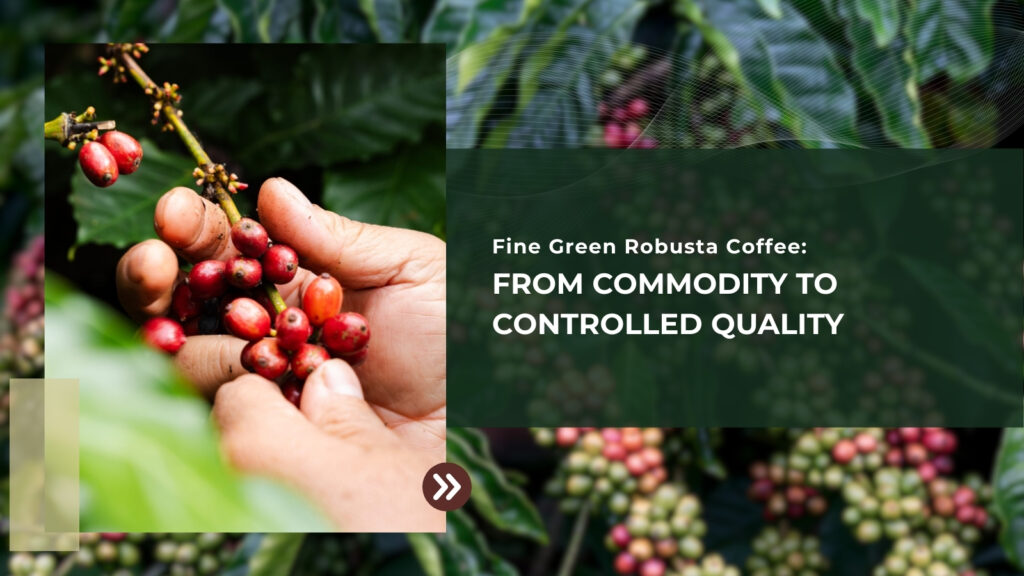
For many years, Robusta has been associated with bold intensity, high caffeine, and a functional role in commercial blends – adding body, crema support, and kick. However, the emergence of fine green Robusta coffee is creating a very different picture. When grown, harvested, and processed under higher standards, Robusta can deliver a cup that is cleaner, smoother, and more experience-driven.
MeTrang Export supports this shift by advising roasters and brands on selecting green Robusta specifications that match specific roasting and brewing objectives from commercial blending to upgraded product lines.
What is fine green Robusta coffee?
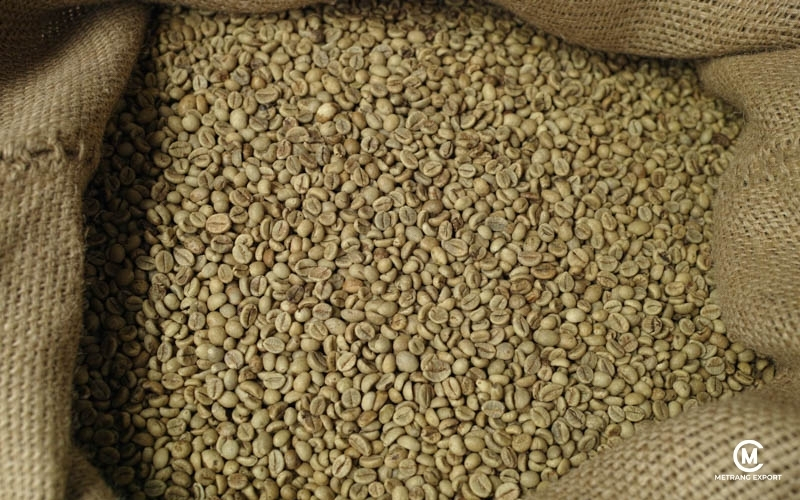
Fine Robusta is a quality classification with measurable criteria applied to green Robusta coffee.
How is fine green Robusta coffee different from commercial Robusta?
According to the Fine Robusta Standards & Protocols developed by the Coffee Quality Institute (CQI) in collaboration with the Uganda Coffee Development Authority, Fine Robusta is defined by two core benchmarks:
- A cupping score of 80 points or above on a 100-point scale.
- In a 350g green sample, zero primary defects and no more than five secondary defects.
- The bean size is expected to be relatively uniform, with allowable variance versus the stated specification kept within 5%.
Compared with commercial Robusta, fine green Robusta coffee stands out in several areas.
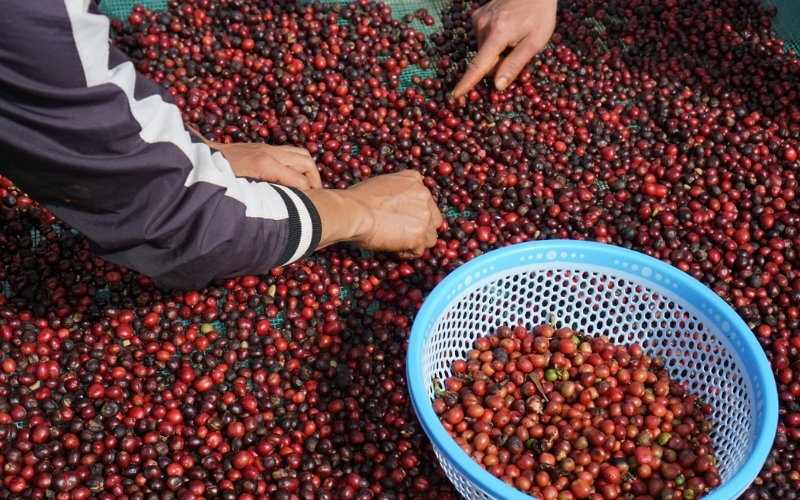
- Higher ripeness at intake: A higher proportion of ripe cherries and fewer green cherries helps reduce green, harsh, or phenolic notes in the cup.
- More disciplined processing control: Drying, washing/cleaning, and foreign-matter removal are handled more carefully, lowering the risk of faulty fermentation or mold.
- Lower defect load: Fewer black beans, moldy beans, insect-damaged beans, or severely broken beans, resulting in a cleaner cup with fewer off-notes.
- Better lot consistency: Lots are graded and checked more rigorously, making it easier for roasters to reproduce roast profiles and maintain flavor consistency.
Because of these advantages, fine Robusta green coffee can still deliver Robusta’s signature body with a cleaner finish and less harsh bitterness.
==>> See Also: Why Robusta Beans Are Vietnam’s Trump Card On The Global Coffee Map
Which product goals does fine green Robusta coffee support?
Depending on a roaster’s strategy and a brand’s product portfolio, fine green Robusta coffee can address multiple objectives.
- Upgrading existing blends: Increase body and crema while keeping the cup clean and reducing aggressive bitterness in the finish.
- Developing limited Robusta lines: Tell a Robusta upgraded story alongside existing Arabica offerings.
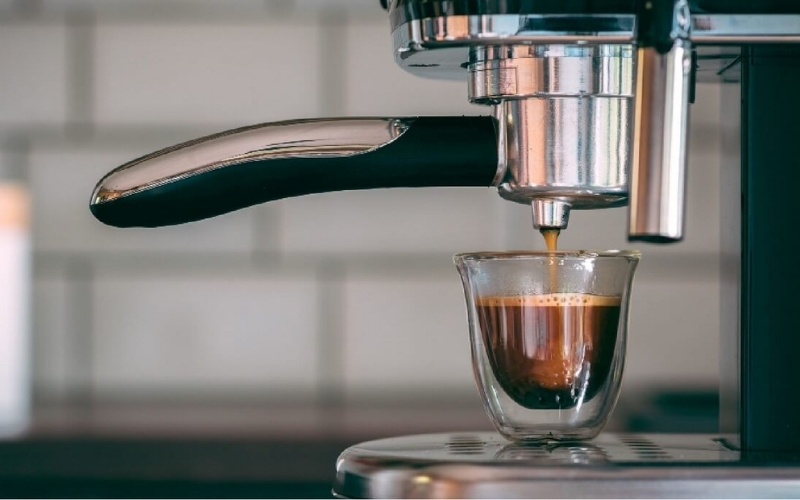
- Building a base for espresso: Deliver strength and structure, but with a smoother, more approachable cup – suitable for both loyal customers and newcomers.
The formation journey of fine green Robusta coffee
Fine Robusta is not a marketing invention. It is the outcome of market pressures combined with technical progress.
Why fine green Robusta coffee emerged as a balance of quality and stability
From a market perspective, fine green Robusta coffee is increasingly viewed as a bridge between commercial Robusta and the demand for a more refined experience in the mid-to-upper segments.
- Rising demand for clean and consistent flavor: Consumers increasingly care about cup feel while roasters need cleaner raw material with fewer defects, without losing Robusta’s body and caffeine advantages.
- Cost pressure from Arabica: Arabica supply and pricing volatility has encouraged many brands to explore an upgraded Robusta approach – protecting operational efficiency while improving sensory quality.
How fine green Robusta coffee is enabled by farming progress and post-harvest control
To build Fine Robusta lots, farmers and cooperatives gradually improve both cultivation and post-harvest handling.
- Harvesting: Instead of strip-picking in one pass, producers prioritize selective picking of ripe cherries, limit green cherries and floaters, and may harvest in multiple rounds. This reduces green, astringent notes.
- Drying and storage: Beans are dried on raised beds, drying-layer thickness is controlled, rain protection is applied, and temperature is managed carefully.
- Processing technology: Washed, honey, and controlled-fermentation variants are invested in more systematically, supporting a cleaner cup, higher natural sweetness, and improved lot-to-lot stability.
When working with an exporter such as MeTrang Export, brands can request clearer documentation of harvest, processing, and warehouse practices.
What core standards create differentiation in fine green Robusta coffee?
For fine green Robusta coffee to deliver real differentiation, each lot should be managed against a practical set of core criteria.
==>> See Also: Why Robusta Beans Are Vietnam’s Trump Card On The Global Coffee Map
Processing methods that drive cleanliness and uniformity
In practice, processing is one of the most visible drivers of cup cleanliness and stability.
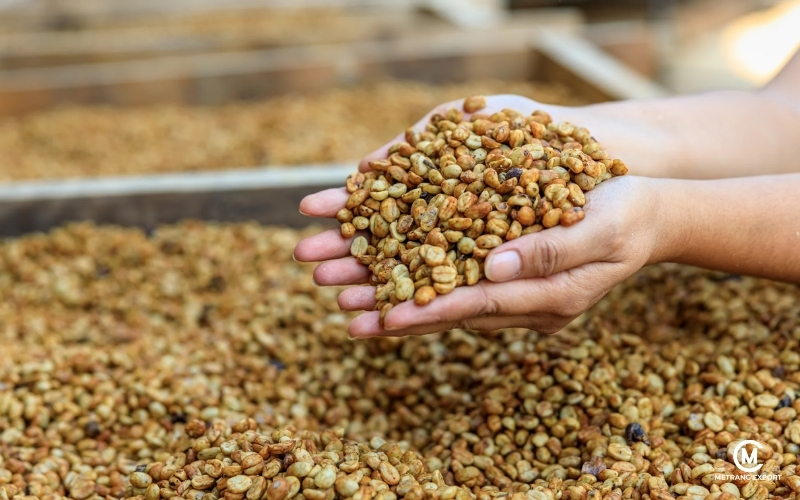
- Washed processing: Washing and removing most mucilage reduces impurities, lowers the risk of faulty fermentation notes, and produces a cleaner cup with clearer tasting notes. This option is well-suited for menus that require stable profiles and scalable roasting.
- Honey processing: Retaining some mucilage when controlled well can enhance sweetness, mouthfeel, and roundness while maintaining a clean cup. This can fit blends that need more natural sweetness and texture, or product lines that highlight processing stories.
When discussing options with MeTrang Export, roasters can prioritize washed and honey lots first, then fine-tune specifications based on roast–brew goals and desired blend structure.
Ripeness: a decisive criterion for approving Fine Robusta lots
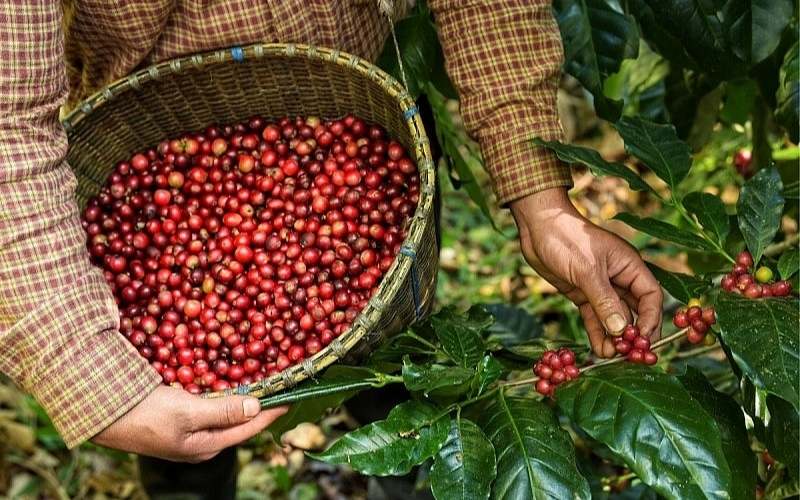
In fine Robusta assessment, input ripeness is consistently one of the most decisive factors.
- Lots with a high ripe-cherry ratio tend to deliver beans with more even size, density, and development.
- Strong ripeness control also helps reduce undesirable compounds associated with off-aromas, while supporting sweetness, smoothness, and a rounder mouthfeel.
MeTrang Export can supply green Robusta lots with selected ripe-cherry ratios in the range of 90-97%, and advise how to translate this advantage into roast profiles, brew performance, and blend structure.
Market momentum for fine green Robusta coffee
Fine green Robusta coffee is gaining a clearer position as the market simultaneously solves for cost, quality, and supply stability.
Vietnam is upgrading fine green Robusta coffee supply
Vietnam is one of the world’s largest Robusta producers and exporters – a foundation that enables the country to gradually elevate part of its supply into the Fine Robusta segment.
- Supply capacity: Strong production volume gives Vietnam enough room to select and develop Robusta lots with better processing discipline and quality control.
- Quality system: When lots are better managed for defect levels, moisture, size uniformity, and lot traceability, brands can work more effectively by specification and maintain stable profiles.
- Market image: The story of Vietnamese Fine Robusta helps reposition Vietnam’s Robusta beyond commodity status toward a segment with clearer sensory value.
How MeTrang Export helps brands meet rising demand
Globally, fine Robusta is receiving more attention due to two parallel trends: businesses need cost optimization while still improving cup quality, and consumers care more about traceability and product consistency.
As a specialist exporter of green coffee, MeTrang Export, supported by years of industry experience, can help B2B customers:
- Select Robusta/fine Robusta specifications aligned to roast and brew objectives.
- Work lot-by-lot with clear traceability information to support consistency and transparency requirements.
- Maintain a stable, quality-driven supply plan as Fine Robusta demand continues to grow.
Conclusion
Fine green Robusta coffee is a natural step forward as the coffee industry looks beyond the simplified Robusta image of “bold – strong – cost optimized”. When managed against clear standards for ripeness, processing, defects, moisture, size uniformity, and lot traceability, Robusta can deliver a cup that is cleaner, smoother, and more experience-driven while retaining its advantages in body and cost efficiency.
On that journey, MeTrang Export aims to be a trusted B2B partner from specification selection and lot traceability to long-term supply planning, so each Fine Robusta lot not only meets technical requirements but also supports sustainable differentiation for brands.
