


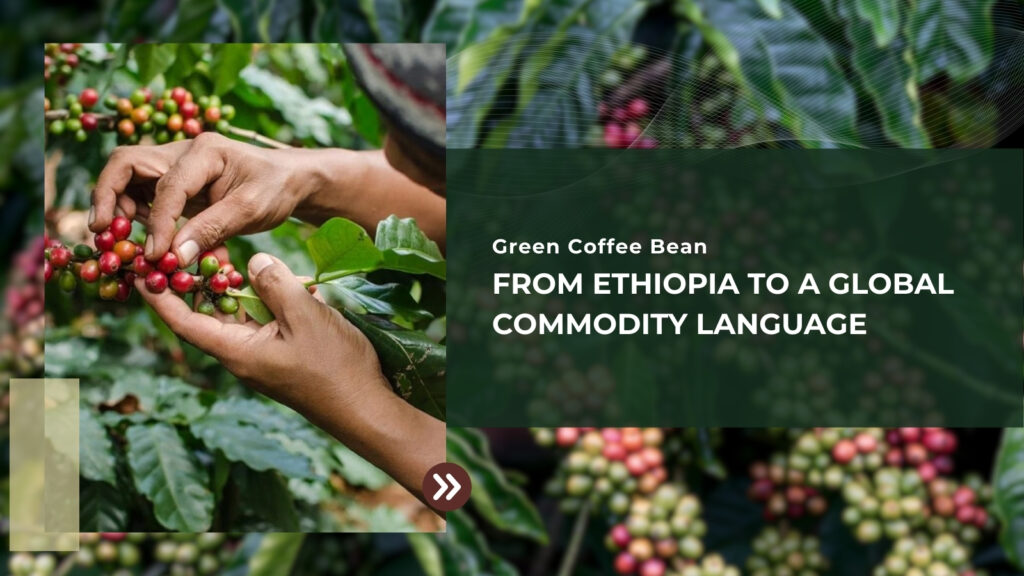
Before coffee becomes a fragrant espresso or the familiar Vietnamese iced milk coffee, every story begins with the Green coffee bean. For brands, understanding green coffee is the shared language used when working with farmers, exporters, and logistics partners.
At MeTrang Export, green coffee is approached in two parallel ways: as a trade commodity that must be standardized, and as a storytelling material – similar to how fine green Robusta coffee evolves from commodity to quality – that carries the people and origin behind each shipment lot.
Green coffee bean: the foundation that determines quality
Even when a brand invests heavily in roasting and brewing, an inconsistent green coffee bean lot makes it extremely difficult to maintain a cup that is clean, well-defined, and repeatable.
What is green coffee bean, and where does it sit in the supply chain?
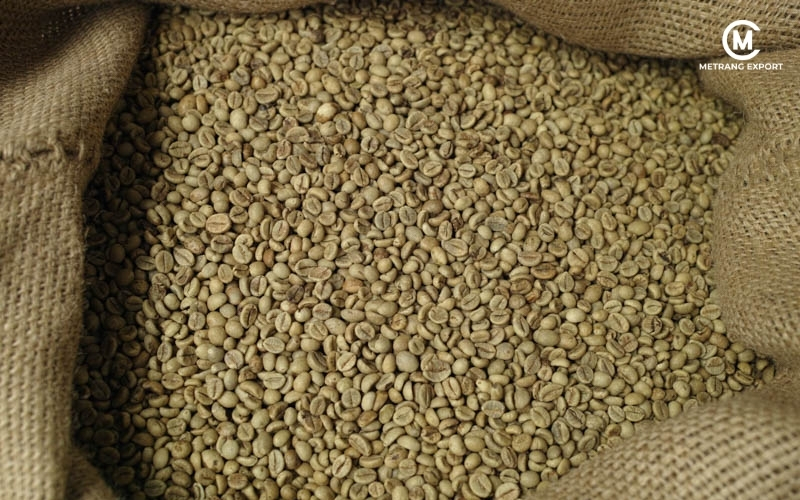
From a technical perspective, green coffee bean is the seed inside the coffee cherry. After harvest, the producer removes the outer skin and fruit,then carries out post-harvest processing and drying, following strict green coffee processing and quality control protocols before storage.
In the supply chain, green coffee sits at the center because this is the stage where value is consolidated from the farm or cooperative before being transferred to roasters. At this point, all key factors – origin, variety, crop season, processing method, moisture level, defects, and grading specifications are consolidated into a specific lot, which becomes the primary unit of trade in commercial contracts.

What information does a Green Coffee Bean lot carry?
When documentation and traceability are well maintained, each green coffee bean lot typically comes with a lot file that includes:
- Origin information: country, region, farm/cooperative, altitude, and variety.
- Crop information: crop year and harvest period.
- Processing method: washed, honey, natural, plus any notable process parameters (fermentation time, drying method, drying duration).
- Physical specifications: screen size, moisture, density, defect level, and foreign matter/impurity rate.
- Commercial terms: grade, applied standards, packaging format, delivery terms (FOB, CIF, etc.), port of loading, and port of discharge.
The origin and evolution of the Green Coffee Bean
Before coffee became a global industry, it was a beverage deeply rooted in local communities.
From Ethiopia to a global commodity category
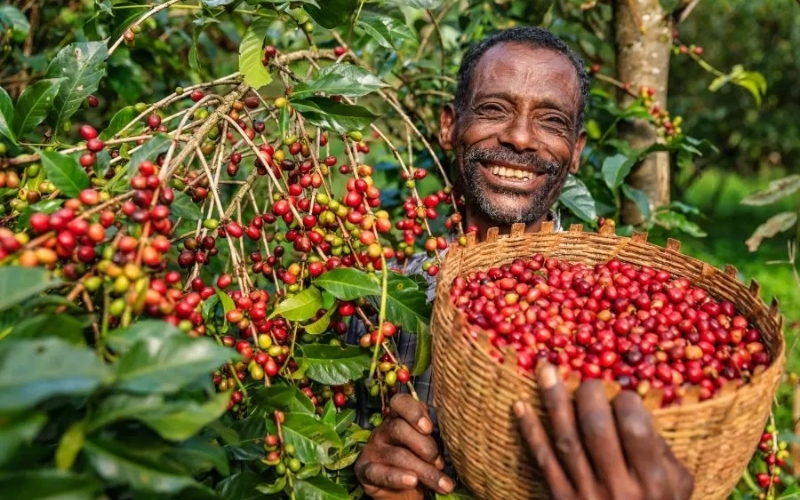
Many historical sources trace coffee’s origin to the Ethiopian Highlands, where coffee trees grew naturally and were gradually harvested and used by local people. From there, coffee spread to the Arabian Peninsula, where the earliest coffeehouses formed and coffee developed into a social and cultural beverage.
Once coffee moved beyond local use into port cities and international trade routes, green coffee bean became the dominant form of transaction:
- Coffee was processed, dried, and transported as green coffee to increase durability and reduce spoilage risk.
- Merchants began buying and selling coffee by lot, by bag, and by grade.
Over time, coffee transformed into a global agricultural commodity – listed, negotiated, and contracted under standardized commercial conventions. As an exporter, MeTrang Export functions as a bridge between Vietnam’s origin stories and trade negotiations across multiple markets.
Why standardization of Green Coffee Bean lots became essential
Coffee is a complex product whose quality can vary significantly by variety, origin, crop season, weather conditions, processing, storage, and even roasting and brewing approach. Because of this variability, buyers and sellers need a shared language to describe lots, for example, screen 16/18, defect standards, grades under national standards, and clearly defined farm/region/lot identities. Industry organizations also need to introduce standards, scoring conventions, and classification rules – often aligned with specialty coffee standards – to help parties negotiate and compare coffees more effectively.
In that context, MeTrang Export does more than sell. The team explains technical standards in practical detail for B2B customers so purchasing decisions can be grounded in clear data.
Identifying Green Coffee Bean lots by species
As a first step, roasters should distinguish green coffee by species because each species has different biological characteristics, flavor tendencies, and product roles.
Arabica Green Coffee Bean: aromatic complexity and refinement
Arabica is often referred to as the “more refined” coffee species due to:
- A wide aromatic spectrum from fruit, florals, and citrus to chocolate, nuts, and honey.
- A lively, structured acidity that creates more layered sensory perception.
- Higher lipid content and aromatic compounds that support deeper flavor complexity.
In commercial terms, Arabica green coffee is typically:
- Used for specialty, single-origin, and filter categories where origin character and flavor storytelling are core value drivers.
- Requested with stricter requirements for defect level, moisture, and cupping score, especially in premium segments.
When working with MeTrang Export, roasters can use Arabica green coffee as a refined component in blends or develop dedicated product lines for specialty segments.
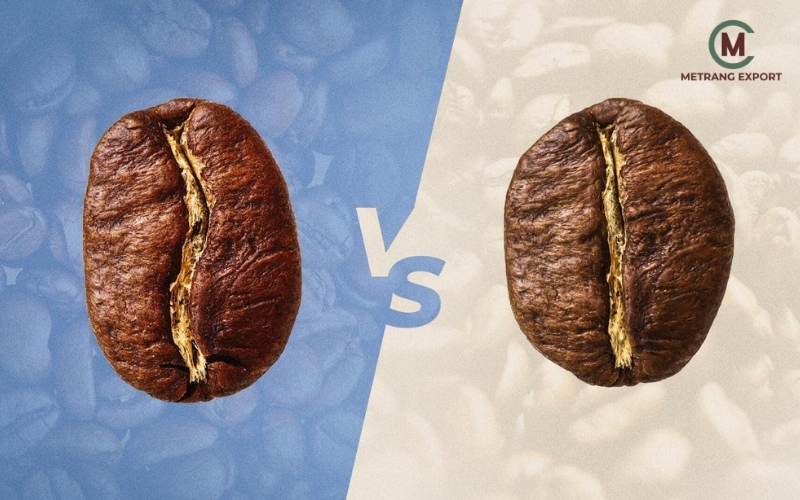
Robusta Green Coffee Bean: superior stability and functional performance
Alongside Arabica, Robusta plays a different role in the coffee ecosystem:
- More resilient biology, with stronger tolerance to heat and certain diseases, well well-suited to lower-elevation tropical climates.
- Higher caffeine, heavier body, and strong crema performance.
- More competitive input costs compared with Arabica in many purchasing scenarios.
In commercial trade, Robusta green coffee:
- Forms the base of many blends/house blends, instant coffee, and industrial applications.
- It is valued for supply stability, especially in origins with strong production advantages such as Vietnam – where Robusta beans are a strategic advantage in global trade.
Through procurement networks and quality control, MeTrang Export can supply standardized Robusta/Fine Robusta green lots aligned to defined specifications – suitable for both commercial blending and upgraded product lines.
Liberica Green Coffee Bean and other species
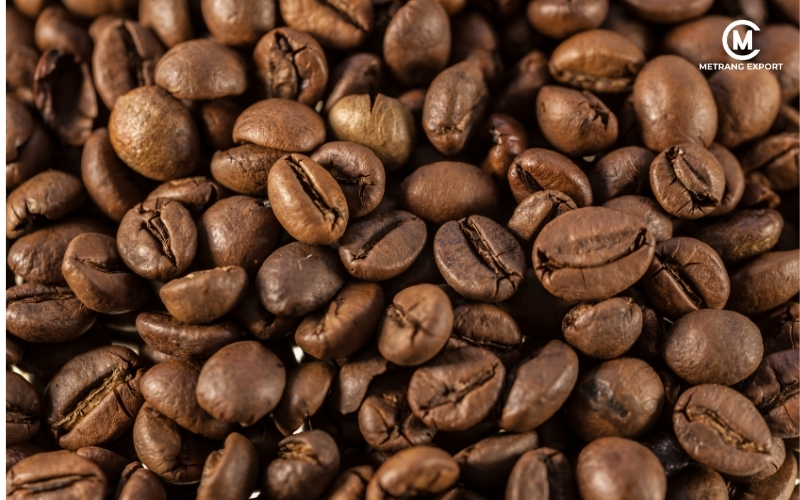
Beyond Arabica and Robusta, Liberica and other species also appear in trade, although at much smaller volumes:
- Liberica often features larger beans and distinctive flavors that can evoke wood, ripe fruit, or spice notes.
- It is cultivated in limited areas across parts of Asia and Africa and may be positioned as an accent coffee for experience-driven or niche markets.
How to choose the right green coffee bean source in trade
Choosing the right green coffee source is one of the most critical decisions for roasters and brands, impacting flavor performance, cost structure, and operational risk.
Top 5 must-have items in a professional green coffee bean offer
A clear and professional green coffee offer should include at a minimum:
- Origin: country, region, farm/cooperative, altitude, and variety. These details help brands understand both the story and the stability of the supply zone.
- Crop season/crop year: indicates freshness and provides context on climatic conditions.
- Processing method: directly influences flavor profile and cup cleanliness.
- Physical specifications and grading: screen size, moisture, defect level, foreign matter, and grade under a defined standard.
- Commercial terms: packaging, delivery terms, port of loading, and expected lead time.
With a partner like MeTrang Export, these elements are standardized into a clear offer format, helping roasters and brands evaluate, compare, and move lots into roast trials and cupping more efficiently.
Top 3 specification indicators that matter most
A Green Coffee Bean specification can include many numbers, but three groups of indicators are typically prioritized first:
- Moisture: If moisture is too high, the risk of mold and quality deterioration increases during storage and transit. If the moisture is too low, beans can become brittle, break more easily, and respond less predictably in roasting.
- Defect level: Lower defects support a cleaner cup with fewer taints. Defect control is also a key differentiator between basic commercial lots and upgraded lots (fine/specialty).
- Screen size: Uniform size supports more stable roasting, reducing the risk of underdeveloped and scorched beans within the same batch.
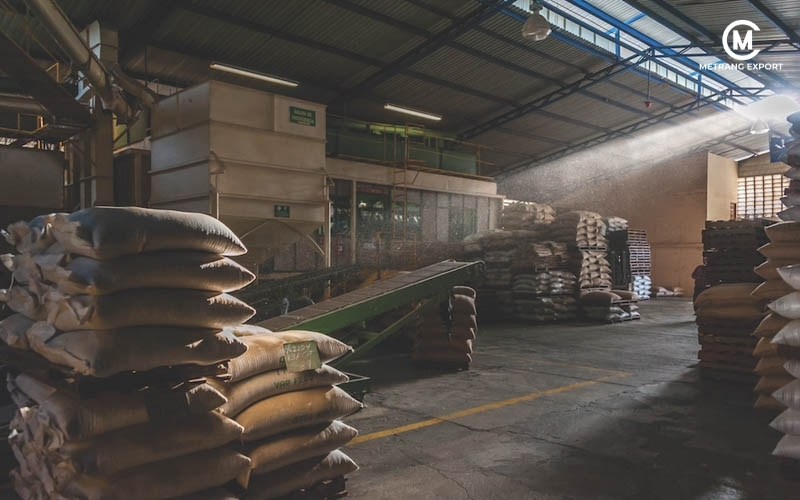
In practical cooperation, MeTrang Export typically works with roasters by starting from these three indicator groups, ensuring specification approval stays closely aligned to the intended end use.
Why MeTrang Export is a trusted partner for Vietnam Green Coffee Bean lots
In a context where Vietnam is among the world’s major coffee exporters, MeTrang Export offers tangible advantages for roasters and brands:
- Vietnam green coffee focus: with particular strength in Robusta and upgraded Robusta lines, supported by a deep understanding of origin characteristics and varied export-market requirements.
- Standardized offers: each lot comes with clear documentation covering origin, processing, physical indicators, and commercial terms.
- Flexible specification design: the ability to co-develop specifications for different goals and adjust within a safe margin rather than selling only fixed, non-negotiable specs.
- Long-term B2B partnership: from sampling and sensory evaluation to specification confirmation, contracting, and monthly/quarterly shipment planning, MeTrang Export aims to support stable, predictable supply management.
Conclusion
The green coffee bean is where history meets commerce. From its Ethiopian origins, through port-city trade routes, to its status as a global commodity category, the story has always revolved around green coffee lots that are processed, classified, and standardized before entering the roaster.
For roasters and brands, understanding green coffee is the most direct way to control quality, optimize costs, and reduce operational risk. When that knowledge is combined with a B2B partner that understands the category, such as MeTrang Export, brands do not simply purchase compliant beans; they build a more resilient foundation for product strategy and long-term flavor storytelling.