
 Tiếng Việt
Coffee Knowledge, Me Trang Activities
Managing Hidden Cost Risks Behind B2B Green Coffee Price Quotes
Apr
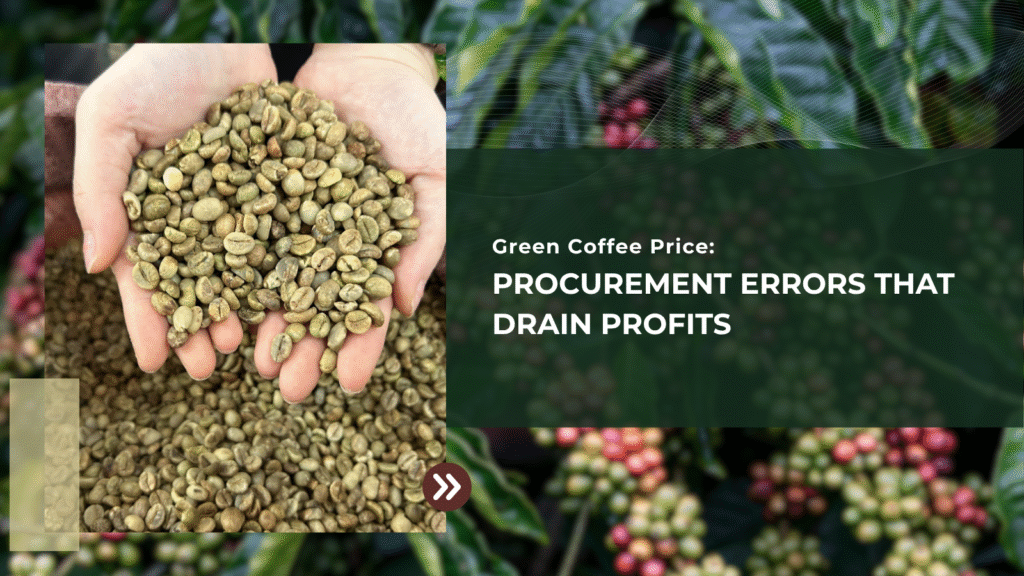
In the coffee business, optimizing input costs through low-priced lots is a common strategy for many roasters to protect profit margins. However, is it truly a bargain?
Profitability is often eroded not by a high unit cost, but by a lack of strategic management regarding the components of the green coffee price and the hidden costs lurking behind the low-price trap. MeTrang Export believes that only by exposing the dark side of these bargains can coffee buyers make decisions that are truly effective and sustainable.
The green coffee price does not reflect the entire value
In the B2B coffee industry, the quoted unit price is merely the tip of the iceberg, hiding a complex system of quality standards and market variables beneath the surface.
What drives the volatility of the green coffee price?
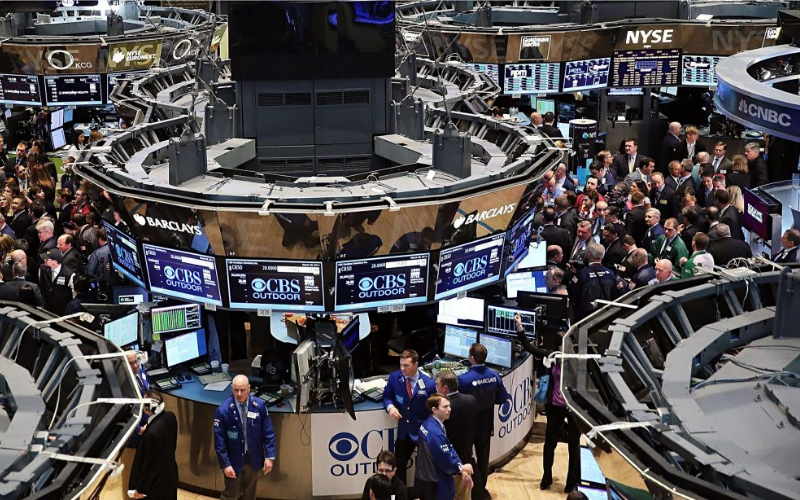
The local green coffee price constantly ebbs and flows according to the latest developments on the world’s major derivative commodity exchanges. MeTrang Export observes that many buyers often overlook cyclical patterns and technical signals, leading to poorly timed entries into the market.
- Reflections from London and New York Exchanges: Robusta prices (London/ICE) and Arabica prices (New York/NYBOT) serve as global benchmarks. Market statistics show that a single frost report in Brazil or a drought in the Central Highlands of Vietnam can cause the price to swing by 5% to 12% within a single trading session.
- Pressure from physical inventories: When stocks at exchange-certified warehouses drop to record lows (as seen during the 2024-2025 period), the green coffee price is driven upward regardless of projected harvest yields.
- The ripple effect: If Robusta futures climb by $100 – $150 per ton (for example), local prices are immediately adjusted in proportion. Roasters who are not well-versed in the financial calendar often find themselves chasing the market at its peak, causing profit margins to shrink from the moment the beans enter the warehouse.
Logistics costs, exchange rates, and quality premiums
A common mistake among buyers is focusing solely on the farm-gate price, whereas the real green coffee price is a synthesis of circulating variable costs and quality valuations (differentials).
- Exchange rate risks: Coffee is traded in USD. A fluctuation of just 1% to 3% in the exchange rate can cause the value of a 19-ton container to differ by tens or even hundreds of millions of VND. This is the most silent eroder of profit for businesses.
- Premium (differential) rates: This is the surcharge added to the base exchange price to reflect the specific quality or prestige of a growing region. A shipment with a Premium of $150-$300 per ton typically corresponds to an exceptionally low defect rate (<1%) and high uniformity.
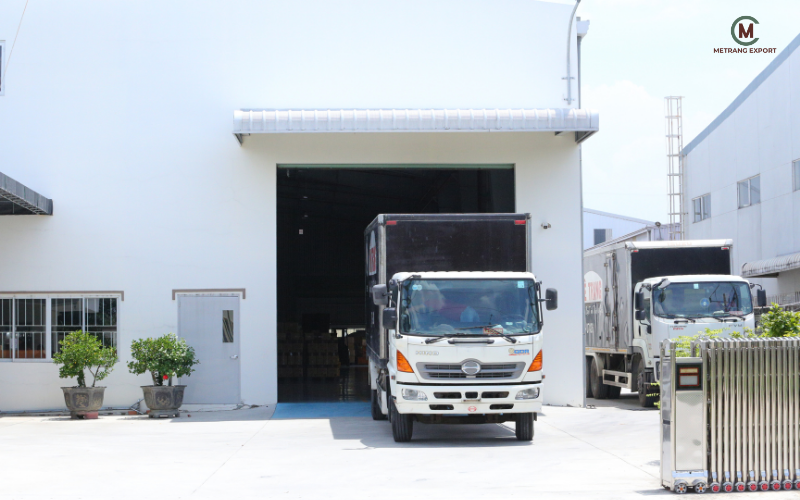
- Logistics variables: International and domestic shipping costs currently account for 4% to 8% of the price structure. During freight crises, these costs can skyrocket, turning an initially low-cost lot into an expensive investment due to unforeseen demurrage and warehousing fees.
What are the hidden costs eroding profits behind a low green coffee price?
A low unit price is often just the tip of the iceberg. Without deconstructing the additional costs incurred during production, roasters can easily fall into a trap where revenue grows, but net profit suffers a severe decline.
The impact of defect rates on the actual green coffee price
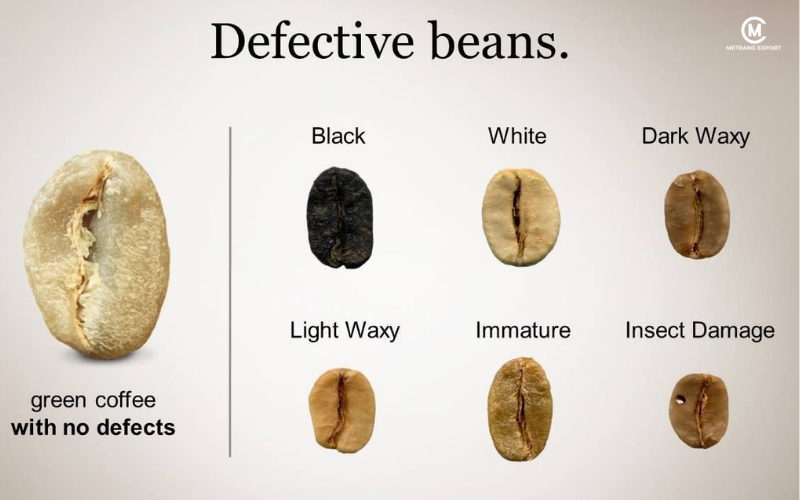
Defective beans (black, broken, moldy, or insect-damaged) do more than just ruin the flavor; they are the direct cause of significant weight loss in usable yield. When purchasing low-cost lots with high defect rates, the actual green coffee price you pay for qualified beans is often much higher than the initial quote.
- Eroding profit margins: With just 2-3% of impurities or defects beyond the allowable limit, your actual raw material costs skyrocket after deducting waste.
- Processing expenses: Businesses must spend more on labor or invest in expensive color-sorting technology to eliminate low-quality beans before roasting.
- The transparency factor: MeTrang Export provides detailed defect rate reports for every shipment, helping buyers identify the true value before closing the deal.
Lack of uniformity and weight loss during roasting
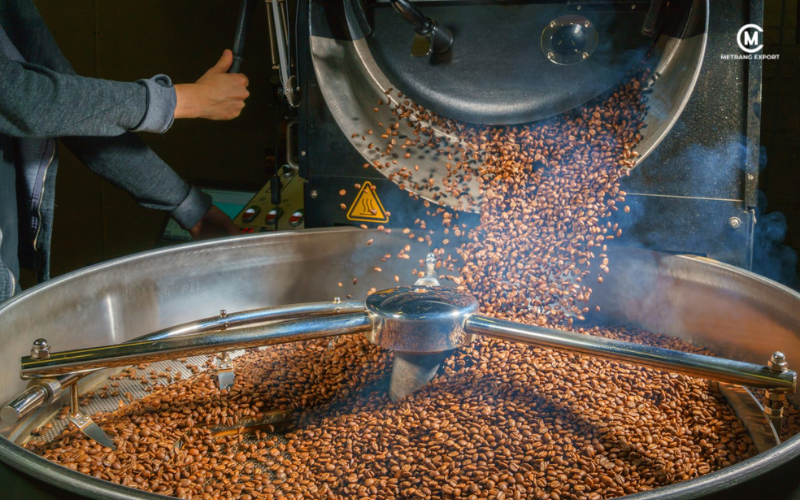
Beans that fail to meet moisture standards or have inconsistent density are the number one enemy of production efficiency. This is the most silent hidden cost, difficult to detect without strict technical supervision at the factory.
- Weight shrinkage: If the green coffee price is low but the moisture content exceeds 13%, you are essentially paying for water instead of coffee. An increased weight loss ratio after roasting will directly inflate the cost of your finished product.
- Energy waste: A lack of uniformity forces roasters to constantly adjust profiles and extend roasting times, leading to wasted electricity and a higher rate of rejected batches.
- The stability guarantee: MeTrang Export controls moisture at the ideal range (10-13%), stabilizing the shrinkage ratio and protecting long-term cash flow for our partners.
Applying Total cost of ownership (TCO) to evaluate the green coffee price
Instead of merely comparing price lists, professional buyers today focus on the Total cost of ownership (TCO) to accurately assess the return on investment (ROI) for every shipment.
The profitability puzzle: Low green coffee price vs. Long-term operational risks
Opting for a low green coffee price may offer immediate cost reductions, but it often triggers a chain of operational consequences that are difficult for businesses to control.
- Erosion of brand reputation: Inconsistent quality leads to fluctuating flavor profiles in the final product. The cost of acquiring a new customer is always significantly higher than maintaining a stable green coffee price for a high-quality source.
- Maintenance burden: Impurities and defective beans in low-cost lots shorten the lifespan of roasting equipment, causing production downtime and unnecessary repair expenses.
- Hidden labor costs: Technical teams spend excessive time recalibrating roasting profiles for sub-par shipments instead of focusing on product innovation and productivity.
A value-based pricing formula for actual usage
To determine whether a green coffee price is truly expensive or not, a business must calculate based on the final yield of finished products.
- The real total cost: The actual cost per kilogram of finished coffee equals the total acquisition and operational expenditure divided by the volume of qualified beans, after deducting shrinkage and waste.
- Actual efficiency: A shipment with a slightly higher green coffee price but denser beans and fewer defects will yield a higher output. Consequently, the actual cost per cup of coffee served is often lower.
Optimizing value for our partners at MeTrang Export
MeTrang Export does not compete for the lowest price; we partner with you for the highest profit efficiency.
Quality control at the source to stabilize the green coffee price
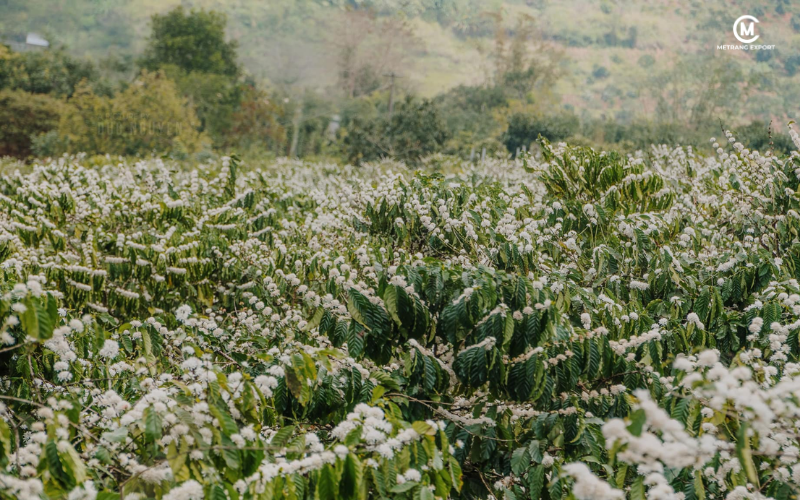
By strictly controlling the selective picking of ripe cherries, MeTrang Export minimizes defect rates right from the initial processing stage. This helps stabilize the green coffee price and significantly reduces sorting costs at our partners’ factories. Our standardized beans ensure that every cent of your brand’s capital yields the highest recovery rate, rather than being wasted on subpar by-products.
A commitment to consistency and transaction transparency
Discrepancies between samples and actual shipments are a major risk that inflates the green coffee price due to the costs of handling faulty goods. MeTrang Export pledges absolute consistency, ensuring every batch delivered to your facility aligns perfectly with the agreed-upon technical specifications and flavor profiles. We provide full transparency of all inspection data, helping procurement teams eliminate hidden risks and accelerate production workflows. We believe that a lasting partnership can only be built on honesty – where the green coffee price truly reflects the actual value of the product.
Conclusion
The green coffee price is merely the tip of the iceberg in the coffee business. To achieve sustainable profitability, enterprises must look beyond the quotation to evaluate actual performance.
Partnering with a reputable supplier like MeTrang Export is a smart investment strategy to optimize costs and solidify your brand’s premium positioning.
