


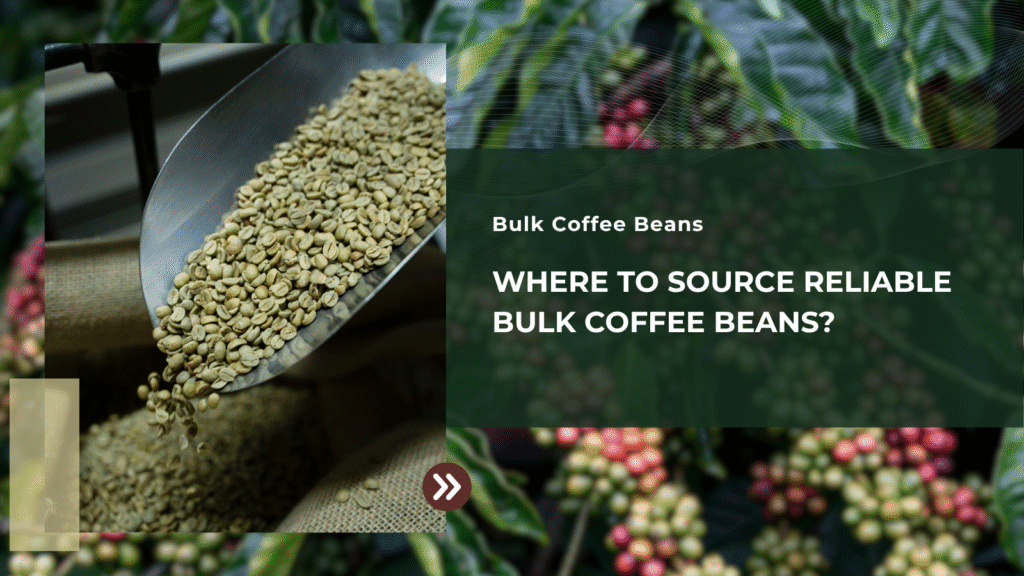
With hundreds of millions of coffee bags traded each year, identifying the right supply source from the outset is a mission-critical challenge for every enterprise. In reality, the quest for bulk coffee beans extends beyond finding a vendor; it lies in the capacity to audit risks before signing any contract. MeTrang Export provides a structured roadmap to help businesses optimise sourcing and secure a sustainable commercial foundation.
Identifying business models that should prioritise buying bulk coffee beans
Rather than sourcing based on intuition, enterprises must clearly define their role within the global value chain. This clarity helps partners determine the correct product types and technical specifications, ensuring the selection of the most compatible supplier.
Where do green coffee beans stand in the global supply chain?
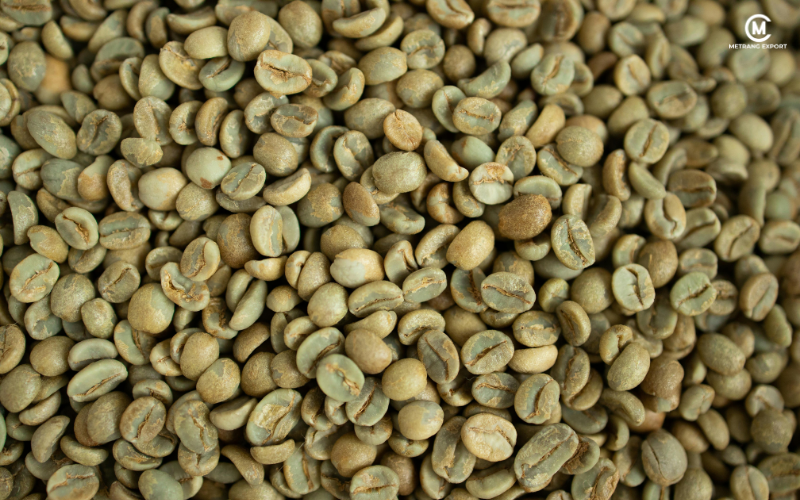
Green coffee refers to beans that have been processed and hulled but not yet roasted. This is the most prevalent form of raw material in international trade. On average, from the 2009/10 to 2024/25 seasons, green coffee accounted for 85.2% of total global exports (USDA, compiled by the Journal of Food and Environment, 2024). These beans are the core link in the global supply chain thanks to three strategic advantages.
- Logistics optimization: Easier to preserve and transport over long distances compared to roasted coffee.
- Production customization: Empowering buyers to take control of roasting profiles according to specific requirements, similar to how global traders source green coffee beans from Ethiopia.
- Standard diversity: Suitable for various industrial applications due to highly flexible technical specifications.

Which business segments are best suited for bulk coffee beans orders?
Procuring bulk coffee beans in large volumes only delivers true economic efficiency when it aligns with an enterprise’s operational model.
- Industrial and commercial roasters: Requiring a stable supply and uniform quality to maintain consistent roasting profiles across every harvest season.
- Coffee importers and distributors: Purchasing bulk coffee beans to optimize cost-efficiency for redistribution to smaller roasters, coffee chains, or domestic retail systems.
- Food and beverage manufacturers: Utilizing green beans as raw inputs for extracts, instant coffee, RTD (Ready-to-drink) products, or food processing applications.
- Export trading companies: Leveraging the economies of scale from Vietnam’s raw material regions for re-export or blending, aimed at optimizing costs and diversifying global portfolios.
Analyzing popular sourcing channels for bulk coffee beans
The market for bulk coffee beans offers various access points, each operating under its own distinct logic.
Strategic choice: commodity exchanges, brokers, or direct exporters?
The bulk coffee beans market operates through three primary channels, each serving specific strategic objectives:
- Commodity exchanges (ICE): Ideal for financial hedging and price risk management. However, due to highly standardized grades, this channel lacks technical flexibility and cannot cater to bespoke specifications.
- Brokers: While offering extensive networks and market data, brokerage fees are often added to the final cost. The lack of direct access to producers makes it difficult to audit quality at the source or build long-term partnerships.
- Direct exporters: Providing the ultimate price advantage by eliminating intermediaries, exporters offer maximum flexibility in customizing technical specs and packaging requirements.
Strategic Advantages of Sourcing Bulk Coffee Beans at the Origin
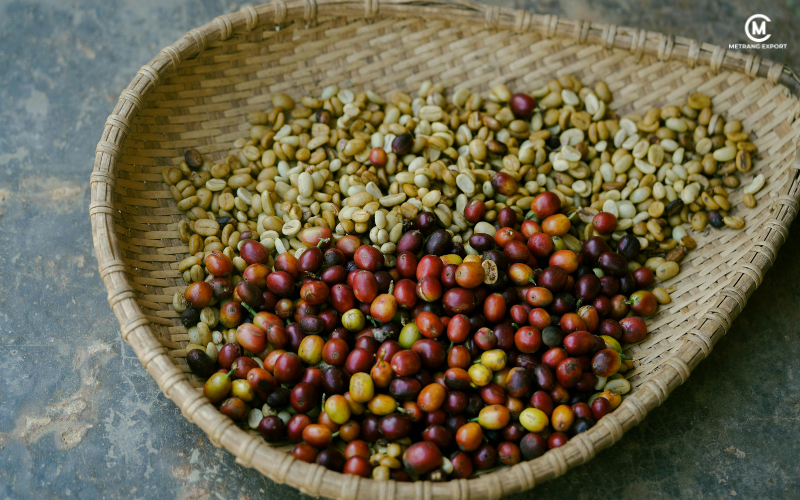
Partnering with exporters who own infrastructure at the origin is a powerful, yet often overlooked, strategic advantage. It provides comprehensive control beyond mere geography.
- Quality assurance at the source: Deep knowledge of crop cycles and lot characteristics allows exporters to guarantee actual quality, unlike intermediaries who buy from third-party warehouses without cultivation history.
- Supply security: During market crunches, such as the first half of the 2024/25 season, when Vietnamese exports dropped 23% due to hoarding (USDA, 2025), direct partners always receive priority supply over those buying through intermediaries.
- Streamlined logistics: Direct procurement creates a leaner supply chain, reducing overhead costs and eliminating quality degradation risks associated with complex warehousing and transshipment stages.

Standards for auditing a professional bulk coffee beans supplier
Not every supplier lives up to their catalog’s promises. Enterprises require a clear set of criteria to evaluate potential partners objectively.
The three pillars of supply capacity assessment
Before signing any contract, brands should rigorously audit these core pillars.
- International certifications: These represent the highest legal commitment to quality and safety, including ISO 22000 (Food Safety), FDA Registration & FSPCA (US standards), and Halal (Muslim markets).
- Execution excellence: Focus on actual processing capacity, standardized warehousing, and proactive logistics management.
- Traceability transparency: The ability to provide detailed data on growing regions, processing methods, and inspection certificates for every lot.
Indicators of a reliable bulk coffee beans partner
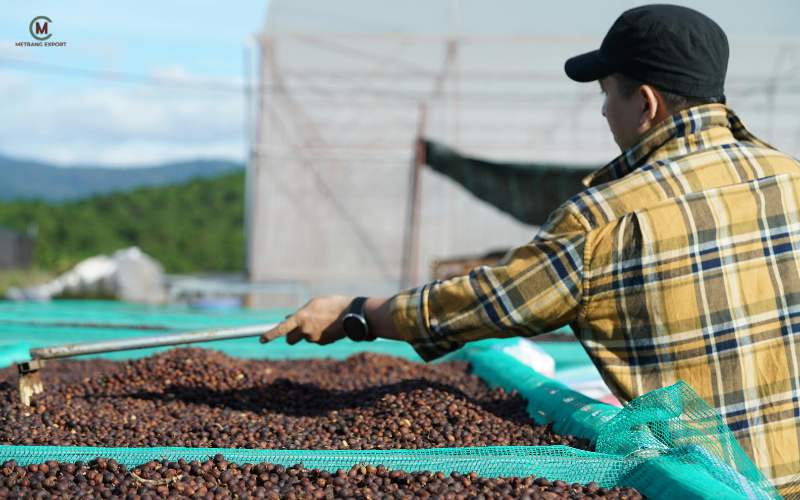
Beyond the credentials, professional partners are identified through these positive indicators.
- Transparent specifications: Proactively providing detailed Spec sheets from the initial stage to build a foundation of trust.
- Sampling readiness: Reputable units encourage partners to verify actual quality and never avoid independent third-party audits.
- Proven export history: A transparent track record with established target markets and positive feedback from long-term global partners.
- Expert communication: Fast, direct responses that address deep technical inquiries with precision.
- Robust contractual terms: Transparent commitments regarding quality, delivery timelines, and dispute resolution mechanisms to protect the interests of both parties.
Comprehensive bulk coffee beans solutions by MeTrang Export
Finding a supplier that meets all the aforementioned criteria is often a challenge. MeTrang Export is established as the definitive answer that B2B enterprises are seeking.
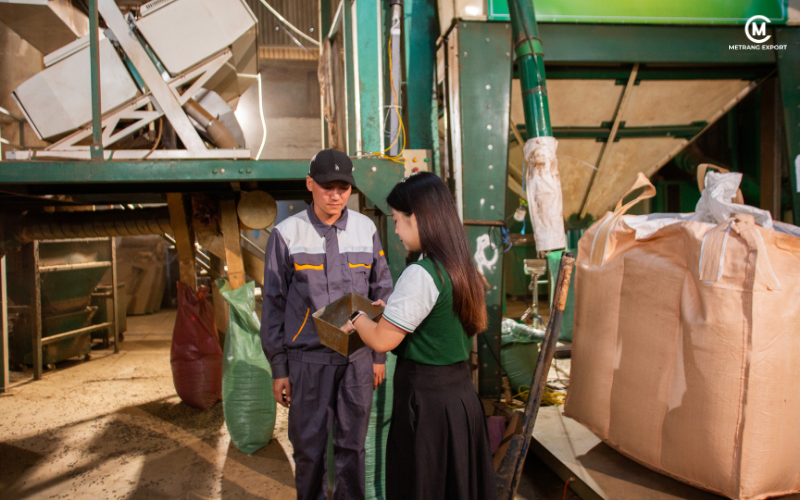
From the coffee capital of Buon Ma Thuot to professional exporting
MeTrang Export represents the strategic evolution of Me Trang Coffee, a powerhouse with over a quarter-century of dominance in the Vietnamese coffee sector.
- 25 years of expertise: As the official export arm of Me Trang Coffee, the brand leverages over two decades of deep-rooted mastery in the Vietnamese coffee sector.
- Strategic location: Headquartered in Buon Ma Thuot, the brand maintains direct access to premium Robusta sources and high-quality raw materials.
- Regional mastery: Extensive knowledge of Vietnam’s diverse terroir, from Cau Dat and Quang Tri to Son La, ensures the preservation of unique regional flavor profiles.
- Global standard compliance: A robust certification system, including ISO 22000:2018, FDA, Halal, and FSPCA, guarantees international food safety and quality.
- Seamless export operations: These global credentials facilitate smooth customs clearance, ensuring efficient delivery to major international markets.
Supply capacity for bulk coffee beans orders
With an impressive production capacity of 5,000-6,000 tons per year, MeTrang Export guarantees a stable supply and flexible customization.
- Commercial grade: Featuring Robusta and Arabica selections (G1, G2, Wet Polished), perfectly catering to commercial roasting and industrial blending needs.
- Specialty & premium grade: Offering a diverse portfolio of Specialty and Premium beans processed through Natural, Honey, and Full Washed methods.
Conclusion
Sourcing reliable bulk coffee beans is about more than just pricing; it is about stability and long-term partnership. A dependable partner allows a brand to operate its supply chain with peace of mind, free from the anxieties of seasonal fluctuations.
Recognizing that every enterprise has unique requirements, MeTrang Export avoids one-size-fits-all formulas. The focus remains on listening and tailoring each order to perfectly align with the specific technical needs and characteristics of each client.
Allow MeTrang Export to become the sustainable link in an enterprise’s supply chain.